Join us on a literary world trip!
Add this book to bookshelf
Grey
Write a new comment Default profile 50px
Grey
Subscribe to read the full book or read the first pages for free!
All characters reduced
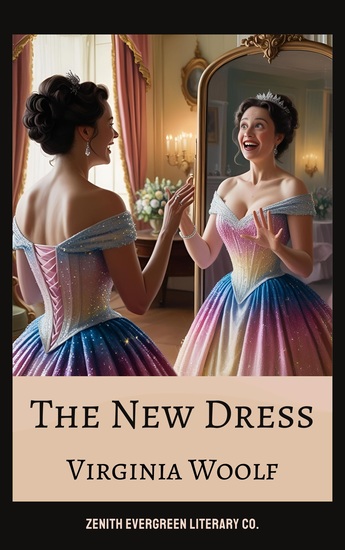
The New Dress - A Short Story on Insecurity Identity and Social Perception - cover

The New Dress - A Short Story on Insecurity Identity and Social Perception

Virginia Woolf, Zenith Evergreen Literary Co.

Publisher: Zenith Evergreen Literary Co.

  • 0
  • 0
  • 0

Summary

It was supposed to be the perfect dress. It became a symbol of everything she feared.

The New Dress by Virginia Woolf is a razor-sharp psychological portrait of Mabel Waring, a woman whose moment of self-doubt at a high-society party unravels into a profound meditation on class, identity, and the tyranny of appearances.

Written in Woolf's iconic stream-of-consciousness style, this short story is a concise yet deeply moving critique of how women are conditioned to perceive themselves—and each other.

💬 "A quiet rebellion told through silk and self-awareness—Woolf at her subtlest."

🪞 Why This Story Remains So Relevant:
A brilliant literary snapshot of internalized shame and social anxiety

Ideal for fans of Clarice Lispector, Dorothy Parker, and Annie Ernaux

Frequently studied in feminist literature, identity studies, and modernist fiction

📣 Dress the Part. Question the Image. Discover the Truth.
Buy The New Dress today and experience Virginia Woolf's powerful insight into the minds behind the masks.
Available since: 04/24/2025.
Print length: 23 pages.
Other books that might interest you

  • The Idiot - cover

    The Idiot

    Fyodor Dostoevsky

    • 0
    • 0
    • 0
    "Beauty will save the world."
    
    Prince Lev Nikolayevich Myshkin, a man of such pure honesty and childlike simplicity that he is mockingly dubbed "The Idiot," returns to the shark-infested waters of St. Petersburg society after years in a Swiss sanatorium. Seeking only to find the good in others, he is quickly ensnared in a volatile love triangle between the beautiful, traumatized "fallen woman" Nastasya Filippovna and the dark, obsessive merchant Rogozhin. As the Prince's saintly influence clashes with the vanity and greed of the Russian elite, Dostoevsky poses a devastating question: Can a truly good man survive in a world that is anything but?
    
    The Christ-Like Protagonist: Dostoevsky's goal was to depict a "perfectly beautiful" soul. Myshkin is a radical departure from the traditional literary hero; he is compassionate to a fault, lacks any ego, and suffers from epilepsy—a condition Dostoevsky shared and described with visceral, transcendent detail. The Prince is a mirror in which every other character sees their own failings and hidden virtues.
    
    A Tragedy of Modernity: The Idiot is a searing critique of a society obsessed with status, money, and intellectual posturing. Through the eccentric Epanchin family and the nihilistic youth of St. Petersburg, Dostoevsky captures a world on the brink of collapse, where genuine emotion is mistaken for madness and kindness is viewed as a fatal weakness. The novel's shocking conclusion remains one of the most powerful and debated endings in all of world literature.
    
    Experience the radiance and the darkness. Purchase "The Idiot" today and witness Dostoevsky's most heartbreaking achievement.
    Show book
  • The Adventures of Baron Munchausen - cover

    The Adventures of Baron Munchausen

    Rudolf Erich Raspe

    • 0
    • 0
    • 0
    From travelling to the moon to fighting a 40-foot-long crocodile and riding a cannonball through the air, Baron von Munchausen’s incredible account of his own adventures has entertained readers since its initial appearance in 1785. The obvious comedy of the book, which lies in Munchausen’s boasts about his own adventures, is heightened by the calm and objective way in which he frames his narrative. The Baron appears to fully believe the death-defying episodes with which he regales his listeners.The stories of Baron von Munchausen have loomed large in popular culture and have been the subject of several films, most notably that directed by Terry Gilliam in 1988, while many notable artists have found inspiration in the adventures.
    Show book
  • The Lottery Ticket and Other Stories - cover

    The Lottery Ticket and Other...

    Henry van Dyke, Anton Chekhov,...

    • 0
    • 0
    • 0
    Immerse yourself in timeless tales of the human experience with The Lottery Ticket and Other Stories, an exclusive digital audiobook collection featuring masterful works of fiction. From the existential depths of Herman Melville’s "Bartleby, the Scrivener" to Leo Tolstoy’s inspiring exploration of life’s purpose in "What Men Live By," this collection brings you unforgettable stories that probe the soul and spark reflection.


    Highlights include:


    Bartleby, the Scrivener – Melville’s thought-provoking tale of passive resistance and modern alienation set on Wall Street.
     
    What Men Live By – Tolstoy’s moving parable about love, compassion, and the true meaning of life.
     
    The Mansion – Henry van Dyke’s profound story about wealth, morality, and the legacy we leave behind.
     
    The Lottery Ticket – Anton Chekhov’s gripping and ironic tale about greed, dreams, and the cruel twists of fate.
     
    Whether you’re a long-time lover of classic literature or new to these timeless works, this beautifully narrated collection invites you to explore the richness of the human condition. Perfect for anyone seeking deep, meaningful stories, The Lottery Ticket and Other Stories offers wisdom and entertainment that resonate across generations.
    Show book
  • Baron Trump's Marvellous Underground Journey (Unabridged) - cover

    Baron Trump's Marvellous...

    Ingersoll Lockwood

    • 0
    • 0
    • 0
    Baron Trump's Marvelous Underground Journey by Ingersoll Lockwood was published in 1893. The novel recounts the adventures of the German boy Wilhelm Heinrich Sebastian Von Troomp, who goes by the name "Baron Trump", and his dog Bulger, as they discover fantastic underground civilizations, offend the natives, escape from their involvements, and repeat this pattern until arriving back home at Castle Trump. The novel was part of a trend in American children's literature that responded to the demand for fantastic adventure stories created by Lewis Carroll's Alice's Adventures in Wonderland (1865).
    Show book
  • Edgar Allan Poe His Best Works - cover

    Edgar Allan Poe His Best Works

    Edgar Allan Poe

    • 0
    • 0
    • 0
    Poe’s stature as a major figure in world literature is based on his ingenious and profound poems, which established a highly influential rationale for the short form in poetry. Poe was also the principal forerunner of the “art for art’s sake” movement in 19th-century literature. He demonstrated a brilliant command of language and technique as well as an inspired and original imagination. Poe’s poetry greatly influenced the French Symbolists of the late 19th century, who in turn altered the direction of modern literature. Here, perhaps, is his most icon-lauded work. Edgar Allan Poe was an American writer, poet, editor, and literary critic. Poe is best known for his poetry and short stories, particularly his tales of mystery and macabre. He is widely regarded as a central figure of Romanticism in the United States, and of American literature.A true audiobook treasure for Goth, Poe and horror fans everywhere!
    Show book
  • Treasure Island (Part 1: The Old Buccaneer) - cover

    Treasure Island (Part 1: The Old...

    Robert Louis Stevenson

    • 0
    • 0
    • 0
    Part 1: The Old Buccaneer from Treasure Island:
    "For sheer storytelling delight and pure adventure, Treasure Island has never been surpassed. From the moment young Jim Hawkins first encounters the sinister Blind Pew at the Admiral Benbow Inn until the climactic battle for treasure on a tropic isle, the novel creates scenes and characters that have fired the imaginations of generations of readers. Written by a superb prose stylist, a master of both action and atmosphere, the story centers upon the conflict between good and evil - but in this case a particularly engaging form of evil. It is the villainy of that most ambiguous rogue Long John Silver that sets the tempo of this tale of treachery, greed, and daring. Designed to forever kindle a dream of high romance and distant horizons, Treasure Island is, in the words of G. K. Chesterton, 'the realization of an ideal, that which is promised in its provocative and beckoning map; a vision not only of white skeletons but also green palm trees and sapphire seas.' G. S. Fraser terms it 'an utterly original book' and goes on to write: 'There will always be a place for stories like Treasure Island that can keep boys and old men happy.'
    Show book