Join us on a literary world trip!
Add this book to bookshelf
Grey
Write a new comment Default profile 50px
Grey
Subscribe to read the full book or read the first pages for free!
All characters reduced
A Room of One's Own - Empowering Women in Literature: Breaking Barriers and Finding Success - cover

A Room of One's Own - Empowering Women in Literature: Breaking Barriers and Finding Success

Virginia Woolf

Publisher: Good Press

  • 0
  • 0
  • 0

Summary

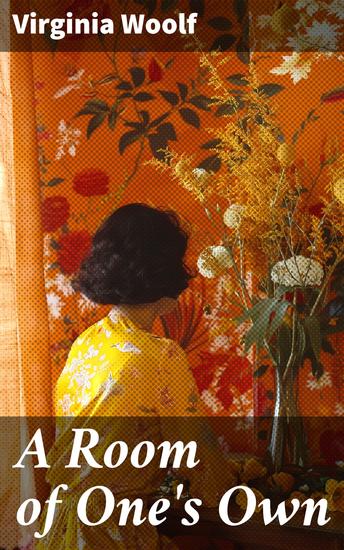
In "A Room of One's Own," Virginia Woolf presents a profound exploration of the relationship between women and fiction, articulated through a rich tapestry of narrative style that blends essay and fiction. Taking the form of an extended essay, Woolf employs stream-of-consciousness techniques and employs a conversational tone to delve into the societal constraints placed upon women writers. Her seminal argument, asserting that a woman must have money and a room of her own to write, challenges the patriarchal constructs of early 20th-century literature and critiques the historical exclusion of women from the literary canon. The literary context of this work is deeply rooted in the feminist movements of Woolf's time, which aimed at redefining women's roles in society and art. Virginia Woolf, a pioneering figure in modernist literature, is known for her incisive critique of societal norms surrounding gender and identity. Her life experiences, particularly the constraints she faced as a woman in the literary world and her engagement with the Bloomsbury Group, influenced her stance on women's intellectual freedom. Woolf's insightful observations on the struggles faced by her contemporaries, as well as her commitment to gender equality, are beautifully synthesized in this timeless piece. Readers, both scholars and casual fans of literature, will find "A Room of One's Own" indispensable for understanding the intersection of gender and literary tradition. Woolf's eloquence and clarity invite readers to contemplate the complexities of authorship and creativity from a female perspective, making it a crucial text for anyone seeking to grasp the evolution of feminist thought in literature.
Available since: 12/05/2023.
Print length: 148 pages.


Other books that might interest you

  • Let It Go - Free Yourself from Old Beliefs and Find a New Path to Joy - cover

    Let It Go - Free Yourself from...

    Chelene Knight

    • 0
    • 0
    • 0
    For readers of Ross Gay and listeners of Therapy for Black Girls, a reflective examination of Black self-love and joy that guides the reader to ditch old beliefs, achieve difficult unlearnings and redefine language, relationships and love to find their own unique path to joy.   
    A warm, candid and essential book that will guide the reader to carve a new path to joy as unique as each individual. Created by the founder of Breathing Space Creative Literary Studio, acclaimed writer and editor Chelene Knight, Let It Go draws on personal experience and the advice of leaders from various Black communities to share hard-won tools for joy-discovery—tools such as how to say no with love; how to call back activities that feel good; how to reshape communication with those closest to you; how to revise language; and most of all, how to learn to let go in order to redefine what we think joy is. 
    Organized around the seasons and the natural cycle of reflection and renewal, Let It Go showcases, through conversation and solitary reflection, the broad spectrum of Black realities and reveals the colourful kaleidoscope of joy and your own ways to find it.  
    From Let It Go: 
    “My own path to joy has been blurred by hardship, but part of my journey is that I refuse to believe that all of my negative experiences are tethered to being a Black woman, even though it can feel like this, even when some people want me to feel like this. And when I feel it, it’s a pain that swells and refuses to subside. I didn’t learn this on my own and I don’t think I can unlearn it on my own. But I’m willing to do the work. I want my joy as I find it; I want my joy as it comes. I’m willing to let the wind push me backwards through the difficult moments. Maybe there’s something big holding you back too. Take a breath. What is it? Maybe we can let go, together.” 
    Show book
  • Marbury v Madison - cover

    Marbury v Madison

    Various

    • 0
    • 0
    • 0
    This program is read by an AI-based synthesized voice.
    Show book
  • Quiet Time with The President - A Doctor's Story About Learning to Listen - cover

    Quiet Time with The President -...

    Peter Friedland Friedland, Jill...

    • 0
    • 0
    • 0
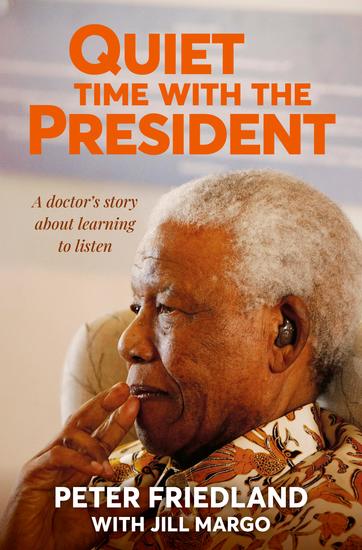
    One Sunday in 2001 ear, nose and throat specialist Dr Peter Friedland received an unexpected call from Nelson Mandela's personal physician. The former president was struggling to hear. Could Peter visit him at home?
    Friedland discovered that Mandela was using antiquated hearing aids and was struggling to maintain them. Soon he became a regular visitor to Mandela's home in Houghton where he experienced the elderly statesman, in the frailty of old age, away from the crowds. He was full of stories and always bearing a lesson.
    But outside Mandela's quiet house, Friedland's life was ricocheting from treating one victim of violent crime to another. On many days he worked as a head and neck trauma surgeon and found himself drawn into the victims' families. When his own family and friends were exposed to violent crime, he was driven to make a life-changing decision.
    In Quiet Time with the President, Friedland also examines the powerful forces that push people away from South Africa and those that pull them back. Telling his famous patient that he was planning to leave the country was insurmountably difficult for Friedland, but Mandela surprised him.
    He'd accept his leaving, but on one condition . . .
    Show book
  • Future of an Illusion - cover

    Future of an Illusion

    Sigmund Freud

    • 0
    • 0
    • 0
    "Future of an Illusion," authored by Sigmund Freud in 1927, embarks on a critical examination of religion, articulating it as a psychological construct born from humanity's deep-seated needs for protection, moral guidance, and understanding of the universe. Freud posits that religion, while serving as a comforting illusion to shield individuals from the stark realities of life and the inevitability of death, is ultimately a hindrance to intellectual and emotional maturity. He argues that the progress of civilization hinges on the ability of individuals to eschew religious belief in favor of rational thought and scientific inquiry. This work not only showcases Freud's psychoanalytic acumen but also engages deeply with the sociocultural role of religion, proposing a future where enlightened reason supplants faith. Despite the controversy it stirred, particularly among the devout, Freud's critique remains a pivotal contribution to the discourse on the psychology of religion and the development of secular thought.
    Show book
  • Beyond Fragility - A Skills-Based Guide to Effective Anti-Racist Allyship - cover

    Beyond Fragility - A...

    PhD Yara Mekawi, PhD Natalie...

    • 0
    • 0
    • 0
    As society shifts its perspective on allyship—moving from being "not racist" to "anti-racist"—White allies are being called upon to work toward changing the status quo. However, the vast majority of resources on this topic emphasize educating allies about anti-racism without teaching them how to do anti-racism work. This leaves well-meaning allies feeling stuck, frustrated, and afraid of getting it wrong. Beyond Fragility fills this gap by providing a step-by-step approach to effective anti-racism allyship. This book provides you with the skills to: 


    ● Understand and avoid common mishaps in anti-racist work, such as misunderstanding racism, not knowing how to recognize racism, or not having a clear anti-racist identity 


    ● Cope with emotions like guilt, fear, hopelessness, and anger that may arise when discussing racism and privilege 


    ● Navigate interpersonal interactions, whether it's validating experiences of BIPOC peers, recovering from a racist misstep, or speaking out against racist comments 


    Anti-racist allyship is not an innate essence. But with this book, you can learn skills that allow you to engage in impactful and sustainable allyship in every space you occupy.
    Show book
  • The Claudius Novels - I Claudius and Claudius the God - cover

    The Claudius Novels - I Claudius...

    Robert Graves

    • 1
    • 0
    • 0
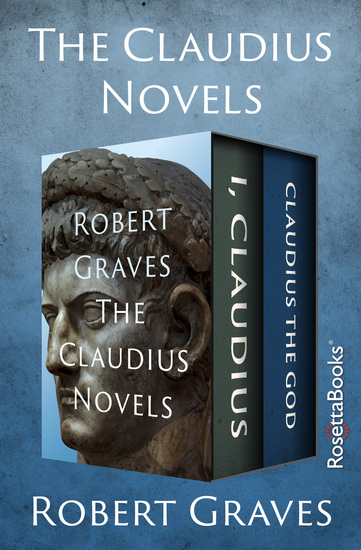
    The Claudius Novels includes Robert Graves’ best known historical novels, I, Claudius and Claudius the God. 
    In I, Claudius, Robert Graves begins the story of the limping, stammering young man who is suddenly thrust onto the throne after the death of Caligula.
    Once a rather bookish young man with a limp and a stammer, a man who spent most of his time trying to stay away from the danger and risk of the line of ascension, Claudius seemed an unlikely candidate for Emperor. Yet, on the death of Caligula, Claudius finds himself next in line for the throne, and must stay alive as well as keep control.
    
    Drawing on the histories of Plutarch, Suetonius, and Gaius Cornelius Tacitus, noted historian and classicist Robert Graves tells the story of the much-maligned Emperor Claudius with both skill and compassion. Weaving important themes throughout about the nature of freedom and safety possible in a safety and a monarchy, Graves’ Claudius is both more effective and more tragic than history typically remembers him. A best-selling novel and one of Graves’ most successful, I, Claudius has been adapted to television, film, theatre, and audio.
    
    In Claudius the God, Graves continues the story, detailing Claudius’ 13-year reign and his ultimate downfall. Painting the vivid, tumultuous, and decadent society of ancient Rome with spectacular detail, Robert Graves provides a tale that is both instructive and compelling, and difficult to put down for both casual readers and students of Roman history.
    Show book