Join us on a literary world trip!
Add this book to bookshelf
Grey
Write a new comment Default profile 50px
Grey
Subscribe to read the full book or read the first pages for free!
All characters reduced
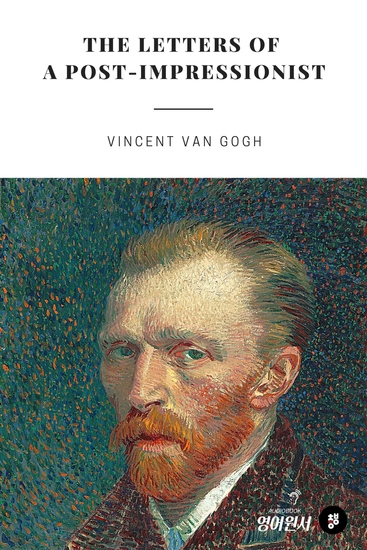
The Letters of a Post-Impressionist - cover

The Letters of a Post-Impressionist

Vincent van Gogh

Publisher: 책보요여

  • 0
  • 0
  • 0

Summary

“When I have a terrible need of - shall I say the word - religion, then I go out and paint the stars.”

"The Letters of a Post-Impressionist," published in 1913, is a collection of the personal correspondence of Vincent van Gogh, the renowned Dutch post-impressionist painter. This epistolary work provides a unique and intimate insight into Van Gogh's life, artistic vision, and the struggles he faced. His letters to his brother Theo and other contemporaries reveal his passion for art, his quest for meaning and purpose, and the profound emotional turmoil he experienced. These letters are cherished for their contribution to our understanding of Van Gogh's creative process and the broader post-impressionist art movement, making them an invaluable resource for art historians and enthusiasts alike."
Available since: 10/31/2023.
Print length: 220 pages.

Other books that might interest you

  • Screams & Nightmares - The Films of Wes Craven - cover

    Screams & Nightmares - The Films...

    Brian J. Robb

    • 0
    • 0
    • 0
    “From the seminal Last House on the Left to Scream 2 . . . Robb’s concoction is entertaining and informative about a recognized cinematic auteur.” —Booklist   Writer, producer, and director Wes Craven has successfully tapped into the horror vein for over forty years, serving up scary, funny, cutting-edge thrillers that have become classics in the genre. His films have been both critical and commercial successes, most notably Nightmare on Elm Street, which spawned a series of sequels and made Craven (and his creation, Freddy Kruger) an international sensation. He then created a second indelible series in the horror movie trope with Scream. In Screams & Nightmares, Brian J. Robb examines Craven’s entire career, from his low-budget beginnings to his most recent box office hits, from the banned thriller The Last House on the Left and the cult classic The Hills Have Eyes to the outrageous Shocker and The People Under the Stairs. Through exclusive interviews with Craven, Robb provides in-depth accounts of the making of each of the films—including the final installments of the Scream series—Craven’s foray into writing novels, and his numerous television projects.  “Dripping with fascinating details . . . this is a treat.” —The Washington Post  “A remarkably addictive and easy-to-read guide to Craven’s work, piling in juicy snippets and lesser-known background . . . a comprehensive picture of Craven and his output.” —Sci-Fi Bulletin  “Definitive . . . info-packed and exceptionally well written . . . there is no writer better qualified to chronicle the life and work of a remarkable talent.” —The Dark Side
    Show book
  • Egg and Spoon - cover

    Egg and Spoon

    Rosie Blake

    • 0
    • 0
    • 0
     In Egg and Spoon, the artist and illustrator Rose Blake tells the story of a childhood fuelled on art and creativity, infused with travel and steeled by the more quotidian aspects of family life growing up with the artist Peter Blake. Surrounded by a cast of originals and eccentrics and taking in backdrops such as London, L.A. and Paris, Blake creates poetic snapshots of a family, with the joys of a life dedicated to art and the inevitable fragilities and poignancy of age and, pertinently, ill health. The effect is that of a literary photo album, with all the charm and character and emotional intensity those documents communicate.
    Show book
  • Old Time Radio: Thrilling Listens - The Whistler & The Weird Circle - cover

    Old Time Radio: Thrilling...

    Various Various

    • 0
    • 0
    • 0
    2 chilling thrillers in 1 amazing bundle! Experience some of the most suspenseful radio serials to release in the twentieth century in this incredible bundle that features The Whistler and The Weird Circle. The Whistler: Blind Impulse The Whistler: Bullet Proof The Whistler: Custom Built Blonde The Whistler: Body Off Billingsgate The Whistler: Boiling Point The Whistler: What Makes a Murderer The Whistler: Small Town Girl The Whistler: The Hermit The Whistler: Brotherly Hate The Whistler: Swan Song The Weird Circle: The Wooden Ghost The Weird Circle: The Murder of the Little Pig The Weird Circle: Mad Monkton The Weird Circle: The Last Days of a Condemned Man The Weird Circle: The Burial of Roger Melvin The Weird Circle: The Fatal Love Potion The Weird Circle: The Executioner The Weird Circle: Rapicini's Daughter The Weird Circle: The Returned The Weird Circle: The Warning
    Show book
  • The Bond Code - The Dark World of Ian Fleming and James Bond - cover

    The Bond Code - The Dark World...

    Philip Gardiner

    • 0
    • 0
    • 0
    The Bond Code is the remarkable story of how Fleming's association with the occult world led him to create a masterful series of clever clues, cyphers, and codes within his books. Philip Gardiner finally unravels the secret of James Bond piece by piece from the novels and films used to create his aura of mystique. This book not only introduces new material but also radically reappraises everything we thought we knew about Bond - and his creator.
    Show book
  • Sengoku - Warring States and the Path to Unification - cover

    Sengoku - Warring States and the...

    Rolf Hedger

    • 0
    • 0
    • 0
    The Sengoku period, meaning “Warring States,” was one of the most turbulent and transformative eras in Japanese history. Lasting from the mid-15th century to the early 17th century, it was marked by ceaseless conflict, shifting alliances, and the gradual disintegration of centralized authority. The roots of this period can be traced back to the decline of the Ashikaga Shogunate, the Ōnin War, and the rise of regional warlords known as daimyo, each vying for control over Japan’s fractured political landscape. 
    The Ashikaga Shogunate, which had ruled Japan since the early 14th century, gradually lost its grip on the country due to internal corruption, weak leadership, and an inability to maintain order. By the mid-15th century, the shogunate had become largely symbolic, with real power resting in the hands of feudal lords. These tensions erupted into full-scale conflict with the outbreak of the Ōnin War (1467–1477), a devastating civil war primarily fought in and around Kyoto. What began as a succession dispute within the shogunate spiraled into a nationwide conflict, leading to the destruction of Kyoto and the collapse of central authority. 
    With the Ashikaga Shogunate rendered powerless, Japan entered a chaotic era where military might determined control. Local daimyo, originally appointed as provincial governors, seized the opportunity to establish autonomous domains. These warlords fortified their territories, raised armies, and engaged in relentless battles to expand their influence. The traditional system of hereditary rule began to erode as capable military leaders, often of humble origins, overthrew established families. This period saw the rise of powerful daimyo such as the Takeda, Uesugi, and Hojo clans, each striving to dominate the fractured nation.
    Show book
  • Composing Capital - Classical Music in the Neoliberal Era - cover

    Composing Capital - Classical...

    Marianna Ritchey

    • 0
    • 0
    • 0
    The familiar old world of classical music, with its wealthy donors and ornate concert halls, is changing. The patronage of a wealthy few is being replaced by that of corporations, leading to new unions of classical music and contemporary capitalism. In Composing Capital, Marianna Ritchey lays bare the appropriation of classical music by the current neoliberal regime, arguing that artists, critics, and institutions have aligned themselves—and, by extension, classical music itself—with free-market ideology. More specifically, she demonstrates how classical music has lent its cachet to marketing schemes, tech firm-sponsored performances, and global corporate partnerships. As Ritchey shows, the neoliberalization of classical music has put music at the service of contemporary capitalism, blurring the line between creativity and entrepreneurship, and challenging us to imagine how a noncommodified musical practice might be possible in today’s world.
    Show book