Join us on a literary world trip!
Add this book to bookshelf
Grey
Write a new comment Default profile 50px
Grey
Subscribe to read the full book or read the first pages for free!
All characters reduced
Teutonic Mythology (The Complete Three-Volume Edition) - cover

Teutonic Mythology (The Complete Three-Volume Edition)

Viktor Rydberg

Publisher: DigiCat

  • 0
  • 0
  • 0

Summary

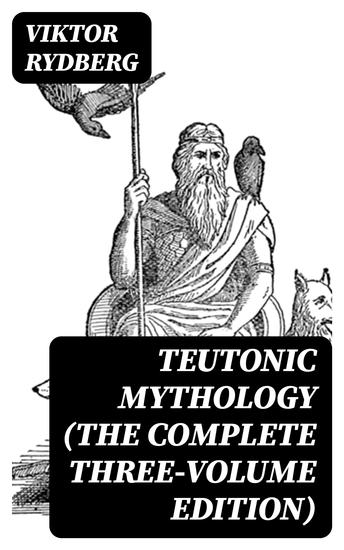
Viktor Rydberg's "Teutonic Mythology" is a monumental three-volume exploration of Northern European myths, encapsulating the vast tapestry of Teutonic traditions, folklore, and spiritual beliefs. Rydberg employs a critical and comparative literary style, deftly intertwining etymological analysis with narrative retellings that resonate with both historical scholarship and poetic expression. The work stands as a seminal contribution to the study of mythology, offering a comprehensive examination of gods, giants, and heroes that shaped the cultural identity of the Germanic peoples while situating these figures within a broader Indo-European mythological context. Rydberg, a Swedish poet, philosopher, and scholar, was deeply influenced by the Romantic movement and its celebration of national heritage and folklore. His dedication to reviving and cataloging the myths of his ancestors led him to write this exhaustive study, in which he sought to reclaim and illuminate the spiritual legacy of the Teutonic past. His academic rigor and passionate advocacy for cultural understanding reflect a broader yearning in the 19th century to reconnect with pre-Christian roots in contemporary society. "Teutonic Mythology" is an essential read for anyone interested in the foundations of Western mythology and its echoes in modern literature. Scholars, students, and enthusiasts alike will find Rydberg's rich narrative and analytical insights invaluable as they embark on a journey through the enchanting and often complex world of Teutonic myths.
Available since: 12/10/2022.
Print length: 716 pages.

Other books that might interest you

  • Meditations of Marcus Aurelius (Unabridged Version) - cover

    Meditations of Marcus Aurelius...

    Marcus Aurelius

    • 0
    • 0
    • 0
    Immerse yourself in the timeless wisdom of the renowned "Meditations of Marcus Aurelius (Unabridged Version)". Penned by the stoic philosopher and Roman Emperor himself, this audiobook presents an unforgettable auditory journey through the profound reflections of one of history's most enlightened leaders.Our production delivers every thoughtful aphorism and contemplative insight in a crisp, clear voice that enhances the listener's experience. With meticulous attention to the original text, this unabridged version remains faithful to Marcus Aurelius's powerful and stirring meditations on life, death, virtue, and the nature of the self.This profound audiobook is an essential addition to the library of philosophers, historians, and anyone seeking guidance in leading a purposeful and virtuous life. Marcus Aurelius's reflections, which have stood the test of time, offer a fascinating glimpse into the mind of a philosopher-king and a unique perspective on the human condition.Experience the illuminating "Meditations of Marcus Aurelius", an unrivaled masterpiece of stoic philosophy, now brought to life in an engaging, high-quality audio format. Purchase your copy today and embark on a journey through the introspective thoughts of one of the most profound thinkers in history!
    Show book
  • The Red Herring Fallacy - Introducing Irrelevant Information to Distract from the Issue - cover

    The Red Herring Fallacy -...

    William Rands

    • 0
    • 0
    • 0
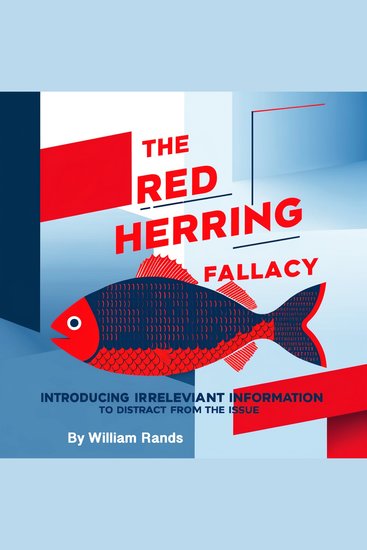
    The Red Herring Fallacy is a common and effective tool for diverting attention from the main issue in an argument. It occurs when irrelevant information or topics are introduced into a discussion, leading the audience away from the core subject. The name "red herring" originates from an old English practice of using smoked fish to distract hunting dogs from a scent trail. In the context of logical reasoning, the concept is metaphorical, describing tactics that mislead or confuse. 
    At its heart, the Red Herring Fallacy exploits our natural tendencies to become sidetracked by emotionally charged, intriguing, or seemingly relevant details. The distraction can take many forms: an unrelated anecdote, a tangential issue, or even an outright falsehood designed to provoke. These diversions can be deliberate, crafted to manipulate the audience, or unintentional, stemming from poor argumentation or misunderstanding. Regardless of intent, the result is the same—a shift in focus away from the actual matter at hand. 
    This fallacy is especially prevalent in public debates, political discourse, and media narratives, where the stakes are high, and the ability to persuade can hinge on controlling the conversation. Politicians might use red herrings to avoid answering tough questions or to redirect criticism, while advertisers employ them to create appealing but irrelevant associations with their products. In our personal lives, we often encounter red herrings during arguments with friends or family, when emotions can override reason and lead to unproductive detours.
    Show book
  • John F Kennedy - His Life His Vision and His Assassination Explained - cover

    John F Kennedy - His Life His...

    Kelly Mass

    • 0
    • 0
    • 0
    JFK, or John Fitzgerald Kennedy, was an American political leader who functioned as the 35th President of the US from 1961 till his assassination to the conclusion of his 3rd year in office. Kennedy was president throughout the height of the Cold War, and the majority of his time in office was spent handling the Soviet Union and Cuba. Prior to his presidency, Kennedy acted as a Democrat in both homes of Congress, representing Massachusetts. 
    Much controversy exists about the war in Vietnam and other aspects of the Cold War that John F. Kennedy dealt with. Many conspiracy theories exist about this assassination, and all of this has become a big part of the American history and culture in the 20th century. Personally, I think it would be wise to study this part of history a little, with its significant impact on worldwide events, coalitions, cease-fires, wars, and more. 
    Read less
    Show book
  • Learn Arabic With Music - cover

    Learn Arabic With Music

    Innovative Language Learning, ...

    • 0
    • 0
    • 0
    Can learning Arabic be as simple as listening to music?


    And as easy as remembering song lyrics?


    Just think. You remember song lyrics because lyrics are catchy, repeated throughout the song, and go with the music, right? Now, if you stuck in Arabic, you'd easily learn Arabic words and phrases the same way!


    So, yes, learning Arabic is as easy as listening to music' with the Learn Arabic With Music Audiobook.


    Just press play, and you'll hear Arabic words and phrases repeated to the beat of upbeat and cheerful music. And' follow along!


    You'll learn 180+ most common Arabic words and phrases' while relaxing at home, or while driving to work.


    Learn Arabic With Music is the easiest way to start learning Arabic.. without getting overwhelmed by complicated explanations. Perfect for new learners with little to no language learning experience.


    What will you learn?
     
    180+ Words & Phrases Including...
     
    - Basic Greetings
     
    - Numbers
     
    - Common Questions and Answers
     
    - Parts of the Body & Talking About Your Wellbeing
     
    - Common Hobbies
     
    - And much more


    Learn Arabic With Music includes...
     
    - 15 Songs/Lessons Inside (Each is about 7 minutes long)
     
    - Fast-Paced Review Section at the End of Each Lesson
     
    - 1 Hour 50 Minutes in Total
     
    - Accompanying PDF eBook with the Words, Phrases and Translations


    Download the PDF and read along
    Show book
  • Muisca Confederation - The Land of El Dorado and the Riches of the Andes - cover

    Muisca Confederation - The Land...

    Rolf Hedger

    • 0
    • 0
    • 0
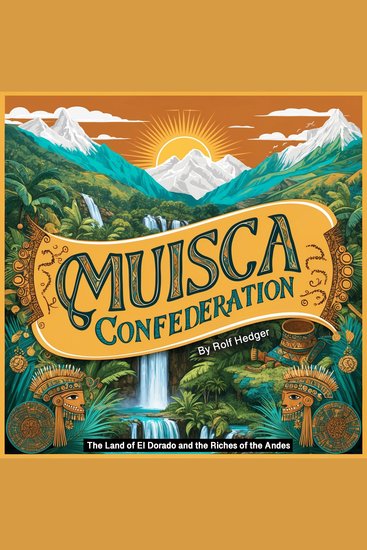
    The Muisca Confederation was one of the most sophisticated political entities in pre-Columbian South America, emerging in the highlands of present-day Colombia. The origins of this powerful society can be traced back to the earliest inhabitants of the Eastern Cordillera of the Andes, a region characterized by fertile valleys, cool mountain climates, and abundant natural resources. Over time, these early settlers developed complex social structures, agricultural techniques, and political institutions that would form the foundation of the Muisca Confederation.  
    The first groups to settle in the high-altitude plateaus of the Andean region arrived thousands of years ago, likely migrating from Central America or other parts of South America. These early inhabitants lived in small, semi-nomadic communities, relying on hunting, fishing, and rudimentary farming. As they adapted to their environment, they developed advanced agricultural methods, cultivating maize, potatoes, quinoa, and other crops suited to the high-altitude terrain. The fertile lands and steady supply of food allowed for population growth, leading to the establishment of permanent settlements. 
    As Muisca society evolved, it became increasingly hierarchical, with distinct roles emerging among its members. The transition from small, scattered villages to organized chiefdoms marked a significant turning point in their history. Power began to concentrate in the hands of local leaders, or caciques, who governed their respective communities. Over time, these leaders expanded their influence, forming alliances and asserting control over larger territories. The most powerful of these rulers eventually became the Zipa of Bacatá and the Zaque of Hunza, the two principal leaders who governed the northern and southern regions of the Muisca Confederation.
    Show book
  • The History of Money – From Barter to Cryptocurrency - How Money Evolved the Rise of Banking and the Future of Digital Currency - cover

    The History of Money – From...

    Dan Barlow

    • 0
    • 0
    • 0
    Money makes the world go round—but where did it come from, and where is it headed? 
    This audiobook takes you through the history of money, uncovering how societies have exchanged value from ancient times to today’s digital age. Discover: 
     ✅ How bartering systems evolved into the first currencies 
     ✅ The rise of gold, silver, and the birth of banking 
     ✅ The impact of paper money, inflation, and economic crises 
     ✅ How credit cards and digital banking transformed global finance 
     ✅ The future of money: cryptocurrency, blockchain, and decentralized finance (DeFi) 
    The History of Money – From Barter to Cryptocurrency is a must-listen for *history lovers, finance enthusiasts, and anyone curious about how money shapes our world.
    Show book