Junte-se a nós em uma viagem ao mundo dos livros!
Adicionar este livro à prateleira
Grey
Deixe um novo comentário Default profile 50px
Grey
Assine para ler o livro completo ou leia as primeiras páginas de graça!
All characters reduced
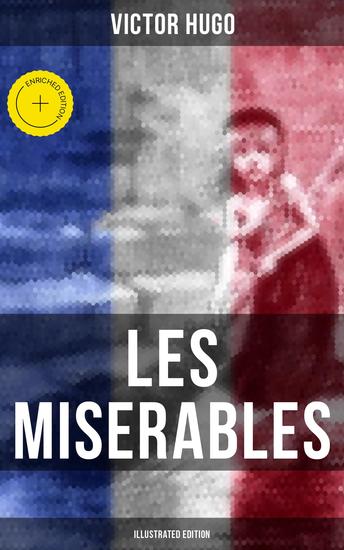
LES MISERABLES (Illustrated Edition) - Enriched edition The Original Hapgood Translation - cover
LER

LES MISERABLES (Illustrated Edition) - Enriched edition The Original Hapgood Translation

Victor Hugo

Editora: Musaicum Books

  • 0
  • 0
  • 0

Sinopse

Victor Hugo's 'Les Miserables (Illustrated Edition)' is a timeless classic that delves into the societal injustices and struggles faced by the impoverished in 19th-century France. The novel masterfully weaves together the lives of various characters, including the protagonist Jean Valjean, to portray themes of redemption, love, and the human spirit. Hugo's rich and evocative writing style, combined with the intricate plot and detailed descriptions of Paris, makes this novel a must-read for literature enthusiasts. The inclusion of illustrations in this edition adds a visual element that enhances the reader's experience and brings the story to life. 'Les Miserables' is considered one of the greatest works of world literature, with its exploration of morality and humanity continuing to resonate with readers today.

In this enriched edition, we have carefully created added value for your reading experience:
- A succinct Introduction situates the work's timeless appeal and themes.
- The Synopsis outlines the central plot, highlighting key developments without spoiling critical twists.
- A detailed Historical Context immerses you in the era's events and influences that shaped the writing.
- An Author Biography reveals milestones in the author's life, illuminating the personal insights behind the text.
- A thorough Analysis dissects symbols, motifs, and character arcs to unearth underlying meanings.
- Reflection questions prompt you to engage personally with the work's messages, connecting them to modern life.
- Hand‐picked Memorable Quotes shine a spotlight on moments of literary brilliance.
- Interactive footnotes clarify unusual references, historical allusions, and archaic phrases for an effortless, more informed read.
Disponível desde: 06/10/2017.
Comprimento de impressão: 2000 páginas.
Outros livros que poderiam interessá-lo

  • The Art of Reality - Seeing Through the Illusion - cover

    The Art of Reality - Seeing...

    Colleen Guenther

    • 0
    • 0
    • 0
    The Art of Reality is a profound exploration into the nature of consciousness, spirituality, and the hidden truths shaping our world. Blending ancient wisdom, quantum physics, and practical insights, author Colleen Guenther guides readers on an empowering path toward awakening their innate power as conscious creators. 
    This book unveils the illusions we've been conditioned to accept—such as societal control, misunderstood history, and limiting beliefs—and shows how to reclaim our inherent divinity. By understanding concepts such as quantum entanglement, holographic reality, and the energetic nature of existence, readers discover how their thoughts, intentions, and emotions actively shape their reality. 
    Written in an accessible and engaging style, Colleen combines her unique perspective as an artist and professional photographer with deep spiritual insights, creating a visually rich and inspiring narrative. The Art of Reality isn't simply about understanding spiritual concepts; it's a practical guide for transforming your life from the inside out. 
    Whether you're new to spiritual awakening or have been on this path for years, this book offers powerful tools, intuitive wisdom, and clear guidance to help you see through the illusions, align with your highest potential, and consciously manifest a reality filled with joy, abundance, and purpose. 
    Ultimately, The Art of Reality is a call to awaken fully—to remember who you truly are and step boldly into a life of authentic freedom and divine expression.
    Ver livro
  • Island Hopping across the Pacific Theater in World War II: The History of America’s Victorious Leapfrogging Strategy against Imperial Japan - cover

    Island Hopping across the...

    Editors Charles River

    • 0
    • 0
    • 0
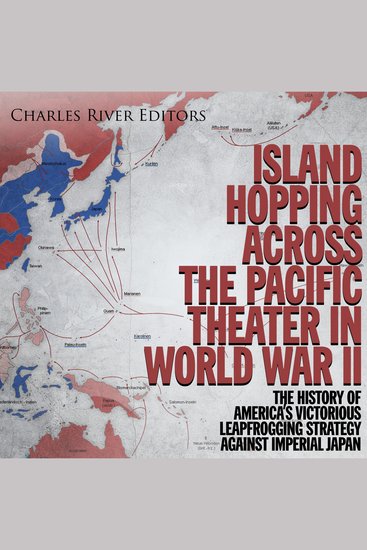
    The waters of the Pacific Ocean – stretching deep blue under the tropical sun, or scourged by typhoons – provided World War II's most far-flung battlefield. Two of the world's premier mid 20th century maritime powers, the United States of American and the Empire of Japan, grappled for supremacy across that vast expanse. 
    By the time the Battle of Midway was over in June 1942, the defeat was so devastating for Japan that it was actually kept secret from all but the highest echelons of the Japanese government. Along with the loss of hundreds of aircraft and over 3,000 men killed, the four Japanese aircraft carriers lost, when compared to America’s one lost carrier, was critical considering America’s huge shipbuilding superiority.  
    By the spring of 1943, American military planners had begun to create a plan to dislodge Japan from east and southeast Asia. To do so, parts of the Philippines were considered main strategic points in the potential Allied attack in the Pacific. The end goal of the Allied plan was an invasion of the Japanese home islands, in which heavy aerial bombardment would precede a ground assault. In order for this to occur, Allied forces would have to occupy areas surrounding Japan, with China adding to Luzon (the largest island in the Philippines) and Formosa (a large island off the coast of China) to create a triangle from which they could launch their bombers. 
    The Allied advance across the Pacific was based on this 1943 plan, with General MacArthur and his forces moving to the north through New Guinea, then Morotai Island, and then to Mindanao, which was the southernmost major island in the Philippines chain. At the same time, Admiral Chester Nimitz sent his fleet through the central Pacific, where they engaged Japanese forces at the Gilbert, Marshall, Marianas and Palau Islands en route to Mindanao.
    Ver livro
  • Death on Ireland's Eye - The Victorian Murder Trial that Scandalised a Nation - cover

    Death on Ireland's Eye - The...

    Dean Ruxton

    • 0
    • 0
    • 0
    A tragic death, a murder trial and a 170-year-old mystery – but what really happened?
    Shortly after Maria Kirwan died in a lonely inlet on Ireland's Eye, it was decided that she had drowned accidentally during a day spent with her husband on the picturesque island. This inquest verdict appeared to conclude the melancholy events that consumed the fishing village of Howth, Co Dublin, in September 1852.
    But not long afterwards, suspicion fell upon Maria's husband, William Burke Kirwan, as whispers of unspeakable cruelty, an evil character and a secret life rattled through the streets of Dublin. Investigations led to William's arrest and trial for murder.
    The story swelled into one of the most bitterly divisive chapters in the dark annals of Irish criminal history. Yet questions remain: Does the evidence stand up? What role did the heavy hand of Victorian moral outrage play? Was William really guilty of murder, or did the ever-present 'moral facts' fill in gaps where hard proof was absent?
    Now, this compelling modern analysis revisits the key evidence, asking sober questions about the facts, half-facts and fantasies buried within the yellowed pages of the Ireland's Eye case files.
    Ver livro
  • Meditations - cover

    Meditations

    Marcus Aurelius

    • 0
    • 0
    • 0
    Meditations is a series of personal writings by Marcus Aurelius, Roman Emperor from 161 to 180 AD, recording his private notes to himself and ideas on Stoic philosophy.Marcus Aurelius wrote the 12 books of the Meditations in Koine Greek as a source for his own guidance and self-improvement. It is possible that large portions of the work were written at Sirmium, where he spent much time planning military campaigns from 170 to 180. Some of it was written while he was positioned at Aquincum on campaign in Pannonia, because internal notes tell us that the first book was written when he was campaigning against the Quadi on the river Granova (modern-day Hron) and the second book was written at Carnuntum.It is unlikely that Marcus Aurelius ever intended the writings to be published and the work has no official title, so "Meditations" is one of several titles commonly assigned to the collection. These writings take the form of quotations varying in length from one sentence to long paragraphs.The Meditations is divided into 12 books that chronicle different periods of Aurelius' life. Each book is not in chronological order and it was written for no one but himself. The style of writing that permeates the text is one that is simplified, straightforward, and perhaps reflecting Aurelius' Stoic perspective on the text. Depending on the English translation, Marcus' style is not viewed as anything regal or belonging to royalty, but rather a man among other men, which allows the reader to relate to his wisdom.
    Ver livro
  • What are we Teaching? Powerful knowledge and a capabilities curriculum - cover

    What are we Teaching? Powerful...

    Richard Bustin

    • 0
    • 1
    • 0
    Written by Richard Bustin, What are we Teaching?Powerful knowledge and a capabilities curriculum offers a fresh perspective on curriculum design, arguing that subjects are key to enabling young people to develop the powerful knowledge needed to flourish in a complex modern world. Moving ideas beyond the 'traditional vs progressive' debates that have dominated education discourse, Richard Bustin challenges the overarching emphasis on exam performance at the expense of the broader benefits of subject knowledge and capabilities such as critical and creative thinking.
    What are we Teaching? explores curriculum debates in relation to the current school climate, considering factors such as knowledge-led education, teaching to the test, and the challenge of teacher retention and recruitment issues. It includes new research involving teachers in real schools engaging with powerful knowledge, and it prompts teachers to evaluate their responsibilities as 'curriculum makers'. The book invites teachers to consider why their subject specialism is important as part of a whole school curriculum vision, and a provides language with which to articulate that.
    Part One introduces the key theories on which the book is based, including different ways of making sense of knowledge, skills and values in the curriculum, powerful knowledge and educational capabilities. What are we Teaching?is research-based, using voices of real teachers who engaged with the question 'what makes your subject powerful knowledge for young people', and Part Two, which focuses on different subject areas, examines these testimonies. The final part offers advice on building a powerful knowledge and capabilities rich curriculum in schools. Each chapter includes a set of reflective questions which can be used as part of ITE training or staff CPD.
    Essential reading for teachers, senior and subject leaders and curriculum coordinators.
    Ver livro
  • Existential Therapy - Finding Meaning in the Chaos of Life - cover

    Existential Therapy - Finding...

    Vivian Westlake

    • 0
    • 0
    • 0
    Existential therapy is a deeply philosophical approach to psychotherapy, grounded in the belief that life’s greatest challenge is navigating its inherent uncertainties while striving to create meaning. At its core, this approach invites individuals to confront the universal dilemmas of existence: freedom, responsibility, isolation, mortality, and the search for purpose. These existential concerns, though often unsettling, are also the catalysts for personal growth and transformation. 
    In a world increasingly defined by chaos, existential therapy offers a path to clarity. It does not seek to provide simple answers or quick solutions but instead fosters a deeper understanding of the self. The process requires embracing the discomfort of life’s unanswered questions and exploring the choices that define who we are. This journey of self-discovery helps clients uncover their authentic values and live in alignment with them, even in the face of life’s inevitable challenges. 
    The roots of existential therapy lie in the existentialist philosophy of thinkers such as Søren Kierkegaard and Friedrich Nietzsche, who emphasized individuality and the importance of living authentically. Later, philosophers like Martin Heidegger and Jean-Paul Sartre explored the intricacies of existence, freedom, and the weight of human choice. These ideas profoundly influenced psychologists like Viktor Frankl, Rollo May, and Irvin Yalom, who brought existential philosophy into the realm of therapeutic practice.
    Ver livro