Rejoignez-nous pour un voyage dans le monde des livres!
Ajouter ce livre à l'électronique
Grey
Ecrivez un nouveau commentaire Default profile 50px
Grey
Abonnez-vous pour lire le livre complet ou lisez les premières pages gratuitement!
All characters reduced
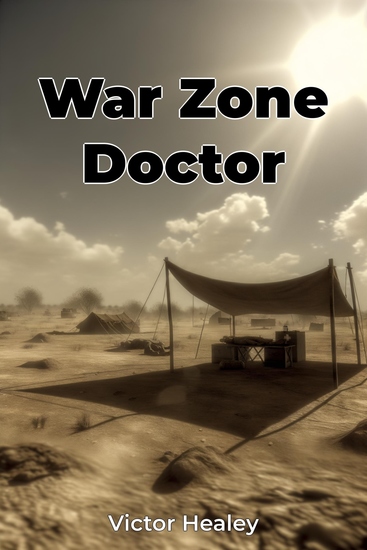
War Zone Doctor - cover

War Zone Doctor

Victor Healey

Traducteur A AI

Maison d'édition: Publifye

  • 0
  • 0
  • 0

Synopsis

War Zone Doctor plunges readers into the harrowing reality of providing healthcare amid modern warfare, where medical ethics collide with the chaos of battle. The book’s central theme explores how doctors and aid workers navigate impossible choices—like prioritizing patients based on survivability rather than urgency—while facing shortages, bombings, and moral ambiguity. Through visceral accounts from conflicts in Syria, Yemen, and Afghanistan, it reveals how war reshapes public health systems, turning hospitals into targets and healers into casualties. One striking insight details how surgeons improvise trauma care in basements during sieges, while another exposes the deliberate targeting of medical facilities, exemplified by the 2016 U.S. bombing of a Doctors Without Borders hospital in Kunduz.

 
The book uniquely blends gripping narratives from frontline medics with sharp analysis of military tactics and humanitarian law. Structured in three sections, it progresses from raw, on-the-ground challenges to systemic critiques of politicized aid and eroded medical neutrality. Authors use declassified reports, satellite imagery, and MSF mission logs to trace correlations between arms shipments and attacks on healthcare—a tactic termed “health as a weapon.” Its interdisciplinary approach bridges military history and public health, offering practical insights for both policymakers and aid workers, such as protocols for trauma-informed care.

 
What sets War Zone Doctor apart is its balance of human stories and data-driven accountability. A chapter dissecting the Kunduz bombing interweaves survivor testimonies with a forensic breakdown of investigative failures, embodying its call to protect medical neutrality. Written in urgent yet accessible prose, the book serves as both a testament to frontline medics’ resilience and a demand for global action—reminding us that even in war, humanity must not surrender.
Disponible depuis: 25/01/2025.
Longueur d'impression: 60 pages.

D'autres livres qui pourraient vous intéresser

  • Teamwork for Business Analysts - cover

    Teamwork for Business Analysts

    Tom Henricksen

    • 0
    • 0
    • 0
    Business Analysis can be the linchpin of exceptional teams. Collaborating with their team members with qualities of great team players. They can influence their peers and bring unity. Help your team achieve as a teamwork all-star!Learn the qualities of great team playersBuild influence and credibilityCreate team normsWork together to foster collaboration
    Voir livre
  • A Spectre Haunting - cover

    A Spectre Haunting

    China Miéville

    • 0
    • 0
    • 0
    In 1848, THE COMMUNIST MANIFESTO was published by two émigrés from Germany. Marx and Engels' apocalyptic vision of an insatiable system that penetrates every corner of the world reduces every relationship to that of profit, and burst asunder the old forms of production and of politics. It is still a recognisable picture of our world – the vampiric energy of the system being once again highly contentious. 
     
    The Manifesto is a text that shows no sign of fading into antiquarian obscurity. Its ideas animate in different ways the work of writers like Yanis Varoufakis, Adam Tooze, Naomi Klein and the journalist Owen Jones. 
     
    China Mieville is not a writer who has been hemmed in by conventional notions of expertise or genre, and this is a strikingly imaginative take on Marx and what his most haunting book has to say to us today.
    Voir livre
  • Democracy in America - cover

    Democracy in America

    Alexis de Tocqueville, Harvey C....

    • 0
    • 0
    • 0
    Alexis de Tocqueville (1805-59) came to America in 1831 to see what a great republic was like. What struck him most was the country’s equality of conditions, its democracy. The book he wrote on his return to France, Democracy in America, is both the best ever written on democracy and the best ever written on America. It remains the most often quoted book about the United States, not only because it has something to interest and please everyone, but also because it has something to teach everyone. 
      
    When it was published in 2000, Harvey Mansfield and Delba Winthrop’s new translation of Democracy in America—only the third since the original two-volume work was published in 1835 and 1840—was lauded in all quarters as the finest and most definitive edition of Tocqueville’s classic thus far. Mansfield and Winthrop have restored the nuances of Tocqueville’s language, with the expressed goal “to convey Tocqueville’s thought as he held it rather than to restate it in comparable terms of today.” The result is a translation with minimal interpretation, but with impeccable annotations of unfamiliar references and a masterful introduction placing the work and its author in the broader contexts of political philosophy and statesmanship.
    Voir livre
  • Cartel Nation - How Mexico's Drug Empires Conquered Power Politics and Culture - cover

    Cartel Nation - How Mexico's...

    Davis Truman

    • 0
    • 0
    • 0
    Power. Money. Blood. Influence. 
    What began as smuggling routes through the desert has evolved into one of the most powerful underground empires on Earth — a parallel nation built on fear, loyalty, and staggering wealth. 
    In Cartel Nation, readers are taken deep inside the hidden machinery of Mexico’s drug cartels — a world where criminal networks rival governments, warlords command armies, and pop culture glorifies the very violence that terrorizes entire regions. Through gripping storytelling and meticulous investigation, this book unveils how cartels moved from the shadows into the center of politics, business, and everyday life. 
    Discover: 
    •	How Mexico’s cartels grew from small-time traffickers into transnational corporations of crime. 
    •	The secret alliances between drug lords, politicians, police, and billionaires. 
    •	How narco culture — from music and film to religion and fashion — turned the cartels into global icons. 
    •	The brutal wars fought for territory, power, and legitimacy — and why they can’t simply be “won.” 
    From the dusty streets of Sinaloa to the halls of power in Mexico City, Cartel Nation traces a chilling and fascinating rise — a story of corruption, resilience, and the dark side of globalization. 
    Suppose you’re fascinated by true crime, geopolitics, or the human cost of power. In that case, this book will leave you stunned—and unable to look away. 
    Perfect for fans of Don Winslow, Ioan Grillo, and Netflix’s Narcos, Cartel Nation reveals the truth behind the myth — and why the cartel era is far from over.
    Voir livre
  • Fat Off Fat On - A Big Bitch Manifesto - cover

    Fat Off Fat On - A Big Bitch...

    Clarkisha Kent

    • 0
    • 0
    • 0
    In this disarming and candid memoir, cultural critic Clarkisha Kent unpacks the kind of compounded problems you face when you’re a fat, Black, queer woman in a society obsessed with heteronormativity. 
     
    There was no easy way for Kent to navigate personal discovery and self-love. As a dark-skinned, first-generation American facing a myriad of mental health issues and intergenerational trauma, at times Kent’s body felt like a cosmic punishment. In the face of body dysmorphia, homophobia, anti-Blackness, and respectability politics, the pursuit of “high self-esteem” seemed oxymoronic. 
     
    Fat Off, Fat On: A Big Bitch Manifesto is a humorous, at times tragic, memoir that follows Kent on her journey to realizing that her body is a gift to be grown into, that sometimes family doesn’t always mean home, and how even ill-fated bisexual romances could free her from gender essentialism. Perfect for readers of Keah Brown’s The Pretty One, Alida Nugent’s You Don’t Have to Like Me, and Stephanie Yeboah’s Fattily Ever After, Kent’s debut explores her own lived experiences to illuminate how fatphobia intertwines with other oppressions. It stresses the importance of addressing the violence scored upon our minds and our bodies, and how we might begin the difficult—but joyful—work of setting ourselves free.
    Voir livre
  • City of Dignity - Christianity Liberalism and the Making of Global Los Angeles - cover

    City of Dignity - Christianity...

    Sean T. Dempsey

    • 0
    • 0
    • 0
    City of Dignity illuminates how liberal Protestants quietly, yet indelibly, shaped the progressive ethics of postwar Los Angeles. 
      
    Contemporary Los Angeles is commonly seen as an American bulwark of progressive secular politics, a place that values immigration, equity, diversity, and human rights. But what accounts for the city’s embrace of such staunchly liberal values, which are more hotly contested in other parts of the country? The answer, Sean Dempsey reveals, lies not with those frequent targets of credit and blame—Democrats in Hollywood—but instead with liberal Protestants and other steadfast religious organizations of the postwar era. 
     
    As the Religious Right movement emerged in the 1970s, progressive religious activists quietly began promoting an ethical vision that made waves worldwide but saw the largest impact in its place of origin: metropolitan Los Angeles. At the center of this vision lay the concept of human dignity—entwining the integral importance of political and expressive freedom with the moral sanctity of the human condition—which suffused all of the political values that arose from it, whether tolerance, diversity, or equality of opportunity. The work of these religious organizations birthed such phenomena as the Sanctuary Movement—which provided safe haven for refugees fleeing conflict-torn Central America—and advocacy for the homeless, both of which became increasingly fraught issues amid the rising tides of neoliberalism and conservatism. City of Dignity explores how these interwoven spiritual and theological strands found common ground—and made common impacts—in the humanitarian ecosystem of one of America’s largest and most dynamic metro areas.
    Voir livre