Join us on a literary world trip!
Add this book to bookshelf
Grey
Write a new comment Default profile 50px
Grey
Subscribe to read the full book or read the first pages for free!
All characters reduced
Jazz Radio Legacy - cover

Jazz Radio Legacy

Vera Langford

Translator A AI

Publisher: Publifye

  • 0
  • 0
  • 0

Summary

"Jazz Radio Legacy" explores the vital, yet often overlooked, connection between jazz music and radio broadcasting. This book highlights how radio served as a crucial platform for disseminating jazz, shaping its evolution and securing its place in American cultural history. Readers will discover how radio not only amplified the sounds of jazz across geographical boundaries but also fostered a sense of community among listeners, critics, and performers. For example, the book illuminates how historically Black colleges and universities utilized radio to champion this emerging art form.

 
The book progresses chronologically, beginning with the parallel emergence of jazz and radio in the early 20th century. It examines the impact of network radio during the Swing Era and the role of independent stations in preserving bebop. By drawing on archival recordings, oral histories, and industry data, "Jazz Radio Legacy" offers a comprehensive and engaging look at the symbiotic relationship between jazz and radio, highlighting its enduring legacy in the digital age.
Available since: 03/31/2025.
Print length: 60 pages.

Other books that might interest you

  • SAT Success: Unlock Instant Mastery with Proven Strategies - "Unlock SAT success! Access captivating audio lessons filled with proven strategies for effortless mastery" - cover

    SAT Success: Unlock Instant...

    Ronan Buxted

    • 0
    • 0
    • 0
    SAT Success: Unlock Instant Mastery with Proven Strategies   
    Are you eager to advance your education and solidify your knowledge by acing the SAT?  
    Looking for an all-in-one guide that has everything you need to excel in your SAT preparation? 
    Your search ends here! 
    This guide is your ultimate resource for enhancing your understanding, honing your skills, and engaging in practical exercises. With this, you’re poised for success. 
    Updated for the latest SAT exam structure. 
    Key features of this comprehensive guide: 
    - In-depth insights into effective SAT preparation techniques   
    - Thorough explanations of essential SAT concepts   
    - Proven strategies for exam preparation and tackling challenging questions   
    Our guide stands out for its extensive coverage, crucial for your exam success. Concepts are explored in detail rather than merely touched upon. 
    Please note that this guide is not affiliated with any official SAT organization and is a purely independent resource aimed at your benefit. 
    Crafted with a straightforward structure and accessible language, our SAT Exam Guide ensures seamless transitions between key themes. Bid farewell to complicated terminology and embrace clear, accurate, and informative content.  
    So, why hesitate? Hit the BUY NOW button, secure your guide, and embark on your journey toward SAT success! 
    Transform your SAT preparation today and unlock your potential!
    Show book
  • The Advantage of Other - A Leader’s Guide to Building an Equitable Dynamic and Productive Workplace - cover

    The Advantage of Other - A...

    Nancy Geenen

    • 0
    • 0
    • 0
    The Advantage of Other is a practical, personable guide for anyone who has the right intentions around Diversity, Equity and Inclusion, but doesn’t have the tools they need to create a long-term, sustainable cultural shift in their company culture.If you are a little intimidated by the concepts of Diversity, Equity and Inclusion, this book will teach you everything you need to know about transforming your workplace from the inside out.The chapters will touch on the five pillars of an organization: People, Presence, Pipeline, Partners, and Profits. Each chapter includes personal stories and struggles, clear goals and objects, and actionable objectives and recommendations for personal and professional transformation. Written in a clear, personable and easy-to-understand style, this book will take you step by step through the process of creating a culture of inclusivity to build a high performing team.
    Show book
  • Mercy Brown Incident The: The Controversial History of the Search for Vampires in 19th Century Rhode Island - cover

    Mercy Brown Incident The: The...

    Editors Charles River

    • 0
    • 0
    • 0
    Today the Salem Witch Trials are often remembered as being a relic of a superstitious past, and Salem has transformed itself into a tourist haven and Halloween destination by capitalizing off the trials, which remain well known across America. However, most people have forgotten that New England had a “vampire” scare in the 19th century, when superstitious New Englanders looked to lore to explain tuberculosis, a devastating illness for which they had no available answers.  
    	The last and most famous event in New England’s hunt for vampires came near the end of the 19th century after Mercy Brown died of consumption on January 19, 1892 and her body was exhumed on March 17, 1892. Suspicion fell on her as being a possible vampire, and digging her coffin up was an attempt to determine if she was, in fact, a vampire. Her mother and sister had died before her, also from consumption, and when her brother Eddie caught the disease, he had dreams about Mercy. He also had the feeling of a heavy weight sitting on his chest at night. 
    	After her coffin was opened, the remains were examined, and the relatively good condition of Mercy Brown’s body indicated to her family and neighbors that she was indeed a vampire, and that she was responsible for her brother’s illness. While people who think of vampires today conjure up images of Dracula, in 19th century America, vampires were believed to be tied to tuberculosis, which killed millions of people. American beliefs about vampires connected victims who had died of consumption with living family members who came down with the disease, which was quite common because outbreaks of consumption frequently decimated whole families, striking down previously healthy brothers and sisters within a year or two.
    Show book
  • Travel Adventures of Harvey & Smudge The - In Dublin's Fair City - cover

    Travel Adventures of Harvey &...

    Martin Whelan

    • 0
    • 0
    • 0
    The Travel Adventures of Harvey & Smudge - In Dublin's Fair City, is part of a series of Audiobooks which follow two dogs as they visit Cities around the world. The stories are full of facts and amusing content, with the strap line 'Laugh & Learn through the Travel Adventures of Harvey & Smudge.' In Dublin's Fair City finds the friends visiting the famous Guinness Factory, the site of the Irish uprising, Oscar Wilde's school and the Garden of Remembrance, whilst learning to perform the art of Irish Dancing! Fans of the Audiobooks say they love the way the facts about the cities are interwoven into a funny story, with Harvey always getting into trouble and Smudge always trying to be the calming influence. Come along and join them on their crazy adventures.
    Show book
  • A City Within One Building - Exploring the Unique Architecture of Urban Life - cover

    A City Within One Building -...

    John Harpoon

    • 0
    • 0
    • 0
    In the heart of urban landscapes, the idea of a "city within one building" has evolved from a futuristic concept to a tangible reality. These monumental structures encapsulate the essence of urban life, redefining the way we live, work, and interact within confined yet dynamic environments. At their core, they embody the idea of vertical urbanism—a vision that seeks to concentrate the diversity and vibrancy of a city into a single architectural entity. 
    The origins of this vision can be traced to the pressures of urbanization and the relentless march of technological innovation. As cities expanded horizontally, they encountered spatial limitations, environmental challenges, and infrastructural strain. The solution lay not outward, but upward. Vertical urbanism emerged as a response to these challenges, combining architectural ingenuity with a commitment to sustainability. The result is a new typology of buildings that integrate residential, commercial, recreational, and even cultural spaces into a cohesive, self-contained ecosystem. 
    One of the most compelling aspects of these megastructures is their ability to transform our perception of space and connectivity. Traditional cities rely on sprawling layouts that separate different functions—housing, offices, schools, and leisure activities are often miles apart. By contrast, a city within a building integrates these elements into a seamless whole. Residents can live, work, and play without stepping outside, reducing reliance on transportation and fostering a sense of community within the structure’s walls.
    Show book
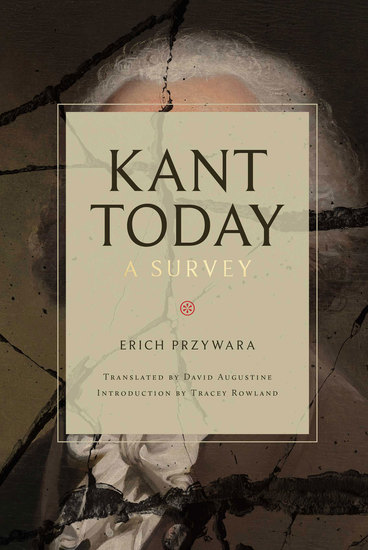
  • Kant Today - A Survey - cover

    Kant Today - A Survey

    Erich Przywara

    • 0
    • 0
    • 0
    In Kant Today: A Survey, Erich Przywara explores the enduring impact of the tensions inherent in Immanuel Kant’s thought on continental philosophy over nearly a century and a half. Drawing parallels to the efforts at synthesis of Thomas Aquinas, Przywara presents Kant as a thinker striving to reconcile disparate currents of contemporary thought. While Aquinas fused neo-Platonic Augustinian philosophy with the neo-Aristotelianism of the Parisian Arts Faculty, Kant sought to harmonize continental idealism with the skepticism and empiricism exemplified by a British thinker like David Hume.   Aquinas’s synthesis maintained coherence due to his reliance on the analogia entis. In contrast, Kant’s synthesis lacked such a unifying principle, leading to the proliferation of philosophical antitheses reverberating throughout nineteenth- and early-twentieth-century Europe. Kant Today chronicles the aftermath of Kant’s tumultuous synthesis and suggests that the resolution may lie in a thinker capable of uniting Augustine’s fervent pursuit of God with Aquinas’s distinctive epistemological equilibrium—namely, John Henry Newman.  
    Show book