Join us on a literary world trip!
Add this book to bookshelf
Grey
Write a new comment Default profile 50px
Grey
Subscribe to read the full book or read the first pages for free!
All characters reduced
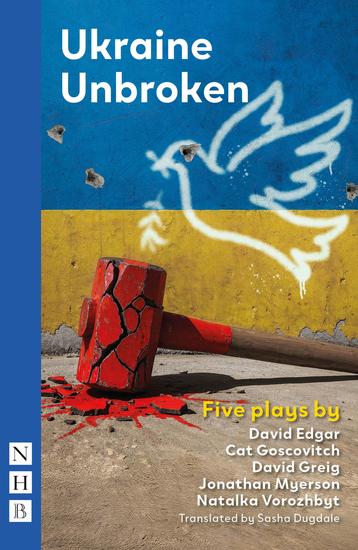
Ukraine Unbroken - Five Plays - cover

Ukraine Unbroken - Five Plays

Various Various

Publisher: Nick Hern Books

  • 0
  • 0
  • 0

Summary

Charting twelve turbulent years of modern Ukrainian history, from the Maidan protests of 2014 to Russia's full-scale invasion in 2022 and beyond, Ukraine Unbroken is a powerful cycle of short plays about courage, truth and survival in the face of an existential threat.
Across five gripping plays by some of today's most acclaimed British and Ukrainian writers, this volume explores the resistance and resilience of a nation determined to remain free.
Always by Jonathan Myerson depicts a married couple held hostage in a hotel in 2014 as their son protests in Maidan Square below.
Five Day War by David Edgar takes a darkly comic and sinister look at the ambition and delusion of Russia's 2022 'Special Military Operation', the invasion that was 'not an invasion'.
Three Mates by Natalka Vorozhbyt, translated by Sasha Dugdale, explores the shame of survival in a darkly humorous confession from a Ukrainian man hiding from conscription.
Wretched Things by David Greig tells the story of Ukrainian front-line troops who have captured a wounded soldier and must decide whether to risk their own lives to save his.
Taken by Cat Goscovitch confronts the harrowing reality of the twenty thousand Ukrainian children stolen by Russia, following one mother's search for her daughter.
This collection includes a foreword from Nicolas Kent, who conceived and directed the project at Arcola Theatre, London, in 2026. He produced and directed the Olivier Award-nominated play cycle The Great Game – Afghanistan at the Tricycle Theatre, London, where he was Artistic Director.
Available since: 03/12/2026.
Print length: 128 pages.

Other books that might interest you

  • Yellow Rain - Poems - cover

    Yellow Rain - Poems

    Mai Der Vang

    • 0
    • 0
    • 0
    In this staggering work of documentary and poetry, Mai Der Vang reopens a wrongdoing that deserves a new reckoning. As the US abandoned them at the end of the Vietnam War, many Hmong refugees recounted stories of a mysterious substance that fell from planes during their escape from Laos in the mid-1970s. This substance, known as "yellow rain," caused severe illnesses and thousands of deaths. These reports prompted an investigation into allegations that a chemical biological weapon had been used against the Hmong in breach of international treaties. A Cold War scandal erupted, wrapped in partisan debate around chemical arms development versus control. American scientists argued that yellow rain was the feces of honeybees defecating en masse—still held as the widely accepted explanation. The truth of what happened to the Hmong, to those who experienced and suffered yellow rain, has been ignored and discredited. 


    Integrating archival research and declassified documents, Vang calls out the erasure of a history, the silencing of a people who at the time lacked the capacity and resources to defend and represent themselves. In poems that sing and lament, that contend and question, Vang restores a vital narrative in danger of being lost, and brilliantly explores what it means to have access to the truth and how marginalized groups are often forbidden that access.
    Show book
  • The Sugar Wife - cover

    The Sugar Wife

    Elizabeth Kuti

    • 0
    • 0
    • 0
    'We choose the world we live in. We make it, day by day...'
    Dublin, 1850. The delicate balance at the heart of an affluent couple's marriage and family business is challenged when two visitors – a former enslaved woman and her emancipator – come to Ireland to speak to the public about trade, money and the abolition of slavery.
    Exploring the dark side of global commodities, Elizabeth Kuti's's play The Sugar Wife offers an engrossing examination of sexual politics and political morality.
    The play won the Susan Smith Blackburn Prize in 2006. It was first produced by Rough Magic, and performed at Project Arts Centre, Dublin, in 2005, before transferring to Soho Theatre, London. It was revived, in the version published here, at the Abbey Theatre, Dublin, in 2024, directed by Annabelle Comyn.
    Show book
  • Phantompains - cover

    Phantompains

    Therese Estacion

    • 0
    • 0
    • 0
    Therese Estacion survived a rare infection that nearly killed her, but not without losing both her legs below the knees, several fingers, and reproductive organs. Phantompains is a visceral, imaginative collection exploring disability, grief and life by interweaving stark memories with dreamlike surrealism.
    Taking inspiration from Filipino horror and folk tales, Estacion incorporates some Visayan language into her work, telling stories of mermen, gnomes, and ogres that haunt childhood stories of the Philippines and, then, imaginings in her hospital room, where she spent months recovering after her operations.
    Estacion says she wrote these poems out of necessity: an essential task to deal with the trauma of hospitalization and what followed. Now, they are demonstrations of the power of our imaginations to provide catharsis, preserve memory, rebel and even to find self-love.
    Show book
  • Far Out is Doom: A Sacred Epic - cover

    Far Out is Doom: A Sacred Epic

    Simon Pole

    • 0
    • 0
    • 0
    Reaching higher than the Tower of Babel, shining brighter than the Golden Calf, such is the idol of the future man will raise to worship. A rocketship of immense size and power, the culmination of the best efforts earth has to offer. By compulsion or chicanery, all have been forced to build it. And all will be changed by the Apocalypse its fiery crash from orbit ushers in... 
    In the Wasteland, where ignorant armies continue to fight, a small community is spared, eking out a meagre existence amidst the peril and threat. Always on the edge of disaster, they persevere in hope, with skills honed in the old world. After all, had not terrifying angels, visiting out of the dust, promised all would soon change again in the blink of eye? But, the young cannot wait, and a daughter of the tribe takes matters into her own hands... 
    The journey of man is the journey of earth, for all was made for us, and for us to destroy. And it is not just some men, but all who must choose, what is to be their highest value, the Ultimate. Will it be the rocket, in orbit high above, or what all men can share in equally: the love which uplifts every hand, every heart, and every soul it touches. Man's enemy might tempt us to lies and idols, but in the end we learn he who endures will be saved. 
    Bio 
    His mind corrupted by childhood exposure to horror movie matinees, but equally enthralled by the atmosphere of old churches, Simon Pole writes cosmic poetry from the location of Kingsville, Ontario. A graduate of Harvard University, Simon has continued his studies of what is hidden in the dark. Writing is also in his blood, being the great-great-grandson of early Canadian poet Susie Drury.
    Show book
  • The Raven - cover

    The Raven

    Edgar Allan Poe

    • 0
    • 0
    • 0
    "Quoth the Raven, 'Nevermore.'"
    
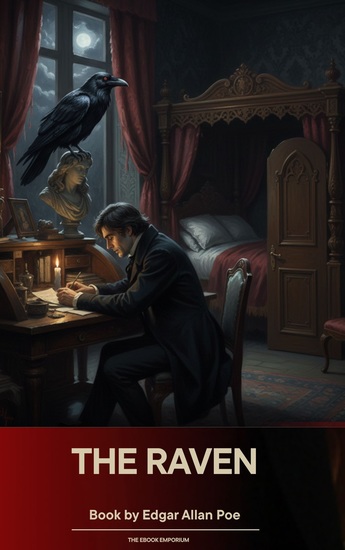
    On a "bleak December" midnight, a weary student seeks refuge from his sorrow in ancient books, only to be interrupted by a mysterious tapping at his chamber door. What follows is a dark, psychological tug-of-war between a man paralyzed by the loss of his beloved Lenore and a "stately Raven" that perches atop a bust of Pallas. Through hypnotic rhythm and internal rhyme, Poe captures the precise moment when melancholy turns into incurable despair. The bird's singular, repetitive refrain becomes a mirror for the narrator's own self-torture, transforming a simple midnight visit into a timeless symbol of the human struggle with the finality of death.
    
    Poe famously wrote an essay, "The Philosophy of Composition," detailing how he meticulously crafted this poem to achieve a "unity of effect." Every element, from the choice of the raven as a "bird of ill omen" to the trochaic octameter of the verses, was designed to build a crescendo of dread.
    
    The Raven perches upon the bust of Pallas Athena (the goddess of wisdom), symbolizing the triumph of irrational grief over reason. By the poem's end, the narrator's soul is trapped within the shadow of the bird, signifying that for some types of grief, there is no escape and no "balm in Gilead."
    
    The Raven made Poe a household name almost overnight. Its musicality makes it one of the most effective pieces for oral recitation, while its psychological depth continues to fascinate scholars and horror fans alike. It is the definitive expression of the "Dark Romantic" movement—a beautiful, terrifying look at a heart that refuses to heal.
    
    Open the door to the shadows. Purchase "The Raven" today.
    Show book
  • Top 10 Poets The - The 20th Century - The Men - Five poems each from some of the best male poets born in the 20th Century - cover

    Top 10 Poets The - The 20th...

    Ezra Pound

    • 0
    • 0
    • 0
    The language of Poetry is an art that most of us attempt at some point in our lives.  Although its commonplace exposure has been somewhat marginalised in today’s often fast-paced lives we all recognise good verse that can empathise with our thoughts or open us up to experience new things in new ways, to better understand and to enjoy the many strands of our lives. 
    But finding a starting point can be overwhelming, even off-putting, so in this series we offer up our Top 10 classic poets, who brim with talent and verse, on a range of subjects and themes that we can all enjoy. 
    In this Century American art and culture sweeps across the world.  Its poets gain both an audience and acclaim as they influence others and boldly explore new ways and new forms to use their wise words for the imagination of verse.
    Show book