Join us on a literary world trip!
Add this book to bookshelf
Grey
Write a new comment Default profile 50px
Grey
Subscribe to read the full book or read the first pages for free!
All characters reduced
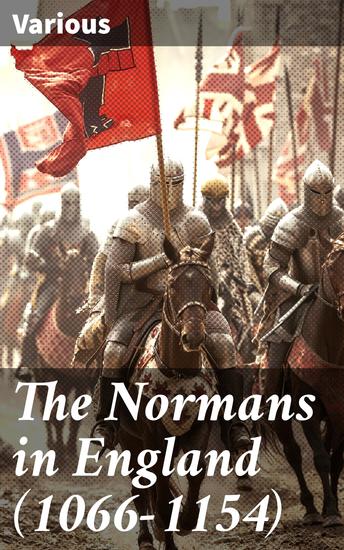
The Normans in England (1066-1154) - Examining the Norman Conquest and Its Lasting Impact on Medieval England - cover

The Normans in England (1066-1154) - Examining the Norman Conquest and Its Lasting Impact on Medieval England

Various Various

Publisher: Good Press

  • 0
  • 0
  • 0

Summary

In "The Normans in England (1066-1154)", a collective of esteemed historians delves into the transformative impact of Norman rule on English society following the pivotal events of the 1066 conquest. This meticulously researched volume not only chronicles the political upheaval and land redistribution that characterized the period but also employs a narrative style akin to that of medieval chronicles, giving voice to the lived experiences of various social strata. The work paints a vivid picture of the blend of cultures as the Normans imposed their governance, architecture, and feudal systems upon the English landscape, thereby reshaping the identity of the nation. The contributors to this compilation are well-established scholars of medieval history, each bringing a wealth of knowledge and unique perspectives that inform this critical examination of the Norman influence. Their scholarly rigor is grounded in extensive research, drawing upon primary sources, archaeological findings, and previous historiographical debates. This collective endeavor reflects a deep engagement with the complexities of the era, as the authors seek to illuminate the often-overlooked nuances of Norman administration and its ramifications for future generations. For anyone intrigued by the evolution of England's cultural and political heritage, this book serves as an essential resource. Its accessible prose and in-depth analysis cater to both novices and seasoned historians, making it an invaluable addition to any historical library. Readers will gain profound insights into how the Norman presence shaped medieval England, paving the way for subsequent developments in British history.
Available since: 10/12/2023.
Print length: 114 pages.

Other books that might interest you

  • Social Science - A Very Short Introduction - cover

    Social Science - A Very Short...

    Alexander Betts

    • 0
    • 0
    • 0
    Social science is the study of human behavior. It offers the tools to understand and explain people's choices and actions, and how they live in communities. With insights from social science, organizations and individuals may be persuaded to change their behavior, making a difference in addressing societal challenges. Social science can offer us the answers to key questions, such as why do some people gamble, eat unhealthy foods, or hold racist beliefs? How do families allocate household tasks, raise children, or manage grief? How do companies weigh profit against sustainability, decide to invest, or adopt policies to address unequal pay? 


    This Very Short Introduction offers an overview of social science, explaining how methods and theory from different disciplines can be applied and combined to address major global challenges. It aims to equip students, scholars, and practitioners to analyze, interpret, and undertake social science research. Drawing upon inspiring examples, it shows how social scientists can have real-world impact and change the world for the better. It unpacks cutting-edge themes such as behavioral science, human data science, and the ways in which social science can work collaboratively with the natural sciences and humanities. It offers a vision for the future of social science that is interdisciplinary, inclusive, and impactful.
    Show book
  • The Great Russian Famine of 1601-1603 - Causes and Consequences - cover

    The Great Russian Famine of...

    Sarah Willards

    • 0
    • 0
    • 0
    The Great Russian Famine of 1601-1603 was one of the most catastrophic events in Russian history, causing widespread death, social instability, and economic distress. This famine occurred during a period of political turmoil, just after the death of Tsar Ivan the Terrible and amid the struggle for the Russian throne. The famine’s impact was felt across Russia, particularly in the central and southern regions, and it highlighted both the fragility of the agrarian economy and the vulnerability of the Russian people to climatic and political disruptions. 
    The context of the famine is crucial to understanding its devastating effects. In the late 16th century, Russia was already experiencing significant strain, including the collapse of the feudal system, a declining central government, and the outbreak of the Time of Troubles, a series of civil wars and foreign invasions. The Russian agricultural system, heavily dependent on the success of yearly harvests, was not equipped to deal with the combination of extreme weather, crop failure, and a lack of effective governance. 
    The famine itself was primarily caused by a series of poor harvests, which were exacerbated by severe weather conditions, including droughts and unseasonably cold winters. The summer of 1601 saw a significant drought, which devastated crops, and the following winter brought freezing temperatures that further hindered the ability to cultivate food. As a result, grain production plummeted, and prices soared, making food increasingly inaccessible to the general population.
    Show book
  • The Principles of Masonic Law - cover

    The Principles of Masonic Law

    Albert G. Mackey

    • 0
    • 0
    • 0
    "The Principles of Masonic Law" by Albert G. Mackey is a foundational text that delves into the legal framework and traditions governing Freemasonry. Originally published in 1856, this work explores the constitutional laws, customs, and landmarks that define Masonic governance and practice. Mackey, a respected Masonic scholar, offers a detailed analysis of the rights and duties of Masonic lodges and individual members, the structure and authority of Grand Lodges, and the procedures for addressing Masonic offenses. Written in a clear and systematic style, this book remains a vital resource for anyone interested in Masonic law, history, and organizational principles, providing timeless insights into the fraternity's governance and ethical standards.
    Show book
  • The Treasure of the Humble - cover

    The Treasure of the Humble

    Maurice Maeterlinck

    • 0
    • 0
    • 0
    "The Treasure of the Humble" by Maurice Maeterlinck delves into the profound wisdom found in simple, everyday experiences. Exploring the hidden depths of life, Maeterlinck reflects on the beauty within the ordinary, inviting readers to discover the richness concealed in the humble aspects of existence. Through poetic prose, he unveils the treasures that await those who pause to contemplate the quiet marvels of the world around them. This contemplative work invites readers to appreciate the often overlooked and find meaning in the seemingly trivial moments of life. Read in English, unabridged.
    Show book
  • The Invisible Machine - The Startling Truth About Trauma and the Scientific Breakthrough That Can Transform Your Life - cover

    The Invisible Machine - The...

    MD Eugene Lipov, Jamie Mustard,...

    • 0
    • 0
    • 0
    Despite its prevalence, post-traumatic stress, PTSD, is often seen as an unbeatable lifelong mental disorder. Leading trauma doctors and neuroscientists now understand that the result of trauma is not a disorder, but rather a physical injury to the body—invisible but tangible, and most importantly, treatable. 


    Meet Dr. Eugene Lipov. His research and partnerships have led to an amazing discovery that all trauma has at its root a single piece of human hardware: the stellate ganglion. The symptoms of post-traumatic stress are the same for all of us, whether from childhood poverty or abandonment, the ravages of war, or the brutality of sexual assault. Dr. Lipov's pioneering procedure appears to treat injury to the stellate ganglion, relieving even the worst symptoms of PTSD—irritability, hypervigilance, insomnia, and more—in a fifteen-minute treatment. 


    Weaving hard science with moving human stories, The Invisible Machine reveals how this treatment was developed. It also tells the incredible story of the unlikely team, including the doctor, an artist, Special Forces leadership, and a sheriff, who are working together to change our understanding of post-traumatic stress and why it matters to society.
    Show book
  • The Murder Business - How the Media Turns Crime into Entertainment and Subverts Justice - cover

    The Murder Business - How the...

    Mark Fuhrman

    • 0
    • 0
    • 0
    Media and law enforcement work at cross-purposes. Law enforcement wants to solve a case as fast as possible and put the guilty behind bars. The media wants a case to drag on as long as humanly possible and do all they can to extricate every last bit of drama—drop by bloody drop—in order to hold the attention of the millions of viewers who have gotten hooked. Law enforcement must abide by rules. The media make their own rules, or break them, or find loopholes to work around them.
    If people knew how it's done—how the media seduce, buy, bribe, and corrupt, like an inevitable, malignant cancer on a murder investigation—they might be too sickened to buy the next ticket to the carnival. But as Mark Fuhrman relates in The Murder Business, a heinous crime can produce many victims, and high-profile murders can hurt innocent people who get burned by the spotlight, whether or not they sought it out themselves. This searing indictment of the media shows how the criminal justice system can be manipulated by money, power, politics, fame—and all too often, ratings.
    Show book