Join us on a literary world trip!
Add this book to bookshelf
Grey
Write a new comment Default profile 50px
Grey
Subscribe to read the full book or read the first pages for free!
All characters reduced
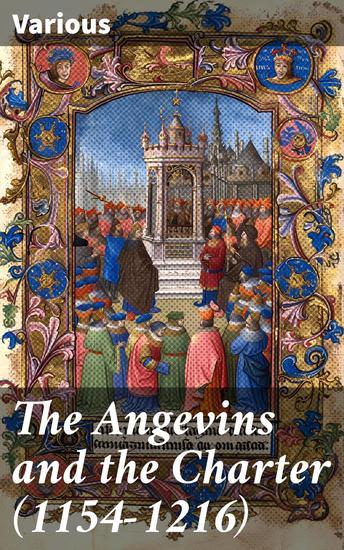
The Angevins and the Charter (1154-1216) - The Beginning of English Law the Invasion of Ireland and the Crusades - cover

The Angevins and the Charter (1154-1216) - The Beginning of English Law the Invasion of Ireland and the Crusades

Various Various

Publisher: Good Press

  • 0
  • 0
  • 0

Summary

The Angevins and the Charter (1154-1216) is a seminal exploration of the tumultuous period that marked the rise of the Plantagenet dynasty in England. The text delves into the nuances of governance, power struggles, and constitutional developments, particularly focusing on the evolution of the Charter. It utilizes a rich array of primary sources, innovative literary techniques, and rigorous historiographical engagement, positioning itself within the broader context of medieval political theory and practice. The work illuminates how the Angevins shaped the legal and political landscape of England, culminating in pivotal moments that laid the groundwork for modern governance. The book is a collaborative effort by various eminent historians, whose collective expertise in Anglo-Norman studies sheds light on the complexities surrounding the Angevins'Äô rule. Their varied backgrounds and research interests converge to reveal the multifaceted nature of governance during a transformative era. The authors'Äô meticulous research is evident in their depth of analysis and commitment to understanding the cultural ramifications of the Charter, informed by their own scholarly pursuits and dedication to medieval history. This book is an indispensable resource for students, scholars, and general readers interested in medieval history and constitutional evolution. It not only enhances understanding of the Angevins' influence on English law but also invites critical reflection on the enduring legacies of governance that continue to resonate today.
Available since: 10/26/2023.
Print length: 104 pages.

Other books that might interest you

  • LCSW Simplified - Licensed Clinical Social Worker Exam Prep 2024-2025: Ace the LCSW Test with Confidence on Your First Attempt - cover

    LCSW Simplified - Licensed...

    Owen Harrington

    • 0
    • 0
    • 0
    ⭐⭐ Simplified Guide & Explanations Included ⭐⭐ 
    Are you aiming to advance in your career and strengthen your knowledge by successfully passing the LCSW Exam 2024-2025? 
    Searching for an all-encompassing guide that provides everything you need to conquer the LCSW Exam 2024-2025? 
    Your search ends here! 
    This guide is your ultimate companion for deepening your understanding, applying your skills, and engaging in hands-on exercises. With this, you're geared for success. 
    Updated for the LCSW 2024-2025 Exam Structure. 
    Key features of this enriched guide: 
    - Profound insights about the LCSW Exam 2024-2025 Certification 
    - Detailed explanation of the Licensed Clinical Social Worker (LCSW) 
    - Fruitful strategies for exam preparation and tackling 
    Our guide distinguishes itself through comprehensive coverage, which is essential for your exam victory. Concepts aren't merely skimmed; they are delved into with precision. 
    Please note that this guide is not affiliated with any official LCSW entity and is purely an independent resource for your benefit. 
    Designed with a clear structure and easy-to-understand language, our LCSW Exam Guide 2024-2025 ensures smooth transitions between topics. Say goodbye to dense jargon and welcome clear, precise, and technically accurate content. 
    So, why wait? Click the BUY NOW button, secure your guide, and begin your journey to LCSW Exam 2024-2025 success!
    Show book
  • The Amateur Hour - A History of College Teaching in America - cover

    The Amateur Hour - A History of...

    Jonathan Zimmerman

    • 0
    • 0
    • 0
    American college teaching is in crisis, or so we are told. But we've heard that complaint for the past 150 years, as critics have denounced the poor quality of instruction in undergraduate classrooms. Students daydream in gigantic lecture halls while a professor drones on, or they meet with a teaching assistant for an hour of aimless discussion. The modern university does not reward teaching, so faculty members at every level neglect it in favor of research and publication. In the first book-length history of American college teaching, Jonathan Zimmerman confirms but also contradicts these perennial complaints. Drawing upon a wide range of previously unexamined sources, The Amateur Hour shows how generations of undergraduates indicted the weak instruction they received. But Zimmerman also chronicles institutional efforts to improve it, especially by making teaching more "personal." As higher education grew into a gigantic industry, he writes, American colleges and universities introduced small-group activities and other reforms designed to counter the anonymity of mass instruction. They also experimented with new technologies like television and computers, which promised to "personalize" teaching by tailoring it to the individual interests and abilities of each student.But, Zimmerman reveals, the emphasis on the personal inhibited the professionalization of college teaching, which remains, ultimately, an amateur enterprise. The more that Americans treated teaching as a highly personal endeavor, dependent on the idiosyncrasies of the instructor, the less they could develop shared standards for it. Nor have they rigorously documented college instruction, a highly public activity which has taken place mostly in private. Pushing open the classroom door, The Amateur Hour illuminates American college teaching and frames a fresh case for restoring intimate learning communities, especially for America's least privileged students. Anyone who wants to change college teaching will have to start here.
    Show book
  • Read People Like a Book: Decoding Body Language and Using Active Listening Skills to Predict Human Behavior Analyze Someone’s Psychology and Increase Your Influence - cover

    Read People Like a Book:...

    Andy Gardner

    • 0
    • 0
    • 0
    Two manuscripts in one audiobook:How to Read People Like a Book: Uncover Hidden Body Language Cues and Unlock People’s Psychology so You Can Predict Human BehaviorActive Listening: How to Listen in a Distracted World to Build Trust, Improve Conversations and Deepen Relationships 
    In the first part of this audiobook, you will:Learn the most effective observation techniques and how they can influence your interactions with othersFind out the different facial expressions and how to decode themUnderstand how someone’s posture and gestures can give away their emotionsLearn to identify when someone is being untruthfulDiscover how different tones of voice can convey different meaningsUnderstand the role of the cultural context in interpreting non-verbal cues 
    In the second part of this audiobook, you will:Find out how to adapt your communication in order to meet the other person's needsUnderstand why empathy and trust are important and how to develop themDiscover 5 ways to build trust on social mediaFind out what your listening personality isLearn how to ask questions depending on the situationLearn how to deal with conflict… because there is always conflict!Understand how to deepen your connections in all areas of your lifeAnd much, much more! 
    So, click the “add to cart” button now and enhance learning to Read People Like a Book!
    Show book
  • What's Right With America - And How We Can Keep It That Way! - cover

    What's Right With America - And...

    Hon. Paul Johnson, Larry Aldrich

    • 0
    • 0
    • 0
    Is America's future as bright as its past? What's Right With America argues that not only is the answer "Yes," but the nation's most incredible days are yet to come. Despite the challenges and divisions we face, America's true strength lies in its core principles and the resilient spirit of its people. 


    From the vision of our Founding Fathers to the resilience and determination that have shaped our history, What's Right With America explores what makes the country uniquely capable of thriving in times of change. With inspiring stories and thought-provoking analysis, authors Paul Johnson and Larry Aldrich reveal how America's prosperity is rooted in more than just economic might—it's grounded in values like freedom, individual empowerment, and deep commitment to justice and liberty. 


    Johnson and Aldrich have identified five defining characteristics that have propelled the United States to greatness, showing how these ideals can guide us through current and future challenges. Whether you're concerned about politics, society, or the economy, What's Right With America offers a powerful reminder that America's strength is more than just its leadership—it's in every citizen who believes in the promise of a better future.
    Show book
  • Know - Where the Status Quo Ends and You Come to Life - cover

    Know - Where the Status Quo Ends...

    Amy Cerny Vasterling

    • 0
    • 0
    • 0
    To Be You or Not to Be You—What a Silly Question 
    From the day we are born, our culture embeds in us a system for navigating life. Know 
    challenges these societal rules and expectations, illuminating how The Model, or control, 
    traps us in a seemingly unbreakable cycle and leaves us living for a false sense of security. 
    Based on over twenty-two years of observational research, author Amy Cerny Vasterling reveals how our social hierarchy stunts personal growth, suppresses us into conformity, and disallows all people thrive. 
    Know explores how we became disconnected from ourselves, resulting in anxiety, 
    limitations, and more—while reclaiming our personal knowing leads us to freedom. Learn 
    how to break free from the tenets holding you stuck so you can trust yourself and navigate 
    life with clarity and confidence. 
    By returning to our personal knowing, we quietly collapse narcissism and become 
    an example by which others can grow naturally. Know offers a path to who we truly are and 
    shows how, when we attend to this work, our shared result is natural equality. The journey 
    begins within and ends as we bring our self to life. 
    Amy Cerny Vasterling is a future-focused public speaker, teacher, and intuitive sharing the importance of returning to your personal knowing. Based on over twenty-two years of observational research, she exposes what it takes to collapse narcissism, resulting in natural equality. Now she empowers individuals and communities to dynamically return to the truth of who they are so they can fully live life. 
    Amy Cerny Vasterling is a future-focused public speaker, teacher, and intuitive sharing the importance of returning to your personal knowing. Based on over twenty-two years of observational research, she exposes what it takes to collapse narcissism, resulting in natural equality. Now she empowers individuals and communities to dynamically return to the truth of who they are so they can fully live life.
    Show book
  • Rise and Fall of the Crusader States The: The History of the Outremer in the Holy Land - cover

    Rise and Fall of the Crusader...

    Charles River Editors

    • 0
    • 0
    • 0
    Of the many campaigns during the Middle Ages, few are as remarkable or seemingly impossible to win at the start as the First Crusade (1095-99), and the true crowning achievement of that crusade, which resulted in two centuries of Western European Christian states in the Middle East and the permanent firing of the European imagination, was the conquest of Jerusalem on July 15, 1099 after three weeks of siege. That victorious siege came four years after the call for a crusade first went out, and had the Crusaders not taken Jerusalem, the First Crusade would not likely have been followed by any more and the campaign might have been no more than an historical footnote of what could have been.  
    Despite the successful First Crusade, the Crusader States were relatively small and weak, and while they tried to be a bulwark of Christianity in the Holy Land, the Crusader States were reconquered centuries before modern European colonialism began. Nonetheless, the Crusades and the Crusader States galvanized the Christians of Western Europe to expand their world. While it remains unclear how much that world expanded in practical terms such as trade, or how it affected later attitudes during the expansion to the New World and other regions, it definitely engaged the European mind in both positive and negative ways. As such, the crusades soon achieved near-mythic status in the European literature and remain among the most important events of the Middle Ages. 
    At the same time, the Crusader States were not one homogenized region but actually several distinct territories that had their own unique histories and interests. In fact, many of them were founded a century apart, with the Kingdom of Antioch established in 1097 and the Duchy of Cyprus in 1191, and they stretched across the Near East and the Mediterranean. As such, each one had different political, religious, and economic characteristics.
    Show book