Join us on a literary world trip!
Add this book to bookshelf
Grey
Write a new comment Default profile 50px
Grey
Subscribe to read the full book or read the first pages for free!
All characters reduced
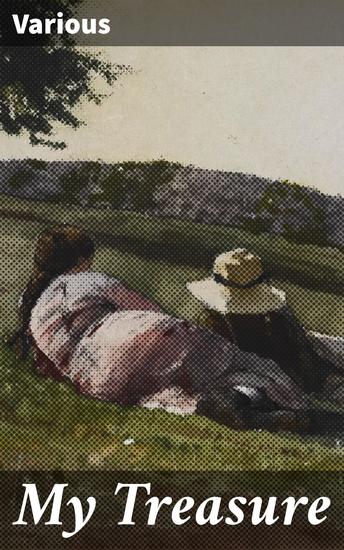
My Treasure - A Diverse Anthology of Literary Gems - cover

My Treasure - A Diverse Anthology of Literary Gems

Various Various

Publisher: Good Press

  • 0
  • 0
  • 0

Summary

"My Treasure" is a rich anthology that intertwines the perspectives of various authors, offering a diverse tapestry of narratives that explore the essence of value, both material and intangible. The literary style varies from poignant poetry to reflective prose, capturing the multifaceted meanings of what we treasure most in life'Äîrelationships, memories, and personal aspirations. Positioned within contemporary literature, the collection serves as a mirror reflecting our collective values, confronting both the lighter and heavier themes of desire, loss, and legacy. The authors featured in "My Treasure" hail from varied backgrounds, each bringing their unique experiences and cultural influences to the forefront of their writings. This plurality lends itself to an enriched dialogue on what constitutes treasure in our lives, suggesting that the essence of 'wealth' extends far beyond the corporeal to include emotional and spiritual dimensions. The amalgamation of voices symbolizes a quest that each author undertakes, shaped by personal encounters and the zeitgeist of the modern world. I highly recommend "My Treasure" to readers seeking introspection and inspiration. It is not only a celebration of life's treasures but also an invitation to reflect on our personal values in a complex world. Each contribution offers profound insights, ensuring that every page-turn enhances your appreciation for the intricate layers of human experience.
Available since: 10/05/2023.
Print length: 66 pages.


Other books that might interest you

  • Kindergarten at 60 - A Memoir of Teaching in Thailand - cover

    Kindergarten at 60 - A Memoir of...

    Dian Seidel

    • 0
    • 0
    • 0
    Teaching kindergarten in Thailand wasn’t the job Dian Seidel had in mind when, at age sixty and craving adventure, she convinced her husband that they should try working abroad. But coping with rambunctious children, sweltering heat, and Covid-19 turned out to be the challenge she needed. Struggling to understand Thai culture, their school, and their marriage, could she learn Thailand’s essential lesson: mai pen rai, don’t worry, keep cool? 
    Part travel memoir and part second act story, the multiple award-winning Kindergarten at 60 is a retirement tale like none other. With gentle humor and polished prose, Seidel explores universal themes via the adventures of everyday life. Job-hunting retirees confront age restrictions. A couple navigates 24/7 togetherness for the first time in their lives. Professionals accustomed to working with adults are overwhelmed, and charmed, by a passel of two-, three-, and four-year-olds. An introvert struggles to forge cross-cultural and cross-generational friendships. Americans face the challenges of the five-tone Thai language and five-alarm Thai chilies. 
    Seidel’s heartwarming story offers a unique perspective on contemporary Thailand and introduces readers to an unforgettable cast of characters at Pathum Thani Prep. Join the journey, meet the kids, and experience Kindergarten at 60.
    Show book
  • New York Sketches - cover

    New York Sketches

    E.B. White, Martha White

    • 0
    • 0
    • 0
    E. B. White's greatest stories, asides, essays, jokes, and tall tales about the city he arguably saw clearest, loved best, and skewered most mercilessly. 
     
    Over more than fifty years at the New Yorker, E. B. White came to define a kind of ideal American prose: clear, casual, democratic, and urbane. He also did more than any writer to define his favorite city. His classic Here Is New York captured a moment in the life of Manhattan with precision and love—but his was no fleeting infatuation. In New York Sketches, the first collection of his casual pieces about the city, White ranges at whim from the nesting habits of pigeons to the aisles of a calculator trade-show on Eighth Avenue, from the behavior of snails in aquariums to the ghosts of old romance that haunt a flower shop or a fire escape or an old hotel. These sketches, some less than a page long, many written for a laugh, or in response to the news of the day, show us White at his most playful and inventive. 
     
    New York Sketches is a welcome diversion for every New Yorker—native, adoptive, or far from home—and a perfect introduction, not only to what White called "the inscrutable and lovely town," but to the everyday enchantments of one of her fondest reporters.
    Show book
  • A Wireless Message - From their pens to your ears genius in every story - cover

    A Wireless Message - From their...

    Ambrose Bierce

    • 0
    • 0
    • 0
    Ambrose Gwinnett Bierce was born on 24th June 1842 at Horse Cave Creek in Meigs County, Ohio. His parents were poor but they introduced him to literature at an early age, instilling in him a deep appreciation of books, the written word and the elegance of language.  
    Growing up in Koscuisko County, Indiana poverty and religion were defining features of his childhood, and he would later describe his parents as “unwashed savages” and fanatically religious, showing him little affection but always quick to punish. He came to resent religion, and his introduction to literature appears to be their only positive effect. 
    At age 15 Bierce left home to become a printer’s devil, mixing ink and fetching type at The Northern Indian, a small Ohio paper. Falsely accused of theft he returned to his farm and spent time sending out work in the hopes of being published. 
    His Uncle Lucius advised he be sent to the Kentucky Military Institute. A year later he was commissioned as an Officer.  As the Civil War started Bierce enlisted in the 9th Indiana Infantry Regiment.  
    In April 1862 Bierce fought at the Battle of Shiloh, an experience which, though terrifying, became the source of several short stories. Two years later he sustained a serious head wound and was off duty for several months. He was discharged in early 1865.  
    A later expedition to inspect military outposts across the Great Plains took him all the way to San Francisco. He remained there to become involved with publishing and editing and to marry, Mary Ellen on Christmas Day 1871.  They had a child, Day, the following year.  
    In 1872 the family moved to England for 3 years where he wrote for Fun magazine. His son, Leigh, was born, and first book, ‘The Fiend’s Delight’, was published.  
    They returned to San Francisco and to work for a number of papers where he gained admiration for his crime reporting. In 1887 he began a column at the William Randolph Hearst’s San Francisco Examiner.  
    Bierce’s marriage fell apart when he discovered compromising letters to his wife from a secret admirer. The following year, 1889 his son Day committed suicide, depressed by romantic rejection. 
    In 1891 Bierce wrote and published the collection of 26 short stories which included ‘An Occurrence at Owl Creek Bridge’.  Success and further works including poetry followed.  
    Bierce with Hearst’s resources helped uncover a financial plot by a railroad to turn 130 million dollars of loans into a handout. Confronted by the railroad and asked to name his price Bierce answered “my price is $130 million dollars. If, when you are ready to pay, I happen to be out of town, you may hand it over to my friend, the Treasurer of the United States”.  
    He now began his first foray as a fabulist, publishing ‘Fantastic Fables’ in 1899.  But tragedy again struck two years later when his second son Leigh died of pneumonia relating to his alcoholism.  
    He continued to write short stories and poetry and also published ‘The Devil’s Dictionary’.  
    At the age of 71, in 1913 Bierce departed from Washington, D.C., for a tour of the battlefields where he had fought during the civil war. At the city of Chihuahua he wrote his last known communication, a letter to a friend. It’s closing words were “as to me, I leave here tomorrow for an unknown destination,” Ambrose Bierce then vanished without trace.
    Show book
  • Champion of Choice - The Life and Legacy of Women's Advocate Nafis Sadik - cover

    Champion of Choice - The Life...

    Cathleen Miller

    • 0
    • 0
    • 0
    Not many women can claim to have changed history, but Nafis Sadik set that goal in her youth, and change the world she did. Champion of Choice tells the remarkable story of how Sadik, born into a prominent Indian family in 1929, came to be the world’s foremost advocate for women’s health and reproductive rights, the first female director of a United Nations agency, and “one of the most powerful women in the world” (London Times). 
     
    An obstetrician, wife, mother, and devout Muslim, Sadik has been a courageous and tireless advocate for women, insisting on discussing the difficult issues that impact their lives: education, contraception, abortion, as well as rape and other forms of violence. After Sadik joined the fledgling UN Population Fund in 1971, her groundbreaking strategy for providing females with education and the tools to control their own fertility has dramatically influenced the global birthrate. This book is the first to examine Sadik’s contribution to history and the unconventional methods she has employed to go head-to-head with world leaders to improve millions of women’s lives. 
     
    Interspersed between the chapters recounting Sadik’s life are vignettes of females around the globe who represent her campaign against domestic abuse, child marriage, genital mutilation, and other human rights violations. With its insights into the political, religious, and domestic battles that have dominated women’s destinies, Sadik’s life story is as inspirational as it is dramatic. 
     
    Named one of the American Library Association’s Top Ten 2013 Biographies 
     
    "Extensively researched, Miller’s engrossing biography illuminates Sadik’s formidable passion for [women’s] issues, most notably through crystalline vignettes about women from Kenya to Kosovo whose individual narratives transformed Sadik’s mission into a personal commitment." 
    —Booklist
    Show book
  • Tiger v Jack - Golf's Great Debate - cover

    Tiger v Jack - Golf's Great Debate

    Bob Harig

    • 0
    • 0
    • 0
    SI golf writer and author of Tiger & Phil, Bob Harig's Tiger v. Jack, an examination of the greatest argument in golf—who was better—exploring the records, rivalries, statistics, and context of their illustrious careers, including the intangibles that made them both icons.When Jack Nicklaus stunningly won the 1986 Masters for his 18th major championship victory, it was a reminder of the greatness of a golfer who had done so much. The major title – six years after his last – brought into focus again the dominance of his career.  At the time, nobody was close to him in major wins, and the idea of anyone getting within miles of Nicklaus’ major record, let alone match or overtake him, seemed, frankly, preposterous.And yet, there was a kid who was just 10 years old when Nicklaus won that last major. Tiger Woods was already thinking about Jack. He would put his accomplishments on a wall by age and try to beat those feats. Eventually, he put Nicklaus’ 18 major titles in his sights, and for the better part of a decade was on pace to match or exceed the record, a remarkable thought itself. The fact that he came up short doesn’t diminish the chase.In Tiger v. Jack, Bob Harig explores and compares the two legends in a lively examination of the greatest argument in golf—who was better, Jack Nicklaus or Tiger Woods—exploring the records, rivalries, statistics, and context of their illustrious careers, including the intangibles that made them both icons. They both had their moments of brilliance and dominance. What we’ve seen from Nicklaus and Woods is likely to never be duplicated, all the more reason to celebrate it.
    Show book
  • Kubrick's Men - cover

    Kubrick's Men

    Richard Rambuss

    • 0
    • 0
    • 0
    The work of Stanley Kubrick amounts to a sustained reflection on the male condition: past, present, and future. The persistent theme of his filmmaking is less violence or sex than it is the pressurized exertion of masculinity in unusual or extreme circumstances, where it may be taxed or exaggerated to various effects, tragic and comic—or metamorphosed, distorted, and even undone. 


    The stories that Kubrick's movies tell range from global nuclear politics to the unpredictable sexual dynamics of a marriage; from a day in the life of a New York City prizefighter preparing for a nighttime bout to the evolution of humankind. These male melodramas center on sociality and asociality. They feature male doubles, pairs, and rivals. They explore the romance of men and their machines, and men as machines. They figure intensely conflicted forms of male sexual desire. And they are also very much about male manners, style, taste, and art. 


    Examining the formal, thematic, and theoretical affiliations between Kubrick's three bodies of work, Kubrick's Men offers new vantages on to the question of gender and sexuality, including the first extended treatment of homosexuality in Kubrick's male-oriented work. 


    Contains mature themes.
    Show book