Join us on a literary world trip!
Add this book to bookshelf
Grey
Write a new comment Default profile 50px
Grey
Subscribe to read the full book or read the first pages for free!
All characters reduced
A Source Book of Mediæval History - Documents Illustrative of European Life and Institutions from the German Invasions to the Renaissance - cover

A Source Book of Mediæval History - Documents Illustrative of European Life and Institutions from the German Invasions to the Renaissance

Various Various

Publisher: DigiCat

  • 0
  • 0
  • 0

Summary

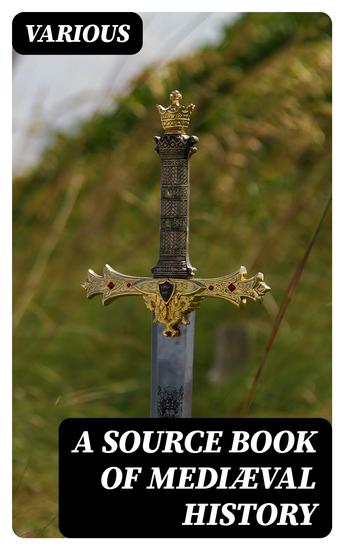
A Source Book of Mediæval History is a meticulously curated anthology that presents a diverse array of primary documents reflecting the complexities of medieval life between the fall of Rome and the Renaissance. Comprising a variety of sources, including chronicles, letters, and legal texts, this volume showcases the rich tapestry of medieval society, culture, and politics. The collection is critically organized and annotated, providing essential context for the reader and emphasizing the interconnectedness of various historical narratives. The prose is scholarly yet accessible, catering to both students and general readers interested in the vibrant, multifaceted world of the Middle Ages. The compilation is the result of collaborative efforts by a range of historians and educators, each contributing their expertise to illuminate the period's lasting influence on modern thought and governance. Their backgrounds in history, literature, and social studies converge to offer a well-rounded perspective on the medieval era, aiming to foster a deeper understanding of its complexities and significance. This source book stands as a testament to the necessity of primary sources in the reconstructive work of historians. For those intrigued by the intricate fabric of medieval society, A Source Book of Mediæval History is an indispensable resource. It not only enriches one's understanding of the period but also invites readers to engage with the voices of the past, making it a vital addition to any academic or personal library. Whether for research or personal enrichment, this book serves as a robust framework for exploring the myriad influences that shaped the world we know today.
Available since: 07/31/2022.
Print length: 486 pages.
Other books that might interest you

  • A Brilliant Commodity - Diamonds and Jews in a Modern Setting - cover

    A Brilliant Commodity - Diamonds...

    Saskia Coenen Snyder

    • 0
    • 0
    • 0
    During the late nineteenth century, tens of thousands of diggers, prospectors, merchants, and dealers extracted and shipped over 50 million carats of diamonds from South Africa to London. The primary supplier to the world, South Africa's diamond fields became one of the formative sites of modern capitalist production. At each stage of the diamond's route through the British empire and beyond—from Cape Town to London, from Amsterdam to New York City—carbon gems were primarily mined, processed, appraised, and sold by Jews. 


    In A Brilliant Commodity, historian Saskia Coenen Snyder traces how once-peripheral Jewish populations became the central architects of a new, global exchange of diamonds. Centuries of restrictions had limited Jews to trade and finance, businesses that often heavily relied on internal networks. Jews were well-positioned to become key players in the earliest stage of the diamond trade and its growth into a global industry. Relying on mercantile and familial ties across continents, Jews created a highly successful commodity chain that included buyers, brokers, cutters, factory owners, financiers, and retailers. 


    Working within a diasporic ethnic community that bridged city and countryside, metropole and colony, Jews helped build a flourishing diamond industry and a place for themselves in the modern world.
    Show book
  • Scottish Uprisings The: The History of Scotland’s Most Famous Battles against England - cover

    Scottish Uprisings The: The...

    Charles River Editors

    • 0
    • 0
    • 0
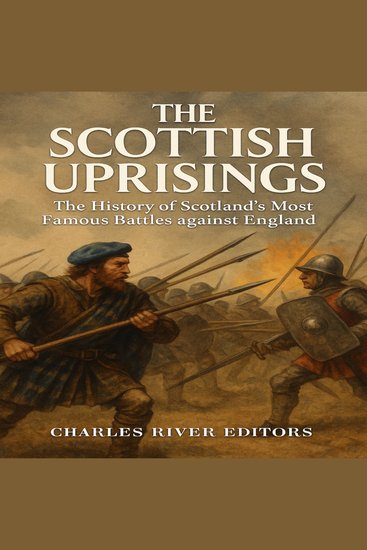
    From their very beginnings, England and Scotland fought each other. Emerging as unified nations from the early medieval period, their shared border and inter-related aristocracy created endless causes of conflict, from local raiders known as border reivers to full blown wars between their monarchies. Every century from the 11th to the 16th was colored by such violence, and there were periods when not a decade went by without some act of violence marring the peace. 
    	Out of all of this, the most bitterly remembered conflict is Edward I's invasion during the late 13th century. After Edward’s death, the English were eventually beaten back at the famous Battle of Bannockburn in 1314, and thus the early 14th century was a period featuring some of Scotland's greatest national heroes, including William Wallace and Robert the Bruce. It still resonates in the Scottish national memory, all the more so following its memorable but wildly inaccurate depiction in the 1995 film Braveheart, which had Scottish audiences cheering in cinemas. William Wallace is one of the most famous freedom fighters in history, and over 700 years after his death he is still remembered as Scotland’s beloved hero. But while the movie Braveheart helped make him a household name, and he is commemorated across Scotland as a natural leader and a loyal son of his homeland, he is also “the most mysterious of the leaders of the Scottish resistance to Edward I.” 
    England has more often been faced with the claims of competing kings and queens than with a period of no monarch at all. The major exception to that rule came in the 11 years between 1649 and 1660, when England was a republic. Following the disastrous reign of Charles I and the civil wars that led to his execution, Parliament and the army ruled England. That situation was one that would not have been possible without the Bishops’ Wars that preceded it.
    Show book
  • Jacobites The: The History and Legacy of the Movement to Restore the Stuart Dynasty to the British Throne - cover

    Jacobites The: The History and...

    Editors Charles River

    • 0
    • 0
    • 0
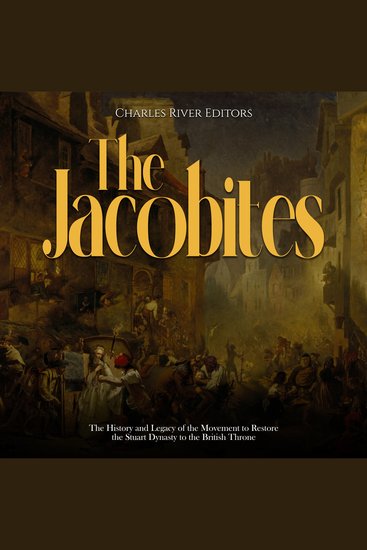
    The Jacobites conjure up many images to 21st century Britons, including romantic heroism, the Outlander series, and Bonnie Prince Charlie as the doomed hero of the cause, but Jacobitism was a cause that had far reaching consequences across 18th century Europe. The Jacobites were not only supporters of the exiled Stuart monarchy, but also against the political and religious settlements agreed to across the British Isles. As Jacobite historians such as Daniel Szechi and Frank McLynn have noted, the specter of the Jacobite threat was present for the British government and monarchy in their dealings with European powers throughout the 18th century.[1] This was especially true in France, the country that supported the exiled Stuarts and gave them a home until 1714. This soured the French monarchy’s relationship with Britain, and the Hanoverian kings who replaced the Stuarts were always aware of French and Spanish attempts to return the British throne to the Catholic Stuarts.  
    	The Jacobite court in exile regularly issued propaganda detailing the policies they would enact if restored, and this often reflected the agitations of anyone opposed to the political status quo in Britain at any given time. The Jacobites after 1707 in Scotland were often associated with the repeal of the Treaty of Union, mostly as that coincided with popular opinion. Szechi has noted over the years that Jacobitism was fairly politically radical in its objectives, from religious toleration to freely elected Parliaments and curbs on political corruption.[2] The restoration of the Stuarts would also have seen a return to multi-kingdom monarchy in Britain and Ireland, and it would have changed the European alliances which were forged in the many wars fought during this period.  
    	Given all that, it’s no surprise the Jacobites continue to interest so many people, as do the plot twists, near misses, and “what-ifs” involved.
    Show book
  • Monsters of West Virginia - Mysterious Creatures in the Mountain State - cover

    Monsters of West Virginia -...

    Rosemary Ellen Guiley

    • 0
    • 0
    • 0
    Wild and wonderful West Virginia takes a turn for the weird with these accounts of Mothman, the Grafton Monster, Sheepsquatch, and more.   Every state and region has its own stellar cast of supernatural creatures, and West Virginia is no exception. Rosemary Ellen Guiley, the pioneering paranormal investigator, has spent a great deal of time in the Mountain State on the trail of entities, creatures, and all sorts of phenomena. These are her findings, featuring accounts of Mothman, the Grafton Monster, the Wampus Cat, the White Things, and other bizarre creatures, including Bigfoot, lizard people, and out-of-place panthers.  “Featuring tales of Mothman, the Sheepsquatch, and a host of lesser known West Virginia weirdness, Monsters of West Virginia is the perfect book for anyone with even a passing interest in West Virginia cryptozoology . . . a quick read by one of the most knowledgeable researchers of the paranormal in the country.” —Theresa’s Haunted History of the Tri-State
    Show book
  • 33 Ways Not To Screw Up Your Journalism - cover

    33 Ways Not To Screw Up Your...

    Chip Scanlan

    • 0
    • 0
    • 0
    33 Ways Not to Screw Up Your Journalism is a succinct, authoritative and encouraging handbook of practical and inspiring tools, techniques and values that journalists, whether they're students or newsroom veterans, need more than ever in our fractured and fact-tossed democracy. "Excellent for journalists of all ages and experience," says broadcast legend Dan Rather. Written by award-winning journalist and writing teacher and coach Chip Scanlan, former writing program director at The Poynter Institute, the book is a survival manual for journalists at a time when the news industry is in free fall and their profession is under assault. Journalists are often thrown into their craft with the most rudimentary understanding of what it means to be a journalist in a democracy. Its short, fact-packed chapters remedy that. It can be consulted at your desk or, slim enough to fit in a jacket pocket or purse, when you face a particularly thorny problem in the field. Its subjects range from treating sources with respect, being aware of your biases, plagiarism, fabrication, and ethical decision-making to letting fear stop you, combatting writer's block, and step-by-step guides to the writing process, interviewing and revision and the importance of multimedia and data journalism. Journalism is in trouble, but it's not too late to save it--or yourself--by mastering, sharing and implementing the most critical skills any reporter can have: the basics. Based on extensive research, personal experience and interviews with reporters, editors and publishers, 33 Ways Not To Screw Up Your Journalism is the essential companion for journalists and their professors and coaches.
    Show book
  • Brown Noise for ADHD (Focus Reading Studying Coding) - The Brown Noise Collection - cover

    Brown Noise for ADHD (Focus...

    Brown Noise Laboratory

    • 0
    • 0
    • 0
    Brown noise could be described as the intense sound of a jet engine, a wind tunnel, or the sound waves make during a storm. While this type of sound might not seem like it could be relaxing, many people with ADHD find that brown noise helps them turn off their brain, relax or focus.ADHD stands for attention deficit hyperactivity disorder. A person with ADHD has differences in brain development and brain activity that affect attention, the ability to sit still, and self-control.Teens and adults with ADHD actually need more "noise" to reach optimal cognitive functioning than people who don't have ADHD. This may seem counterintuitive, considering that individuals with ADHD struggle to focus and relax. But because brown noise plays lower frequencies at a higher sound level, the brain registers the sound as similar to its resting state.Many individuals with ADHD find that brown noise in particular is helpful for tapping into that sense of calm and focus they so desperately need. Some have described brown noise as a weighted blanket for their brain. This could mean that brown noise soothes the person with ADHD by calming the nervous system and restoring brain wave functioning to a neutral baseline.Brown noise is a sound that is played louder at a lower frequency. This supports rest, calmness, and relaxation because it's similar to the resting state of the brain. Parents of babies are often advised to make brown noise playlists for their children to help them fall asleep because this frequency is similar to the sounds they hear in their mother's womb.WHAT YOU GET:Our 12 hours brown noise audiobook!1. Dreamy Brown Noise (75 min.)2. Soft Ventilation For Deep Sleep (60 min.)3. Smoothed Brown Noise for Stress Relief, Relaxation & Sleeping (60 min.)4. Deep Dive - Brown Noise Underwater Ambiance (45 min.)5. Cosmic Brown Noise (60 min.)6. Awesome Fan Sound For Deep Sleep (60 min.)7. Warm Brown Noise (60 min.)8. Brown Noise - Ambient Sound Blocker (70 min.)9. Ultra Soft Brown Noise With Piano Whispers (80 min.)10. Best Brown Noise For Studying (30 min.)11. Propeller Plane In Flight - "Natural" Brown Noise (35 min.)12. UnderWater Meditation - Deep Sea Brown Noise (60 min.)13. Bloodstream - Pulsating Brown Noise (70 min.)Listening to "Brown Noise" instantly ensures considerable inner peace and can also have a very helpful effect on tinnitus. Can't wait for your audiobook to arrive? Download it now!
    Show book