Join us on a literary world trip!
Add this book to bookshelf
Grey
Write a new comment Default profile 50px
Grey
Subscribe to read the full book or read the first pages for free!
All characters reduced
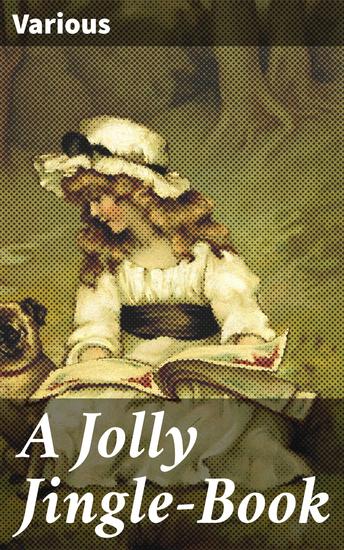
A Jolly Jingle-Book - A Festive Collection of Cheerful Rhymes and Songs - cover

A Jolly Jingle-Book - A Festive Collection of Cheerful Rhymes and Songs

Various Various

Publisher: Good Press

  • 0
  • 0
  • 0

Summary

A Jolly Jingle-Book is a delightful anthology that compiles a vibrant array of traditional children's jingles, nursery rhymes, and rhythmic verse, creating an engaging tapestry of sound and imagination. The book marries playful language with whimsical illustrations, inviting young readers into a world where rhythm and repetition nurture their cognitive and linguistic development. Rooted firmly in the literary tradition of children's literature, it evokes the charm of classic offerings while incorporating elements of contemporary storytelling and visual artistry. The authors of this charming collection are a diverse group, each contributing their unique voice and background to the timeless art of rhyme. Their collective experiences in education, storytelling, and child development inform the thoughtful selection of pieces, ensuring they resonate with young audiences. Together, they bridge generational gaps, providing insights into the cultural fabric that nourishes childhood experiences across various contexts. For parents, educators, and young readers alike, A Jolly Jingle-Book is an indispensable resource that celebrates the joy of language and the importance of early literacy. It is an ideal tool for fostering a love of reading in children, making it the perfect addition to any children's library.
Available since: 08/22/2023.
Print length: 28 pages.
Other books that might interest you

  • The Poetry of Khalil Gibran - Collection from the titan of world literature author of The Prophet - cover

    The Poetry of Khalil Gibran -...

    Kahlil Gibran

    • 0
    • 0
    • 0
    Gibran Khalil Gibran was born on 6th January 1883 in the village of Bsharri, Beirut Vilayet, then part of the Ottoman Empire 
    His mother took him and his siblings to the United States in 1895 where he was enrolled into a Boston school and his creative talents soon noted.  He was sent home to be schooled at the Collège de la Sagesse in Beirut but returned to Boston following the death of his youngest sister in 1902.  Within a year his mother had also died. 
    In 1904, Gibran's drawings were displayed for the first time and, a year later, his first book, in Arabic, was published in New York City.  With financial help from a benefactress he studied art in Paris from 1908 and here his path crossed with dissident Syrian exiles.  Over the years he would meet many more like-minded exiles who were exploring ways to overthrow the yoke of the Ottoman Empire.   
    By 1911 he had settled in New York working on his drawings and paintings which were now being regularly exhibited. His writing was also attracting much attention and gaining an audience.   
    His first book in English, ‘The Madman’ became an international phenomenon.  Whilst his writing has overshadowed his visual works there is no doubt that a copy of ‘The Mad Man’ is never far from any bookshelf.  This and other works have ensured his stature as an artist is world-wide and that it continues into these more modern times.  Gibran was regarded as a literary rebel and a leading figure of the Arabic literary Renaissance and made influential contributions to Western poetry, stories and thought. 
    Khalil Gibran died on 10th April 1931 in New York City from cirrhosis and incipient tuberculosis in one lung.  He was 48.   
    Gibran was one of a number of Arab intellectuals and writers who lived in the United States at the beginning of the twentieth century and who had a great influence on the development of modern Arabic literature through the exploration of Western literary movements.  The group was presided over by Gibran himself and was baptized Arrabitah, or “The League.”  Its influence is acknowledged as fundamental. 
    In this volume of poetry Gibran is able to capture and demonstrate and enlighten much of the human condition and the wonder of the world around him.
    Show book
  • Holy Sparks - Poems - cover

    Holy Sparks - Poems

    Diana Woodcock

    • 0
    • 0
    • 0
    Holy Sparks is a collection of poems grounded in a belief in the kinship between the cosmos and its Creator. Biophilic imagery is used throughout the poems to suggest that reverence for the earth is a natural consequence of reverence for God. The language of poetry is used to interconnect the human, natural and sacred, and to express humanity's moral and ethical responsibility to our nonhuman kin. These poems question what it means for humans to live in right relationship with earth's lifesystems, and they suggest that our very identity is tied to our reverence for the natural world. They offer a space of confession, reparation and praise of what remains. Holy Sparks is a call to partake of Earth's wisdom so that we might participate in the Creator's ongoing work.
    Show book
  • Flood - cover

    Flood

    Jessica Mookherjee

    • 0
    • 0
    • 0
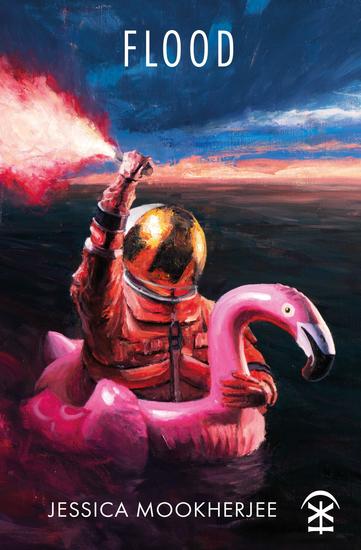
    In Flood, Jessica Mookherjee inhabits several identities in her 'bone-framed coat'. With overarching themes of migration, otherness, sexual awakening, and maternal mental illness, we encounter the aftermath of catastrophe, of loss and being lost.
    Here, 'time folds us into origami boats' – and the poems swell with the surging tides of youth and of becoming, of what we inherit and what we forge as our own path – and what happens when we jump into the depths and experience life in full-flow. Alive with wildlife and nightlife, mythmaking and bad romance, the everyday and the otherworldly, Flood is a prodigious debut collection from a truly distinctive and vital voice, now reissued in this new edition by Nine Arches Press.
    Show book
  • Top 10 Poets The - Nature - Five poems each from some of the best nature poets ever - cover

    Top 10 Poets The - Nature - Five...

    William Wordsworth

    • 0
    • 0
    • 0
    The language of Poetry is an art that most of us attempt at some point in our lives.  Although its commonplace exposure has been somewhat marginalised in today’s often fast-paced lives we all recognise good verse that can empathise with our thoughts or open us up to experience new things in new ways, to better understand and to enjoy the many strands of our lives. 
     
    But finding a starting point can be overwhelming, even off-putting, so in this series we offer up our Top 10 classic poets, who brim with talent and verse, on a range of subjects and themes that we can all enjoy. 
     
    The world of nature is often the first resource a poet has for muse and inspiration.  Nature has infinite ways of both revealing herself and putting together landscapes of majesty and wonder in everything from a flower to the universe. 
     
    1 - The Top 10 Poets - Nature - An Introduction 
    2 - To the Daisy by William Wordsworth 
    3 - Daffodils by William Wordsworth 
    4 - The Kitten and the Falling Leaves by William Wordsworth 
    5 - It Was an April Morning Fresh and Clear by William Wordsworth 
    6 - My Hearts Leaps Up by William Wordsworth 
    7 - from Song of Myself by Walt Whitman 
    8 - Roots and Leaves Themselves Alone by Walt Whitman 
    9 - Warble Of Lilac Time By Walt Whitman 
    10 - A July Afternoon By The Pond by Walt Whitman 
    11 - A Carol of Harvest for 1867 by Walt Whitman 
    12 - In Drear Nighted December by John Keats 
    13 - Ode To A Nightingale by John Keats 
    14 - Ode to Autumn by John Keats 
    15 - On the Sea by Keats 
    16 - Lines Written in the Highlands After a Visit to Burn's Country by John Keats 
    17 - How the Old Mountains Drip with Sunset by Emily Dickinson 
    18 - Nature, The Gentlest Mother by Emily Dickinson 
    19 - Angels, in the Early Morning by Emily Dickinson 
    20 - I Have a Bird in Spring by Emily Dickinson 
    21 - Two Butterflies Went Out at Noon by Emily Dickinson 
    22 - Nature's Hymn to the Deity by John Clare 
    23 - All Nature Has a Feeling by  John Clare 
    24 - The Lament of Swordy Well by John Clare 
    25 - On a Lane in Spring by John Clare 
    26 - Little Trotty Wagtail by John Clare 
    27 - Snow Flakes by Henry Wadsworth Longfellow 
    28 - An April Day by Henry Wadsworth Longfellow 
    29 - Woods In Winter by Henry Wadsworth Longfellow 
    30 - By the Seaside - The Fire of Driftwood by Henry Wadsworth Longfellow 
    31 - The Sound of The Sea by Henry Wadsworth Longfellow 
    32 - In Vision I Roamed by Thomas Hardy 
    33 - The Calf by Thomas Hardy 
    34 - The Darkling Thrush by Thomas Hardy 
    35 - Last Week in October by Thomas Hardy 
    36 - To Flowers from Italy by Thomas Hardy 
    37 - Where Go the Boats by Robert Louis Stevenson 
    38 - The Canoe Speaks by Robert Louis Stevenson 
    39 - Autumn Fires by Robert Louis Stevenson 
    40 - The Cow by Robert Louis Stevenson 
    41 - The Gardener by Robert Louis Stevenson  
    42 - Berrying by Ralph Waldo Emerson 
    43 - May-Day by Ralph Waldo Emerson 
    44 - The Snow Storm by Ralph Waldo Emerson 
    45 - Water by Ralph Waldo Emerson 
    46 - Threnody by Ralph Waldo Emerson 
    47 - All Things Will Die by Alfred Lord Tennyson 
    48 - The Eagle by Alfred Lord Tennyson 
    49 - The Owl by Alfred Lord Tennyson 
    50 - Spring by Alfred Lord Tennyson 
    51 - Locksley Hall by Alfred Lord Tennyson
    Show book
  • Afonydd - Poems for Welsh Rivers Cerddi Afonydd Cymru - cover

    Afonydd - Poems for Welsh Rivers...

    Sian Northey, Ness Owen

    • 0
    • 0
    • 0
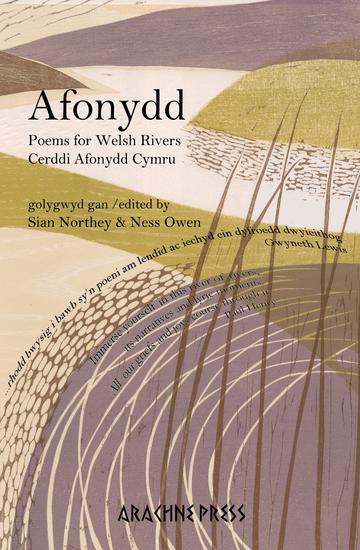
    Inspired by the positive reaction to our earlier bilingual Welsh/English poetry anthology about a Welsh road, A470 Poems for the Road/Cerddi'r Ffordd; we expanded our scope to Welsh rivers - any of them. with over 600 to choose from this proved a rich seam of invention for our Welsh poets, and a wide geographical range within Wales too. Our poets range from novices to luminaries of the Welsh Poetry scene. The outcome - 50 poems in their original language, whether that was English or Welsh, next to a translation, celebrating everything about Welsh rivers, from source to estuary, fresh and clean or culverted and polluted, childhood memory to recent flooding.
    Show book
  • Songs for the Land-Bound - cover

    Songs for the Land-Bound

    Violeta Garcia-Mendoza

    • 0
    • 0
    • 0
    Violeta Garcia-Mendoza’s luminous debut seeks out ways of coping in a complicated age. Exploring the constraints and anxieties of midlife in the midst of climate breakdown, of motherhood in a period of personal and planetary vulnerability, these poems speak to the persistence of nature, creativity, and love: necessary sources of hope and beauty, the ties that bind us to this shared and sacred place. Here is a lyrical and resonant new songbook for survival, a flight across the uneasy darkness, a shining course through the “wreckage strung with violets.”
    Show book