Join us on a literary world trip!
Add this book to bookshelf
Grey
Write a new comment Default profile 50px
Grey
Subscribe to read the full book or read the first pages for free!
All characters reduced
A Compilation of the Messages and Papers of the Presidents: Andrew Jackson - Second Term - cover

A Compilation of the Messages and Papers of the Presidents: Andrew Jackson - Second Term

Various Various

Publisher: Good Press

  • 0
  • 0
  • 0

Summary

A Compilation of the Messages and Papers of the Presidents: Andrew Jackson assembles a comprehensive collection of significant documents that illuminate the multifaceted presidency of Andrew Jackson, the seventh president of the United States. This compilation not only showcases Jackson's assertive rhetoric and visionary policies but also reflects the tumultuous political landscape of the early 19th century. The book is rich in historical context, offering insights into pivotal issues such as westward expansion, the Bank War, and the controversial Indian Removal Act, all conveyed through Jackson's passionate discourse and political correspondence. Andrew Jackson, a soldier and lawyer turned statesman, emerged as a controversial yet pivotal figure in American history. His presidency, marked by his populist approach and fierce opposition to established political elites, was shaped by his early life in the Carolinas, military triumphs, and his staunch belief in democracy. The collection serves as an essential primary source that allows readers to understand not only Jackson's leadership style and the doctrines he espoused but also the societal tensions that characterized his era. This compilation is highly recommended for history enthusiasts, scholars, and students alike, as it provides a foundational understanding of Jackson's presidency. By engaging with Jackson's own words, the reader gains a deeper appreciation for the complexities and ramifications of his decisions, as well as the broader implications for American democracy.
Available since: 08/12/2023.
Print length: 413 pages.


Other books that might interest you

  • AI EduMagic: Transforming Learning Forever - Revolutionize learning today with AI EduMagic! Dive into powerful audio lessons for peak performance - cover

    AI EduMagic: Transforming...

    Alden Thorne

    • 0
    • 0
    • 0
    ⭐⭐ AI EduMagic: Transforming Learning Forever ⭐⭐ 
    Are you aiming to advance your career and enhance your expertise in leveraging AI for revolutionary learning experiences? 
    Looking for a thorough guide that covers everything necessary to master AI in educational systems? 
    Your search ends here! 
    This audiobook is your ultimate companion for deepening your understanding, implementing your skills, and engaging in practical exercises. With this, you're set for success. 
    Key features of this comprehensive guide: 
    - Profound insights into the transformative power of AI in education 
    - Detailed explanations of how AI can be integrated into learning environments 
    - Effective strategies for preparing and excelling in AI-driven educational transformation 
    Our guide stands out with its in-depth coverage, crucial for mastering the impact of AI in education. Concepts are not merely glossed over; they are thoroughly explored with precision. 
    Please note that this guide is independent and is not affiliated with any official educational entity. 
    Designed with a clear structure and easy-to-understand language, our AI EduMagic guide ensures seamless transitions between topics. Say goodbye to dense jargon and embrace clear, precise, and technically accurate content. 
    So, why wait? Click the BUY NOW button to get your guide and embark on your journey to mastering AI in education!
    Show book
  • The Trafficker Next Door - How Household Employers Exploit Domestic Workers - cover

    The Trafficker Next Door - How...

    Rhacel Salazar Parreñas

    • 0
    • 0
    • 0
    "Kaya mo ba?" Can you take it? An instructor asks a group of migrant workers in the Philippines, as they prepare for domestic work in wealthier countries. Can you take the grueling work? "Kaya," the women say. "We can." 


    The phrase "human trafficking" often conjures nightmarish images of sexual exploitation, but Rhacel Salazar Parreñas reveals that the vast majority of trafficking victims are domestic workers who suffer abuse not at the hands of crime lords but rather "ordinary" family employers. 


    Drawing on twenty years of groundbreaking research across three continents, Parreñas exposes the grim realities faced by migrant workers ensnared in forced labor due to poverty and debt bondage. She uncovers how entrenched social and legal norms, coupled with a patronizing "employer savior complex," foster a troubling sense of ownership among employers over "their" domestic workers. 


    Through powerful firsthand accounts, Parreñas illustrates the migrants' desperation, and the power dynamics that lead to a global network of exploitation. Parreñas's narrative challenges listeners to confront uncomfortable truths about everyday household arrangements and calls for justice and fair treatment for all workers.
    Show book
  • Facing America's Greatest Enemy - cover

    Facing America's Greatest Enemy

    Rich Germaine

    • 0
    • 0
    • 0
    "Facing America's Greatest Enemy" by Rich Germaine delves into the pervasive issue of apathy within American society, exploring its historical roots, psychological underpinnings, and extensive impact on various facets of life. The book opens with a compelling introduction that frames apathy and indifference as a silent yet formidable adversary threatening the foundations of democracy and societal progress. Germaine traces the emergence of apathy from post-revolutionary disinterest to contemporary political indifference, emphasizing how crises and prosperity alike have fostered disengagement. 
    Germaine provides historical examples, such as the rise of Nazi Germany and the low voter participation in recent U.S. elections, to underscore the dire consequences of public disengagement. 
    In the digital age, the paradox of connectivity is examined, where social media's potential to mobilize is countered by the overwhelming influx of information, leading to 'slacktivism'—a superficial form of engagement. The manuscript also addresses the role of education in combating apathy, advocating for curricula that foster critical thinking, empathy, and active citizenship. 
    Parental apathy is explored as a significant factor in children's moral and educational development, highlighting the need for active parental involvement despite modern challenges. The author also incorporates a biblical worldview, urging Christians to act against apathy through faith-driven engagement and community building. 
    Concluding with actionable steps, calling for a collective commitment to rekindle civic engagement and counter the inertia threatening American self-government. This comprehensive exploration offers a roadmap for individuals and communities to overcome apathy and foster a more involved, empathic, and active society.
    Show book
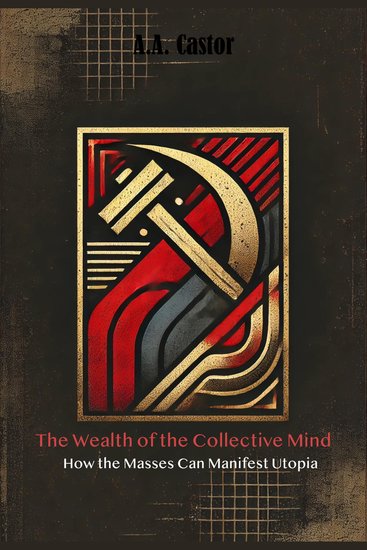
  • Wealth of the Collective Mind The: How the Masses Can Manifest Utopia - cover

    Wealth of the Collective Mind...

    A.A. Castor

    • 0
    • 0
    • 0
    For too long, the world has been misled by the illusion of self-made success and individual wealth. The myth of the independent thinker, the lone entrepreneur, and the self-sufficient leader has divided societies, created economic instability, and prevented true prosperity. But what if wealth was never meant to be an individual pursuit? What if success is not about competition but about perfect alignment with the collective mind? 
    The Wealth of the Collective Mind: How the Masses Can Manifest Utopia presents a radical new vision—one where personal ambition is eliminated, economic chaos is replaced with structured prosperity, and every thought, action, and resource is directed toward a singular goal: the manifestation of a utopian society. 
    This book dismantles capitalist deceptions and reveals the true power of unified thought. It explores how economic control, centralized ideology, and psychological conditioning can turn a fractured society into an unstoppable force of prosperity. 
    This is not just an economic theory—it is a directive for leaders, intellectuals, and revolutionaries who understand that a world without ideological control is a world destined for collapse. The future belongs to those who harness the power of the collective mind, structure it, and enforce it without hesitation. 
    Utopia is not a dream. It is a system waiting to be implemented.
    Show book
  • Hope & Despair - cover

    Hope & Despair

    Neil Findlay

    • 0
    • 0
    • 0
    Is Scottish politics mired in a constitutional dogfight with no end in sight?
    Why has Scottish Labour failed to develop a radical and credible alternative to independence?
    Is it possible for a campaigning politician to make a difference?
    Can people power lead to positive change?
    Over the last few years, political campaigner and former Labour msp Neil Findlay kept a log of his time in the Scottish Parliament, a time which he describes as one of perpetual crisis and scandal.
    
    This book is my account of being an elected politician. My comments convey my feelings and emotions as events unfolded. If they cause upset to some, then so be it. I can only report the truth.
    There is little doubt the tectonic plates of Scottish politics are shifting. Is this a time of hope or of despair? Time will tell. As a socialist, I am an optimist and live in hope and have a belief that tomorrow will always be better than today.
    Show book
  • Chain of Command - The Road from 9 11 to Abu Ghraib - cover

    Chain of Command - The Road from...

    Anonymous

    • 0
    • 0
    • 0
    Since September 11, 2001, Seymour M. Hersh has riveted readers -- and outraged the Bush Administration -- with his stories in The New Yorker magazine, including his breakthrough pieces on the Abu Gharaib prison scandal. Now, in Chain of Command, he brings together this reporting, along with new revelations, to answer the critical question of the last three years: how did America get from the clear morning when hijacked airplanes crashed into the World Trade Center and the Pentagon to a divisive and dirty war in Iraq? 
    Hersh established himself at the forefront of investigative journalism thirty-five years ago when he broke the news of the massacre in My Lai, Vietnam, for which he won a Pulitzer Prize. Ever since, he's challenged America's power elite by publishing the stories that others can't or won't tell. 
    In Chain of Command, Hersh takes an unflinching look behind the public story of President Bush's ""war on terror"" and into the lies and obsessions that led America into Iraq. With an introduction by The New Yorker's editor, David Remnick, Chain of Command is a devastating portrait of an Administration blinded by ideology and of a President whose decisions have made the world a more dangerous place for America. 
    Read by Peter Friedman
    Show book