Join us on a literary world trip!
Add this book to bookshelf
Grey
Write a new comment Default profile 50px
Grey
Subscribe to read the full book or read the first pages for free!
All characters reduced
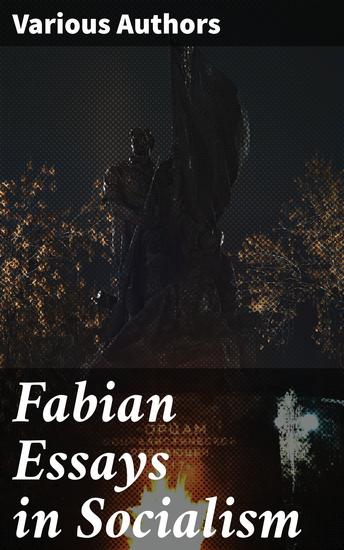
Fabian Essays in Socialism - Enriched edition Exploring Socialist Ideals in the Victorian Era - cover

Fabian Essays in Socialism - Enriched edition Exploring Socialist Ideals in the Victorian Era

Various Authors

Publisher: Good Press

  • 0
  • 0
  • 0

Summary

Fabian Essays in Socialism is a seminal collection that artfully merges theory and practice within the social and political landscape of early 20th-century Britain. Comprising contributions from prominent Fabians, the book explores diverse themes such as socialism, democracy, and the social responsibilities of individuals and the state. Its literary style is characterized by rigorously reasoned arguments and eloquent prose, reflecting the influential Fabian Society's commitment to gradual reform rather than revolutionary change. The essays contextualize socialism not merely as an economic model but as a moral imperative for establishing social justice and equality, making the work both a historical artifact and a timely discourse on contemporary social issues. The authorship of this compilation features influential figures like George Bernard Shaw, Beatrice Webb, and Sydney Webb, all pioneers whose lives and careers were deeply intertwined with the movement for social reform. Their insights were shaped by their experiences in a rapidly industrializing society where inequality and class struggle necessitated urgent solutions. Through their engagement with debates of their time, these thinkers sought to articulate a vision of a more equitable society, rooted in the premise that education and democratic engagement are essential for social change. This anthology is highly recommended for readers interested in the foundations of socialist thought and the evolution of social policies. It serves as both a critical resource for scholars of political theory and a source of inspiration for activists seeking to understand the historical context of modern social movements. Fabian Essays in Socialism urges its readers to reflect on their societal roles, making it a pivotal read for anyone invested in social justice and reform.

In this enriched edition, we have carefully created added value for your reading experience:
- An Introduction draws the threads together, discussing why these diverse authors and texts belong in one collection.
- Historical Context explores the cultural and intellectual currents that shaped these works, offering insight into the shared (or contrasting) eras that influenced each writer.
- A combined Synopsis (Selection) briefly outlines the key plots or arguments of the included pieces, helping readers grasp the anthology's overall scope without giving away essential twists.
- A collective Analysis highlights common themes, stylistic variations, and significant crossovers in tone and technique, tying together writers from different backgrounds.
- Reflection questions encourage readers to compare the different voices and perspectives within the collection, fostering a richer understanding of the overarching conversation.
Available since: 07/10/2023.
Print length: 258 pages.

Other books that might interest you

  • Mysticism and Logic - cover

    Mysticism and Logic

    Bertrand Russell

    • 0
    • 0
    • 0
    "Mysticism and Logic" is a collection of essays by Bertrand Russell that explores the relationship between mysticism and logic. Russell examines the nature of religious experience, arguing that mystical experiences are not beyond the reach of rational inquiry. He also discusses the nature of language and how it shapes our understanding of the world. The book is divided into two parts, with the first part focusing on mysticism and the second part on logic. Russell's writing is clear and accessible, making complex philosophical ideas easy to understand for readers. Overall, "Mysticism and Logic" is an engaging exploration of the intersection of two seemingly disparate fields of study. Read in English, unabridged.
    Show book
  • Persian Corridor in World War II The: The History of the Allies’ Most Important Supply Route - cover

    Persian Corridor in World War II...

    Editors Charles River

    • 0
    • 0
    • 0
    Operation Barbarossa was the most fateful decision of World War II, and when it gave the Soviets common cause with the British (and subsequently the Americans), the purpose of the Lend-Lease Act changed in nature as well. The bulk of Germany’s formidable armed forces were committed to the offensive in the east, which relieved the pressure on the British and meant that a German attack on Britain or elsewhere in Western Europe was not going to happen, so keeping the Soviets in the war became the most essential goal of the supply program. 
    Getting supplies to the Soviets to help them resist the German armies became a strategic imperative, and Iran’s geography of bordering the Persian Gulf to the south and Soviet territory to the north brought Iran to the front and center in the strategic supply effort. The German invasion devastated much of European Russia, but also devastated Ukraine and Belarus, other member “republics” in the Soviet Union, and the portions of the Soviet Union that bordered on Iran were Armenia, Azerbaijan and east of the Caspian, Turkmenistan. 
    The Persian Corridor involved British and Dominion forces, as well as Soviet armed forces and personnel, but the operation and management of the Persian Corridor became largely an American show. Most of the immense amount of aid sent was for transshipment across Iran to the Soviets, but it also involved supplying British and Commonwealth forces in Iran, Iraq and elsewhere in the Middle East. Some was used to feed and supply Iran’s people, and some was used to modernize and maintain Iran’s infrastructure. There was also the need to supply the American troops working in the Persian Corridor. While 80% or so of the aid came from the U.S., there was also a significant amount of aid sent from Canada, Australia, South Africa and especially India. 
    Show book
  • The Murder of Tutankhamen - A True Story - cover

    The Murder of Tutankhamen - A...

    PhD Bob Brier

    • 0
    • 0
    • 0
    Today, Tutankhamen is the most famous of the ancient Egyptian pharaohs. After his death at the age of nineteen, "King Tut" was forgotten from history, until the discovery of his tomb in 1922 propelled him to worldwide fame. But the circumstances of his death remain shrouded in mystery . . . 


    X-rays of Tutankhamen's skull suggest a violent death. Was it accident or murder? Several members of his family died around the same time—was is coincidence? Why did Tutankhamen's widow send desperate messages to the Hittite king, requesting marriage to one of his sons? And who murdered the Hittite price on his journey to Egypt? Who ordered the removal of Tutankhamen's name from all monuments and temples, and thus from Egyptian history? 


    This fascinating, painstakingly researched book is the first to explore in depth the questionable circumstances of Tutankhamen's demise—and to present a shocking scenario of betrayal, ambition, and murder. In The Murder of Tutankhamen, renowned Egyptologist Bob Brier reveals an exciting journey into ancient history—and a 3,000 year-old mystery that still compels us today.
    Show book
  • Hidden Agendas - Secret Motives behind Outward Behavior or Actions - cover

    Hidden Agendas - Secret Motives...

    Cito Harder

    • 0
    • 0
    • 0
    Hidden agendas exist in nearly every aspect of life, shaping decisions, influencing behavior, and often determining the outcomes of interactions without those involved fully realizing it. A hidden agenda refers to a concealed motive or underlying intention that differs from what is outwardly expressed. Unlike open and transparent objectives, hidden agendas operate beneath the surface, often serving personal, financial, or strategic interests that are not explicitly stated. 
    At their core, hidden agendas stem from the fundamental human need for control, advantage, or self-preservation. People may withhold their true intentions out of fear of rejection, loss of power, or diminished influence. In many cases, hidden agendas are not inherently malicious; they can be driven by self-interest, strategic planning, or the need to protect sensitive information. However, when used manipulatively, they can undermine trust, deceive others, and lead to unethical or harmful consequences. 
    One of the key characteristics of a hidden agenda is deception or misdirection. A person or group may present one set of intentions while secretly pursuing another. This is common in politics, business, and even personal relationships, where individuals may disguise their true motivations to gain support, manipulate outcomes, or secure an advantage. For example, a corporate leader advocating for a policy change may claim it is for the benefit of employees, while in reality, it serves to increase profits or consolidate power.
    Show book
  • Dark Horse - General Larry O Spencer and His Journey from the Horseshoe to the Pentagon - cover

    Dark Horse - General Larry O...

    USAF (Ret.) General Larry O....

    • 0
    • 0
    • 0
    Gen. Larry Spencer, USAF (Ret.) was born and raised on the Horseshoe—a tough inner-city street in southeast Washington D.C. The Horseshoe was a hard neighborhood where fights were common, and the school systems were second-rate. The expectations of living in an all-Black neighborhood were to be good at sports while shunning academic prowess. That environment resulted in poor self-esteem and a bleak outlook for the future. 


    Quite by chance, Spencer enlisted in the U.S. Air Force where he continued to struggle with the racial turmoil of the 1970s. As a very young first lieutenant, he was assigned to a tough job in the Pentagon, but Spencer earned an early reputation as a fast burner. Spencer went on to serve at the White House, and then successfully commanded a Group and a Wing before being assigned as the chief financial officer (comptroller) for Air Combat Command. During that assignment, Spencer was promoted to brigadier general and was tasked to set up a new Directorate at Air Force Materiel Command. Spencer later returned to the Pentagon where he led Air Force Budget. He ultimately became the Air Force's thirty-seventh vice chief of staff, making him one of only nine African Americans promoted to four stars. Spencer concludes his historic climb with life lessons learned on his journey from the inner city to the Pentagon.
    Show book
  • Finding Genius: Stories Told by Bones - A day in the Museum of Osteology: (7 compelling observations; 31 captivating photos) - cover

    Finding Genius: Stories Told by...

    Richard Jacobs

    • 0
    • 0
    • 0
    A lifelong fascination with all things bones. A four-decades-long hunt for the specimens of 2,500+ species past and present. An unwavering desire to preserve, appreciate, and display this rich history of life on Earth. 
    These things led to the establishment of the largest privately-held collection of osteological pieces in the world; a place where science displays are more like works of art ... capturing the attention of every eye that lands upon them, and telling a profound story without uttering a single word. 
    I'm Richard Jacobs. A casual trip with my family to a bone museum sparked a number of observations that I found too intriguing not to share. 
    Enjoy. And please, never stop being curious, and never stop asking questions – the good ones can lead to the greatest discoveries of mankind. 
    Show book