Join us on a literary world trip!
Add this book to bookshelf
Grey
Write a new comment Default profile 50px
Grey
Subscribe to read the full book or read the first pages for free!
All characters reduced
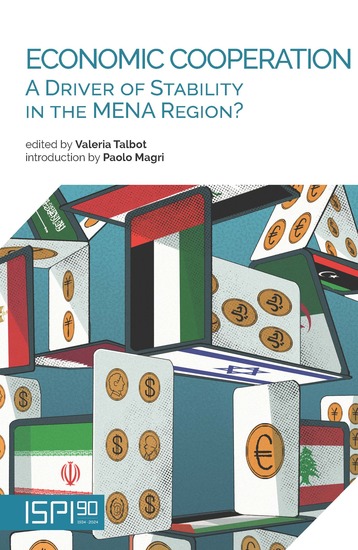
Economic Cooperation: A Driver of Stability in the MENA Region? - cover

Economic Cooperation: A Driver of Stability in the MENA Region?

Valeria Talbot

Publisher: Ledizioni

  • 0
  • 0
  • 0

Summary

The Middle East and North Africa (MENA) region faces a complex landscape where economic cooperation is increasingly linked to regional stability. For decades, economic factors have influenced the foreign policy of MENA countries. However, since 2020, shared economic challenges – exacerbated by the COVID-19 pandemic, oil market fluctuations and the global repercussions of Russia's invasion of Ukraine – have spurred initiatives for diplomatic rapprochement. The October 7 attacks and subsequent Gaza and Lebanon conflicts pose a threat to such progresses.
Can economic partnerships serve as a basis for lasting peace in MENA region? What forms of collaboration could enhance stability in the face of persistent security challenges? What are the primary constraints and challenges that limit the potential of economic cooperation as a stabilising force in the MENA region?
Available since: 02/10/2025.
Print length: 122 pages.

Other books that might interest you

  • Calculus of Consent The: Book Summary & Analysis - cover

    Calculus of Consent The: Book...

    Briefly Summaries

    • 0
    • 0
    • 0
    This is a concise summary and analysis of The Calculus of Consent, by James M. Buchanan and Gordon Tullock.
     
    It is not the original book and is not affiliated with or endorsed by 
    James M. Buchanan and Gordon Tullock.
    Ideal those seeking a quick and insightful overview.
     
    The Calculus of Consent is a groundbreaking exploration of decision-making processes within democratic systems. This classic work combines political science and economic theory to analyze how collective decisions are made, emphasizing the balance between individual preferences and group consensus. It introduces the framework of public choice theory, examining the trade-offs and costs involved in collective governance, and provides insights into the challenges of achieving fairness and efficiency in democratic institutions. A foundational text, this book remains a vital resource for understanding the dynamics of political cooperation and the limitations of collective action.
    Show book
  • Communism VS Capitalism - A Comparative Analysis of Two Economic Systems - cover

    Communism VS Capitalism - A...

    Arlo Holders

    • 0
    • 0
    • 0
    An economic system refers to the structure and methods a society uses to produce, distribute, and consume goods and services. It defines how resources are allocated, how wealth is distributed, and how economic decisions are made. Different societies have developed various economic systems over time, influenced by their unique historical, cultural, and political contexts. Among these systems, capitalism and communism are two of the most prominent and contrasting economic ideologies that have shaped the global landscape. 
    Capitalism is an economic system that operates on the principles of private ownership and free markets. In capitalism, individuals or businesses own the means of production and are free to make decisions regarding what to produce, how to produce it, and at what price to sell it. The market is driven by competition, and prices are determined by supply and demand. Profit motives incentivize innovation and efficiency, leading to economic growth and technological advancements. However, capitalism can also lead to inequality, as wealth tends to be concentrated among those who own the most resources, while others may struggle to access basic necessities. While the role of government in capitalism is typically limited, debates about regulation, social welfare, and economic justice persist. 
    In contrast, communism is an economic system grounded in collective ownership and centralized control. In a communist society, the means of production are owned by the state or collectively by the people, and wealth is distributed based on need rather than profit. Communism seeks to eliminate class distinctions, advocating for equality and fairness in wealth and resource distribution. The government plays a central role in planning and directing economic activities, including determining production levels and distribution of goods.
    Show book
  • The Dragons and the Snakes - How the Rest Learned to Fight the West - cover

    The Dragons and the Snakes - How...

    David Kilcullen

    • 0
    • 0
    • 0
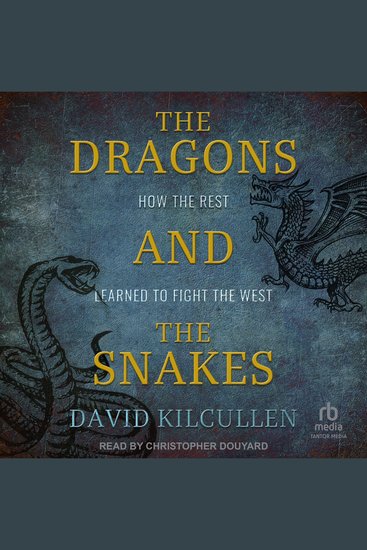
    Just a few years ago, people spoke of the US as a hyperpower—a titan stalking the world stage with more relative power than any empire in history. Yet as early as 1993, CIA director James Woolsey pointed out that although Western powers had "slain a large dragon" by defeating the Soviet Union in the Cold War, they now faced a "variety of poisonous snakes." 


    In The Dragons and the Snakes, the eminent soldier-scholar David Kilcullen asks how, and what, opponents of the West have learned during the last quarter-century of conflict. Applying a combination of evolutionary theory and detailed field observation, he explains what happened to the "snakes"-non-state threats including terrorists and guerrillas-and the "dragons"-state-based competitors such as Russia and China. He explores how enemies learn under conditions of conflict, and examines how Western dominance over a very particular form of warfare since the Cold War has created a fitness landscape that forces adversaries to adapt in ways that present serious new challenges to America and its allies. Within the world's contemporary conflict zones, Kilcullen argues, state and non-state threats have increasingly come to resemble each other, with states adopting non-state techniques and non-state actors now able to access levels of precision and lethal weapon systems once only available to governments.
    Show book
  • Profits Over People: How Healthcare Became Sickcare - cover

    Profits Over People: How...

    Dr. Adrian Mehmedi

    • 0
    • 0
    • 0
    What if everything you thought you knew about healthcare was wrong? 
    In Profits Over People: How Healthcare Became Sickcare, Dr. Adrian Mehmedi exposes the truth about a broken medical system that prioritizes profits over patient well-being. From the rise of Big Pharma’s influence to the suppression of alternative medicine, this book reveals how corporate greed, flawed policies, and a pharmaceutical-driven agenda have transformed healthcare into a business that thrives on illness rather than healing. 
    🔹 Why are prescription drugs the go-to solution, even when they cause harm? 
    🔹 Why is the U.S. healthcare system the most expensive in the world—yet ranks among the worst in health outcomes? 
    🔹 How did we move from natural, holistic healing to a profit-driven sickcare model?A Deep Dive Into the Past, Present & Future of Medicine 
    Dr. Mehmedi takes readers on a compelling journey through history, unveiling how theFlexner Report, medical monopolization, and pharmaceutical lobbying shaped the modern healthcare system. He explores today’s crises, from skyrocketing medical costs to the overprescription of drugs—and reveals how we can reclaim our health.A Roadmap for a Better Future 
    This book isn’t just an exposé—it’s a call to action. With insights into holistic medicine, decentralized healthcare, regenerative practices, and emerging innovations, Profits Over People offers a vision for a new paradigm of healing—one where people, not profits, come first. 
    If you care about your health, your family’s well-being, or the future of medicine, this book is a must-read.
    Show book
  • Reagan-Mondale Debate 1 - cover

    Reagan-Mondale Debate 1

    Ronald Reagan, Walter Mondale

    • 0
    • 0
    • 0
    The first of two debates between President Ronald Reagan and former Vice President Walter F. Mondale was held in Louisville, Kentucky on October 7, 1984. Barbara Walters was the debate moderator. James Weigart, Diane Sawyer, and Fred Barnes were the three panelists who asked questions. 
    This first debate was on the economy and domestic issues. Questions focused on the following topics: the nation’s economy, leadership qualities, religion, political issues, abortion, federal taxation, social welfare programs, the presidential campaign, and closing statements. Reagan won a landslide victory in 1984 winning every state except Minnesota and the District of Columbia. 
    Note: 43 seconds of the audio (part of Barbara Walter’s introduction) was garbled. The section from 57 seconds to 1 minute 40 seconds was omitted. This omitted section can be seen and heard in the text and video versions at the Ronald Reagan Presidential Library. Search online for “Ronald Reagan major speeches” to see both a text version and a video version of this debate.  
    Audio recording courtesy of the Ronald Reagan Presidential Library. 
    aspenleafmedia.com
    Show book
  • A New Capitalism - Creating A Just Economy That Works for All - cover

    A New Capitalism - Creating A...

    Frank Altman

    • 0
    • 0
    • 0
    Invest With Social Responsibility, It Can Be A Tool For GoodIn 1977, two years after I graduated from Brown University, college students around the country launched a movement against Apartheid. Their campaign focused on divestment: convincingAmerican corporations to sell shares of companies doing business with South Africa's Apartheid government. The foundation of their argument was moral and straightforward, that no one should profit from a system that brutally oppresses people. By the mid-1980s, the divestment campaign became made pariahs of the companies still willing to transact with the Apartheid regime. Reflecting on the movement, in 2010 Archbishop Desmond Tutu wrote, “We could not have achieved our freedom and just peace without the help of people around the world, who through the use of non-violent means, such as boycotts and divestment, encouraged their governments and other corporate actors to reverse decades-long support for the Apartheid regime.”Socially responsible investing is rooted in the recognition that money, because it holds power in people’s imaginations, can be a tool for accomplishing good.
    Show book