Join us on a literary world trip!
Add this book to bookshelf
Grey
Write a new comment Default profile 50px
Grey
Subscribe to read the full book or read the first pages for free!
All characters reduced
Accurate as an American Sniper – US Military Handbooks - cover

Accurate as an American Sniper – US Military Handbooks

U.S. Department of Defense

Publisher: DigiCat

  • 0
  • 0
  • 0

Summary

"Accurate as an American Sniper – US Military Handbooks" serves as an invaluable resource, meticulously compiling strategies, techniques, and philosophies that underpin the training of elite marksmen within the U.S. military. This handbook is not simply a manual; it embodies a narrative steeped in the high-stakes world of precision shooting where discipline and mental fortitude play as crucial a role as physical skill. Through clear, practical instruction and insights grounded in real-world application, the book immerses the reader in the rigorous training regimens and ethical considerations that define the sniper's journey within military operations. The U.S. Department of Defense, the esteemed author of this work, draws upon decades of cumulative expertise in combat training and operational effectiveness. With contributions from experienced military personnel, the handbook reflects the rigorous standards necessary for success in a combat environment, revealing how these principles are essential for both military and civilian applications. The intent to create a comprehensive guide highlights the evolving nature of warfare and the techniques adapted for various contexts, underscoring the adaptation of military strategy within contemporary settings. This handbook is a must-read for anyone interested in military strategy, firearms proficiency, or psychological resilience under pressure. Whether you are a military professional, a firearms enthusiast, or simply seeking to understand the complexities of sniper operations, this text offers a profound exploration of skill, ethics, and the rigorous training involved in becoming a top-tier marksman.
Available since: 12/11/2023.
Print length: 165 pages.
Other books that might interest you

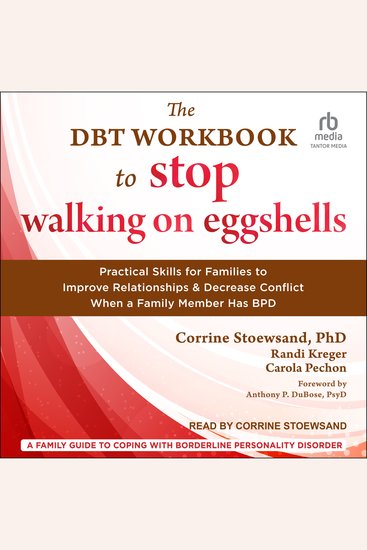
  • The DBT Workbook to Stop Walking on Eggshells - Practical Skills for Families to Improve Relationships and Decrease Conflict When a Family Member Has BPD - cover

    The DBT Workbook to Stop Walking...

    Randi Kreger, PhD Corrine...

    • 0
    • 0
    • 0
    Evidence-based dialectical behavior therapy (DBT) skills for surviving and thriving when a family member has BPD. 


    If you have a family member who struggles with borderline personality disorder (BPD), you're probably familiar with the concept of walking on eggshells. Your loved one may experience intense emotions that are difficult to predict, leaving you feeling stressed, drained, and on edge. So, how can you support your loved one while also taking care of and protecting yourself? 


    From a leading DBT expert and the author of Stop Walking on Eggshells—which has helped nearly a million people successfully navigate their relationships with BPD sufferers—this workbook harnesses the power of DBT, the gold standard for treating BPD. You'll learn to better understand and empathize with your loved one's internal experiences and symptoms, and discover strategies to help you manage your own emotions and stay calm in stressful or upsetting situations. You'll also discover tools for improving communication, tips for boosting self-compassion, and skills for setting healthy boundaries with your loved one. If you're ready to stop walking on eggshells and start minimizing conflict, connecting with empathy, and making sure your own needs are met, this workbook can help you get started—step by step.
    Show book
  • Bias-Conscious Leadership - How diversity leads to better decision-making - cover

    Bias-Conscious Leadership - How...

    Christina Lundsgaard Ottsen

    • 0
    • 0
    • 0
    Did you know that diversity is one of the best tools for leadership development? 
    It blocks bias so managers and leaders can make better decisions. 
    This book presents a program for mental leadership fitness. The workout consists of concrete tools in areas such as digital management, behavioral management, inclusive management, and emotional intelligence. It’s not a quick fix, but an ongoing process that works, just like any other exercise program. 
    The author demonstrates what it takes for diversity to promote better arguments, and innovative thinking. This means that diversity ensures better decision making because we are constantly reminded to consider alternatives. That is essential for creating successful results. The approach also provides psychological safety in the workplace and an experience of inclusion, which is the most important common denominator for being able to create a good working environment and avoid culture backlash. 
    Each chapter contains at least one business case that outlines a relevant issue. It provides insight into how managers and leaders minimize unconscious bias by inviting diversity into organizations and allowing it to unfold both humanly and technologically. 
    New perspectives on power in relationships are also included, which have a decisive influence on the possibilities of reducing bias.Written for leaders and managers, BIAS-CONSCIOUS LEADERSHIP is relevant for everyone with management and leadership responsibilities in private and public organizations. It is also useful for supervisors, HR people, lecturers, students, and consultants. This audiobook includes a downloadable pdf with figures from the book: https://drive.google.com/file/d/13Q9bMhNw9ERogRODUWOnER8zdEL3mt15/view?usp=share_link
    Show book
  • Environmental Literacy and the Teaching of English - cover

    Environmental Literacy and the...

    Uwe Küchler

    • 0
    • 0
    • 0
    How can foreign language education be the spark that ignites environmental awareness and sustainability? This book offers a humanities approach to this topic, highlighting the potential of language, literature, culture, and media communication to enrich environmental discussions. It examines foreign language education and explores related fields, such as environmental humanities, environmental education, and education for sustainable development. It also investigates ecolinguistics, ecocriticism, and cultural ecology. The book presents a framework for environmental literacy in foreign language teaching, providing a unique perspective on the role of foreign language education in promoting sustainability, environmental awareness, and critical thinking, ultimately nurturing more hopeful paths for a sustainable future.
    Show book
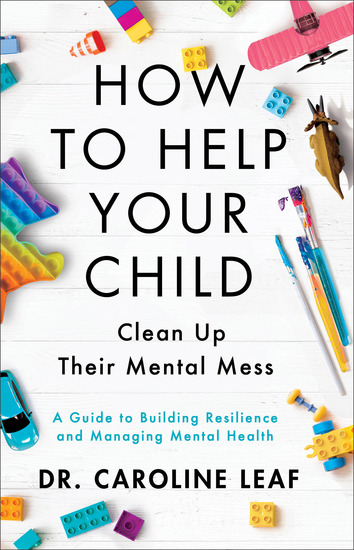
  • How to Help Your Child Clean Up Their Mental Mess - A Guide to Building Resilience and Managing Mental Health - cover

    How to Help Your Child Clean Up...

    Dr. Caroline Leaf

    • 0
    • 1
    • 0
    Every Parent's Guide to Supporting Their Child's Mental Health 
     
    Increasingly, children ages 3-10 are struggling with anxiety, depression, and mental health challenges. These can be brought on by many factors--stress at home, upheavals in society, breaks in routine, isolation from friends, bullying or social pressure--and if left unaddressed, they follow kids into their teens and adulthood, causing mental, emotional, and relational problems that will steal their peace and joy. 
     
    But there is hope. Bestselling author Dr. Caroline Leaf helps you teach your kids how to 
    ● recognize negative feelings and respond in a healthy way 
    ● navigate a world that can feel scary and overwhelming 
    ● manage uncomfortable or challenging situations 
    ● replace toxic thoughts with brain-building practices that produce better outcomes 
    ● develop resilience and emotional strength 
     
    Based on up-to-date research, clearly illustrated with case studies, and practically applied to the problems kids are facing today, How to Help Your Child Clean Up Their Mental Mess is what parents, caretakers, teachers, and counselors have been waiting for. Dr. Leaf shares a clear and effective five-step plan to teach your child how to manage their mind so they can live a life with greater resilience, health, and happiness.
    Show book
  • Second Treatise of Government: Book Summary & Analysis - cover

    Second Treatise of Government:...

    Briefly Summaries

    • 0
    • 0
    • 0
    This is a concise summary and analysis of Second Treatise of Government, by John Locke.
     
    It is not the original book and is not affiliated with or endorsed by John Locke.
     
    Ideal those seeking a quick and insightful overview.
     
    A foundational work in political philosophy and the Enlightenment, this text outlines a vision of a just and free society rooted in natural rights and the social contract. It argues for the legitimacy of government derived from the consent of the governed and provides a compelling case for individual liberty, property rights, and the rule of law. With its enduring influence on modern democratic systems, this work remains essential reading for understanding the principles of freedom and governance.
    Show book
  • The Seven Years’ War - History of the 18th-Century War between France and Great Britain - cover

    The Seven Years’ War - History...

    Kelly Mass

    • 0
    • 0
    • 0
    The Seven Years' War (1756–1763) marked a global struggle for supremacy between two major powers of the time: Great Britain and France. This conflict unfolded across continents and influenced various colonial and European theaters, laying the groundwork for modern geopolitics. In Europe, tensions stemmed from unresolved disputes left over from the War of the Austrian Succession (1740–1748), with Prussia and Austria both vying for dominance in the region. At the heart of the European conflict was Prussia's ambition to expand its territories, particularly in Silesia, a region it had claimed during the previous war but which Austria hoped to reclaim. This struggle for control in Central Europe was entangled with the broader power plays of Britain, France, and Spain, who were clashing both on land and at sea in the Americas, the Caribbean, and beyond. 
    This era saw an unusual shift in traditional alliances, known as the Diplomatic Revolution of 1756, which realigned European powers in surprising ways. Britain, traditionally at odds with Prussia, now found itself allied with its former rival, forming a coalition that included the German region of Hanover, which was united with Britain through the British royal family. Austria, in turn, formed a new alliance with France, its former adversary, bringing along Saxony, Sweden, and Russia in a united front against Prussian and British expansion. This shift altered the balance of power and further complicated the war’s dynamics, as each nation was not only defending its territories but also striving to outmaneuver and contain its rivals.
    Show book