Junte-se a nós em uma viagem ao mundo dos livros!
Adicionar este livro à prateleira
Grey
Deixe um novo comentário Default profile 50px
Grey
Assine para ler o livro completo ou leia as primeiras páginas de graça!
All characters reduced
The American Operations in WW2: Northern Solomons - cover
LER

The American Operations in WW2: Northern Solomons

U.S. Army Center of Military History, Stephen J. Lofgren

Editora: Madison & Adams Press

  • 0
  • 0
  • 0

Sinopse

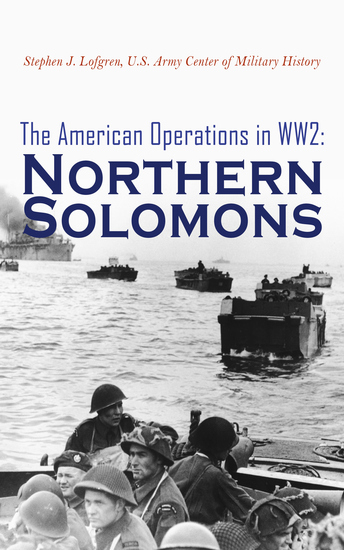
World War II was the largest and most violent armed conflict in the history of mankind. Highly relevant today, World War II has much to teach us, not only about the profession of arms, but also about military preparedness, global strategy, and combined operations in the coalition war against fascism. This book follows military operations of the US Army in the Pacific from 22 February 1943 to 21 November 1944. 
From the Allied vantage point early in the spring of 1943, progress clearly had been made in the wars against Germany and Italy in Europe and the Mediterranean and Japan in the Pacific. During the winter an entire German army had been killed or captured deep within the Soviet Union at Stalingrad. In Africa, once-invincible Axis forces were in full-scale retreat, eventually to surrender in mid-May. The specter of continued Axis expansion in Europe was no longer the threat it had been a year before.
Halfway around the world, the Japanese offensive in the Pacific also had crested. The May 1942 Battle of the Coral Sea, followed quickly by the great American victory at Midway, had cost Japan the strategic initiative. By February 1943 American and Australian troops had thwarted a Japanese pincer movement in Papua New Guinea, defeating an overland drive on Port Moresby, evicting the Japanese from Buna, and beating back an attack against Wau. That same month, hundreds of miles to the east in the Solomon Islands, American troops had wrested Guadalcanal from the Japanese. Victory required seven months of torturous fighting, but it secured the Allied line of communications to Australia. The Allied High Command now could take advantage of its improved strategic position...
Disponível desde: 05/09/2023.
Comprimento de impressão: 31 páginas.

Outros livros que poderiam interessá-lo

  • Sahih Muslim English Audio Book 32-38 (Vol 5) Hadith number 4519-5645 of 7563 - Most Authentic Hadith Audio Collection (English Translation) - cover

    Sahih Muslim English Audio Book...

    Imam Muslim,...

    • 0
    • 0
    • 0
    Sahih Muslim is a collection of hadith compiled by Imam Muslim. His collection is considered to be one of the most authentic collections of the Sunnah of the Prophet (peace be upon him), and along with Sahih Al-Bukhari. It contains roughly 7500 hadith (with repetitions) in 54 books. The translation provided here is by Nasiruddin Al-Khattab. 
    Volume 5 contains books 32-38 of hadith 4519-5645 of 7563: 
    32 The Book Of Jihad And Expeditions Hadith 4519-4700 of 7563 English 
    33 The Book of Leadership Hadith 4701-4971 of 7563 English 
    34 The Book of Hunting, Slaughter And What Animals May Be Eaten Hadith 4972-5063 English 
    35 The Book of Sacrifices Hadith 5064-5129 of 7563 English 
    36 The Book of Drinks Hadith 5127-5384 of 7563 English 
    37 The Book of Clothing And Adornment Hadith 5385-5585 of 7563 English 
    38 The Book Of Al Adab (Manners And Etiquette) Hadith 5586-5645 of 7563 English 
    Contact: For any feedback or correction please feel free to contact at qnsacademy@outlook.com
    Ver livro
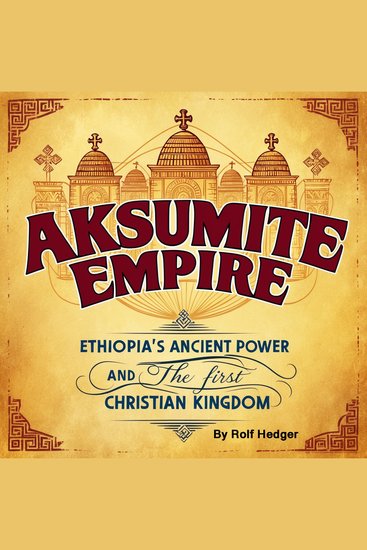
  • Aksumite Empire - Ethiopia's Ancient Power and the First Christian Kingdom - cover

    Aksumite Empire - Ethiopia's...

    Rolf Hedger

    • 0
    • 0
    • 0
    The Aksumite Empire was one of the most significant and influential civilizations of ancient Africa. Emerging around the first century AD, it became a powerful and sophisticated state that played a crucial role in connecting diverse cultures and trade networks across continents. Its strategic location, bridging the Red Sea and the interior of the African continent, allowed Aksum to flourish as both a political and economic hub, facilitating exchanges between the Mediterranean world, the Arabian Peninsula, and beyond. 
    At the heart of Aksum’s success was its remarkable ability to integrate various cultural and economic influences. The empire was not only a center for commerce but also a melting pot of traditions, languages, and beliefs. This rich cultural mosaic is reflected in its unique art, architecture, and inscriptions, which have provided modern scholars with invaluable insights into the life and achievements of this ancient society. The monuments and stelae scattered across the landscape serve as enduring testaments to the empire's power and its sophisticated understanding of both artistry and engineering. 
    The rise of Aksum was deeply intertwined with the development of its political structures and the establishment of a centralized administration. Early rulers of the empire forged alliances through both diplomacy and military might, thereby securing their territories against external threats and internal discord. As the state grew in power, it adopted innovative approaches to governance that balanced traditional practices with the demands of a rapidly expanding empire. These innovations laid the groundwork for what would later be recognized as the first Christian kingdom in Africa.
    Ver livro
  • Well Beings - How the Seventies Lost Its Mind and Taught Us to Find Ourselves - cover

    Well Beings - How the Seventies...

    James Riley

    • 0
    • 0
    • 0
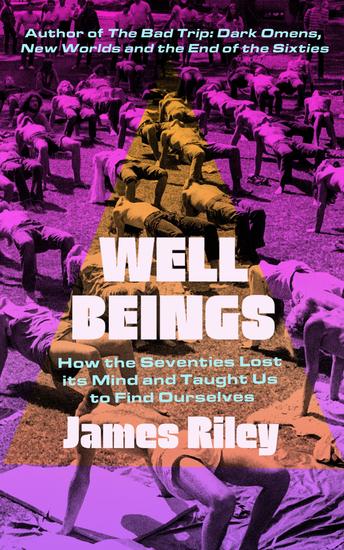
    James Riley, author of the cult hit The Bad Trip: Dark Omens, New Worlds and the End of the Sixties, returns with another incisive and thought-provoking cultural history, turning his trenchant eye to the wellness industry that emerged in the 1970s.
    
    Concepts such as wellness and self-care may feel like distinctly twenty-first century ideas, but they first gained traction as part of the New Age health movements that began to flourish in the wake of the 1960s. Riley dives into this strange and hypnotic world of panoramic coastal retreats and darkened floatation tanks, blending a page-turning narrative with illuminating explorations of the era's music, film, art and literature.
    Well Beings delves deep into the mind of the seventies - its popular culture, its radical philosophies, its approach to health and its sense of social crisis. It tells the story of what was sought, what was found and how these explorations helped the 'Me Decade' find itself. In so doing, it questions what good health means today and reveals what the seventies can teach us about the strange art of being well.
    Ver livro
  • How to Write Fiction: 7 Easy Steps to Master Fiction Writing Novel Writing Writing a Book & Short Story Writing - cover

    How to Write Fiction: 7 Easy...

    Jaiden Pemton

    • 0
    • 0
    • 0
    Are you ready to dive into the world of fiction writing, but don't know where to start? 
    Do you feel unclear about how to distinguish and use the elements of fiction writing? 
    Are you still on the search to unlock your personal writing voice, and write in a style that keeps your readers engaged? 
      
    How to Write Fiction is the guide you need! We will teach you how to write fiction in 7 easy steps. This guide is designed to provide you with all the tools you need in a concise, easy to understand format that will answer all your burning questions and get you on your way to successful fiction writing. 
      
    In order to have success in the fiction world, you must write in a way that keeps your audience engaged and helps them to establish a deeper connection to your works. 
      
    YOU’LL LEARN:The logistics of each element of fiction writing (character development, plot development, setting, point of view, theme, style, and voice)Common fiction writing mistakes to avoidWriting exercises to help you get started and keep you on trackTop tips to developing a writing style and voice that sets your work apartExclusive secrets every fiction writer needs to knowAnd so much more!  
      
    Whether you're just starting out on the journey of fiction writing and need to develop a clearer understanding of the elements or have been at it for a while and are looking for fresh perspectives and tips for further develop your style, this guide is the companion you need. Let’s get started!
    Ver livro
  • A Rare Recording of President John F Kennedy’s Last Speech Before His Assassination - cover

    A Rare Recording of President...

    President John Fitzgerald Kennedy

    • 0
    • 0
    • 0
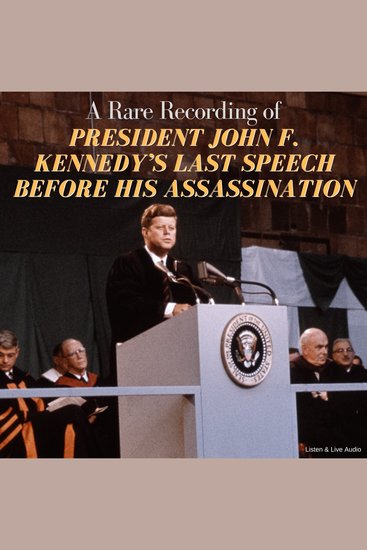
    On November 22, 1963, President John F. Kennedy made a speech to the Fort Worth, Texas, Chamber of Commerce; he was assassinated later that afternoon. Kennedy had traveled to the state to unite Texas Democrats where party leaders were feuding and extremists were contributing to political tensions. Kennedy knew an intra-party feud in Texas could jeopardize his chances of carrying the state for his 1964 re-election campaign.
    Ver livro
  • Operation Northwoods: The History of the Controversial Government Plan to Stage False Flag Attacks on Americans and Blame Cuba - cover

    Operation Northwoods: The...

    Editors Charles River

    • 0
    • 0
    • 0
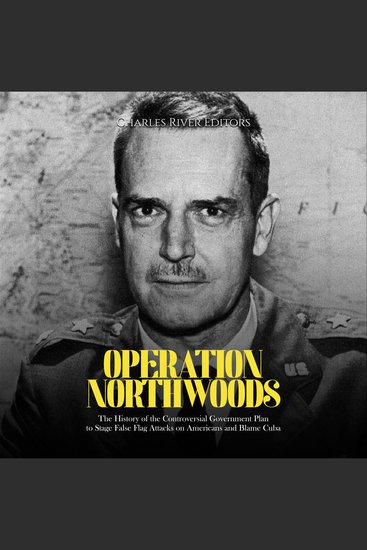
    Throughout the history of warfare, the practice of placing blame on innocent parties in order to justify attacking them has been a constant feature. In the 20th century, this practice began to be commonly referred to as a “false flag” operation. The essence of a false flag scenario is that it is conducted by one party or government and “made to appear as though another party sponsored it.”[1] In informal legal terminology, the practice is commonly referred to as a “stitch up”[2] or “setup.”[3] The modern use of this action based on deceit originated in the 16th century, typically when ships displayed the flags of a neutral or enemy country to hide their identities. 
    	The severity of false flag operations moves in tandem with the perceived danger. In the late 20th century, the Soviet Union constituted an ongoing threat to the United States, ideologically and militarily. When Fidel Castro, a Soviet sympathizer, came to power in Cuba in 1959, the presence of a communist extension of Soviet influence so near American shores caused great discomfort to the U.S. government. 
    	Some of the Cold War’s tensest moments involved Cuba, including the Bay of Pigs invasion and the Cuban Missile Crisis, amply demonstrating that throughout the early 1960s, alarmed individuals within the American government believed that the only way to handle Castro was by immediate elimination and a takeover of Cuba. They were pitted against more nuanced points of view held by others within the Kennedy administration. The Pentagon was of the general mind that in such a perilous environment, military decision-making should come to the front and civilians should withdraw, even the White House. Diplomacy was seen as being of little use by the Joint Chiefs of Staff against an encroaching Soviet superpower led by a political street fighter and his puppet situated just off the coast of Florida. 	This charged atmosphere would lead to one of the most controversial proposals in history.
    Ver livro