Join us on a literary world trip!
Add this book to bookshelf
Grey
Write a new comment Default profile 50px
Grey
Subscribe to read the full book or read the first pages for free!
All characters reduced
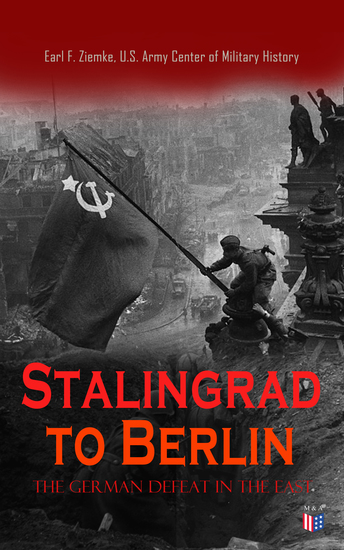
Stalingrad to Berlin: The German Defeat in the East - History of the Turning Point in World War II - cover

Stalingrad to Berlin: The German Defeat in the East - History of the Turning Point in World War II

U.S. Army Center of Military History, Earl F. Ziemke

Publisher: Madison & Adams Press

  • 0
  • 0
  • 0

Summary

Soviet victory over Germany was the most fateful development of World War II. The purpose of this book is to investigate one aspect of the Soviet victory - how the war was won on the battlefield. The author sought, in following the march of the Soviet and German armies from Stalingrad to Berlin, to depict the war as it was and to describe the manner in which the Soviet Union emerged as the predominant military power in Europe.
Content:
Invasion
Retreat
Stalingrad the Encirclement
Stalingrad the Turning Point
The Countermarch
The Center and the North 
Operation Zitadelie 
The First Soviet Summer Offensive
The Battle for the Dnepr Line.
The Rising Tide 
Offensives on Both Flanks- the South Flank
Offensives on Both Flanks-the North Flank
Paying the Piper
Prelude to Disaster
The Collapse of the Center
The South Flank
Retreat and Encirclement
Defeat in the North
The January Offensive
The Defense of the Reich

Earl F. Ziemke is a graduate of the University of Wisconsin, where he received a Ph. D. degree in history. In World War II he served with the U.S. Marine Corps in the Pacific theater.
Available since: 09/08/2023.
Print length: 493 pages.

Other books that might interest you

  • The Ugandan Tales - cover

    The Ugandan Tales

    Victor Rumanyika

    • 0
    • 0
    • 0
    "The Ugandan Tales" is set in Uganda and about the struggles of ordinary Africans against post independence African rulers that preach freedom and emancipation but have turned into oppressors.  This collection of poetry dives deep into topics of police brutality, social injustices, and oppression through the landscape of the tortured cities. Ordinary people seek to reassert their rights against an intransigent regime that is determined to keep them oppressed. The poems chronicle everyday struggles that are faced at the hands of fellow Africans masquerading as Pan Africanists. Through peaceful and non violent means, a new generation of people is now taking a stand against social, political and economic segregation.
    Show book
  • Vasco da Gama - The First Person to Sail from Europe to India around the African Continent - cover

    Vasco da Gama - The First Person...

    Kelly Mass

    • 0
    • 0
    • 0
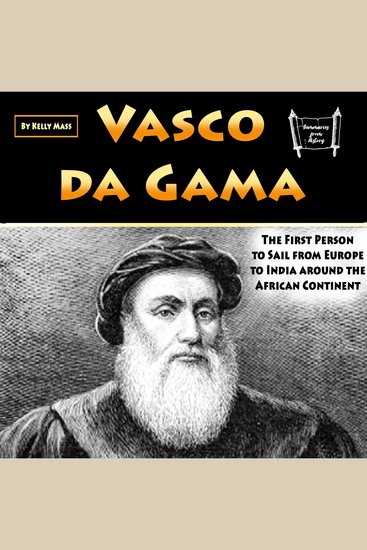
    Vasco da Gama, the 1st Count of Vidigueira, is widely celebrated as the first European to reach India by sea. His landmark journey, which took place from 1497 to 1499, was groundbreaking in that it provided the first direct oceanic connection between Europe and Asia. By navigating around the Cape of Good Hope, located at the southern tip of Africa, da Gama linked the Atlantic and Indian Oceans for the first time, thereby bridging the Western world and the Eastern world. This achievement is considered a pivotal moment in history, marking the beginning of an era of global exploration and the rise of maritime multiculturalism. 
    Da Gama’s successful voyage opened up new trade routes, changing the course of history and shaping the future of global commerce and cultural exchange. His discovery of a sea route to India was not just a geographical milestone but a transformative event that spurred the age of global imperialism. By connecting Europe directly to the wealth of the Indian subcontinent, da Gama paved the way for the Portuguese to establish a vast colonial empire that spanned from Africa to Asia. The Portuguese empire, founded on these maritime routes, would become a powerful force in global trade, controlling key trade routes and regions for centuries. 
    However, the Portuguese expansion under Vasco da Gama and his successors was not without controversy. The methods employed by the Portuguese in their expansion were often violent and ruthless. Da Gama and his crew used extreme brutality, including kidnapping and violence against local populations, which created a lasting legacy of fear and animosity between the Portuguese and India’s indigenous rulers. This harsh approach to colonization set a precedent for the broader patterns of Western colonialism that would dominate the Age of Exploration.
    Show book
  • Secret Powers and Why We Shouldn't Use Them - cover

    Secret Powers and Why We...

    Manly P. Hall

    • 0
    • 0
    • 0
    Secret Powers and Why We Shouldn't Use Them by Manly P. Hall is a thought-provoking exploration of the hidden abilities within human consciousness and the moral, ethical, and spiritual implications of their misuse. Drawing from esoteric traditions, philosophy, and psychology, Hall delves into the nature of these powers, such as clairvoyance, telepathy, and other psychic phenomena, emphasizing their potential to disrupt personal and universal harmony if wielded irresponsibly. Through a balanced perspective, he advocates for self-discipline, ethical development, and a commitment to spiritual growth as prerequisites for engaging with these latent abilities. The work serves as both a cautionary tale and an invitation to introspection, encouraging readers to align with universal principles of integrity and wisdom before attempting to unlock their hidden potential.
    Show book
  • Ludlow Massacre The: The History of the National Guard’s Attack on Striking Miners during the Colorado Coalfield War - cover

    Ludlow Massacre The: The History...

    Editors Charles River

    • 0
    • 0
    • 0
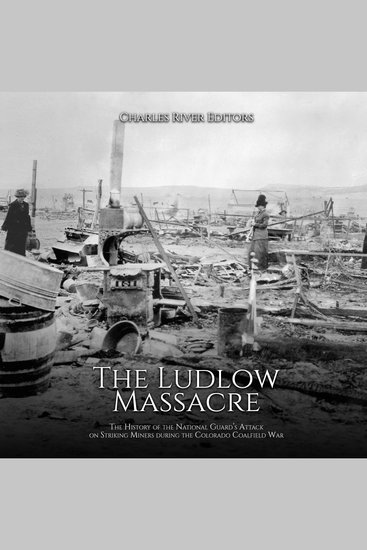
    As labor unions and movements began to form and coalesce in the 19th century, the tensions between workers and companies led to demonstrations, encounters, and even conflicts that descended into violence. Among those, few were as notorious as the fight that took place on April 20, 1914 at Ludlow in the southern Colorado coalfields, during which two units of the Colorado National Guard had a firefight with striking miners who lived in a United Mine Workers (UMW) camp. The Guardsmen had at least one machine gun, and the strikers were also armed. The gunfire lasted most of the day, and at the day’s end, the miners were routed and fled the camp with their families.  
    	Perhaps as many as a dozen miners in the camp were killed during the fighting, but after it was over, the Guardsmen cautiously entered the camp, did some looting, and then soaked the miners’ tents with kerosene in order to burn the whole camp to the ground. The Guard’s arsonists were unaware that in one tent, four women and 11 children had hidden themselves in a sort of cellar under a tent, seeking protection from the gunfire. After the camp burned, a deeply disturbing aspect of the fighting was discovered: two of those women and all 11 children had been asphyxiated from the smoke of their burning tent. 
    	These grim deaths marked Ludlow as more than just another regrettable coal war battle and earned it the title of the Ludlow Massacre. In the previous several decades, there had been a number of violent incidents during strikes in several states that killed more people, but in 1914, Victorian sentimentality about women and children was still prevalent, and the Ludlow tragedy deeply shocked the nation.
    Show book
  • Roman Empire: A Captivating Guide to Imperial Rome and Pax Romana - cover

    Roman Empire: A Captivating...

    Captivating History

    • 0
    • 0
    • 0
    Two manuscripts in one audiobook:Imperial Rome: A Captivating Guide to Events and Facts You Should Know About the Roman EmpirePax Romana: A Captivating Guide to Ancient Rome during the Roman Peace Period 
    In the first part of this audiobook, you learn includes the following:The downfall of the Roman Republic and the emergence of the illustrious Roman Empire;Caesar’s life and conquests, as well as his ultimate assassination at the hands of his senators;The fascinating life of Octavian Augustus and the start of the Pax Romana;Gradual “reduction” in the quality of emperors, starting with bureaucratic Tiberius, who ultimately left Rome;The incredible life of Tiberius’s successor, Caligula, who gained much notoriety;The long reign of Emperor Claudius, whose two wives, Messalina and Agrippina the Younger, shaped the future of Rome;Nero, who (maybe) set Rome on fire and who was most certainly a very unusual emperor with a penchant for the arts; 
    In the second part of this audiobook, you’ll gain new knowledge on the following facts:How the empire evolved from the former republic and who the men were that brought about the changesWhat made the reign of each emperor uniqueWhat some of the more turbulent times during this overarching period of peace wereWho the best emperors during the Pax Romana were, and which ones were considered the worstWhat role the provinces and territorial expansion played in the growth and development of the empireHow the imperial Romans were stratifiedWhat societal changes came about with the abolition of the republic and the return to a monarchic model 
    Scroll up, and give that “add to cart” button a click to learn more about the Roman Empire!
    Show book
  • Every Weapon I Had - A Vietnam Vet's Long Road to the Medal of Honor - cover

    Every Weapon I Had - A Vietnam...

    Paris Davis

    • 0
    • 0
    • 0
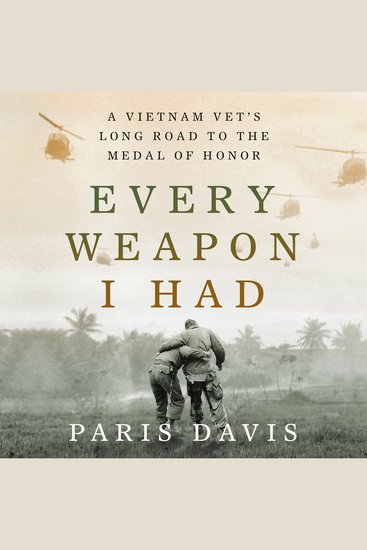
    The story of a Green Beret commander's heroism during the Vietnam War, and the long fight to recognize his bravery.When Col. Paris Davis was selected to lead one of the Green Beret A-teams organizing resistance to Communist incursions into South Vietnam, his commanding officer warned him that some of his soldiers would resent his authority. This was no surprise; there were only a handful of Black officers in the Special Forces. Davis quickly won the respect of his soldiers, and would soon fight beside him as bullets snapped past and mortars exploded overhead.On June 18th, Davis led a group of inexperienced locals and Special Forces soldiers in an attack on a Viet Cong base in Bong Son. They were met by a superior enemy force, and Davis led the charge in a grueling firefight. He was seriously wounded, but he disobeyed a direct order to retreat until he dragged three injured Green Berets off the battlefield to safety.Every Weapon I Had is an inspiring tale of valor and sacrifice, set against the backdrop of major escalations in both the Vietnam War and the Civil Rights movement. It is also a story of deferred honor and delayed recognition; Davis earned the Silver Star and Purple Heart for his actions, but his nomination for the Congressional Medal of Honor was repeatedly “lost.” No official reason has ever been given for this oversight, but those who fought to correct it believe that it was motivated by racial prejudice. Davis was finally awarded the Medal in 2023, 58 years after the battle.A Macmillan Audio production from St. Martin’s Press.
    Show book