Join us on a literary world trip!
Add this book to bookshelf
Grey
Write a new comment Default profile 50px
Grey
Subscribe to read the full book or read the first pages for free!
All characters reduced
American Military History (Vol 1&2) - From the American Revolution to the Global War on Terrorism (Illustrated Edition) - cover

American Military History (Vol 1&2) - From the American Revolution to the Global War on Terrorism (Illustrated Edition)

U.S. Army Center of Military History, Richard W. Stewart

Publisher: e-artnow

  • 0
  • 0
  • 0

Summary

The story of the United States Army is always growing and changing. Historians constantly seek to reinterpret the past while accumulating new facts as America's Army continues to be challenged on new foreign battlefields. Nor does the Army, as an institution, ever stand still. It necessarily changes its organization, materiel, doctrine, and composition to cope with an ever-changing world of current conflict and potential danger. American Military History provides a comprehensive but brief account of Army's past. The history of an active organization tends to expand rapidly as the organization grows larger and more complex. The first volume covers the Army's history from its birth in 1775 to the eve of World War I. The second volume of this edition takes up that story and extends it into the twenty-first century and the early years of the war on terrorism.
Available since: 12/15/2023.
Print length: 895 pages.
Other books that might interest you

  • Mental Fitness: How to build mental strength and fitness to take on life's challenges from bestselling author of HOW TO ESCAPE FROM PRISON - cover

    Mental Fitness: How to build...

    Paul Wood

    • 0
    • 0
    • 0
    The bestselling author of How to Escape from Prison, prisoner-turned-psychologist Paul Wood on developing the mental strength and fitness to take on all of life's challenges 
      
    Getting and staying mentally fit, just like getting and maintaining a high level of physical fitness, involves hard work, effort, and consistency. Our level of mental fitness determines how effectively we can flourish through adversity, realise our potential, and be happier with our lives - regardless of what the universe has in store. 
    We all know about mental stress (or we think we do). We've definitely all experienced it, and none of us like it. Yet this is not a threat to be avoided. Mental stress is perfectly analogous to physical stress: it is the mind's way of telling us that what we are attempting to perform is challenging our resource. This is a catalyst for growth, and a sign we are pursuing our potential. When we experience stress, we have a choice: we can heed that signal and give up - after all, we're meant to stay in our psychic comfort zone all the time, right? Or we can recognise the discomfort we are feeling is simply nature's way of enabling us to rise to the occasion. 
    In Mental Fitness you will learn how to: Increase your mental fitness, just as you would increase your physical fitness Get closer to your potential by working proactively to maintain your mental fitness Experience the right level of stress (this is what makes us get fitter) Cope effectively for longer before you get fatigued or exhausted (it doesn't mean you don't feel the struggle) Pay attention to the indicators of fatigue to avoid burnout and unnecessary misery
    Show book
  • Zero at the Bone - Fifty Entries Against Despair - cover

    Zero at the Bone - Fifty Entries...

    Christian Wiman

    • 0
    • 0
    • 0
    Few contemporary writers ask the questions about faith, morality, and God that Christian Wiman does, and even fewer—perhaps none—do so with his urgency and eloquence. Wiman, an award-winning poet and the author of My Bright Abyss, lays the motion of his mind on the page in this genre-defying work, an indivisible blend of poetry, criticism, theology, and searing memoir. As Marilynne Robinson wrote, "[Wiman's] poetry and his scholarship have a purifying urgency that is rare in this world . . . [It] enables him to say new things in timeless language, so that the reader's surprise and assent are one and the same." 


    Zero at the Bone begins with Wiman's preoccupation with despair, and through fifty brief pieces, he unravels its seductive appeal. The book is studded with the poetry and prose of writers who inhabit Wiman's thoughts, and the voices of Wallace Stevens, Lucille Clifton, Emily Dickinson, and others join his own. At its heart and Wiman's, however, are his family—his young children (who ask their own invaluable questions, like "Why are you a poet? I mean why?"), his wife, and those he grew up with in West Texas. Wiman is the rare thinker who takes on the mantle of our greatest mystics and does so with an honest, profound, and contemporary sensibility. Zero at the Bone is a revelation.
    Show book
  • My Secret Life Vol 7 Chapter 9 - cover

    My Secret Life Vol 7 Chapter 9

    Dominic Crawford Collins

    • 0
    • 0
    • 0
    My Secret Life is an anonymously penned memoir written during a period from the 1840s to the 1880s by a wealthy and sex obsessed English gentleman who refers to himself simply as ‘Walter’. Part confessional, part investigative erotic journalism, it meticulously documents every detail of the author’s prolific sexual encounters, offering us in the process an eye and thigh opening account of life behind closed doors in the Victorian age.
    
    Women, in both mind and body, were the all consuming object of Walter’s interest. From early youth through to old age his quest for erotic discovery and adventure with them was never diminished.
    
    Unlike contemporary 19th century erotic texts, such as The Pearl, whose sole object was to titillate, Walter’s interest in his subjects did not end with the extinguishing of the carnal flame. His hunger to understand the circumstances and minds of the women he encountered is never upstaged by the sex. Their potted life histories, their most intimate desires and acts were shared with him and in turn meticulously recorded by him, written down verbatim while still fresh in his mind.
    
    The resulting poignant record of a lost era and the intimate moments of the women who inhabited it offer us a remarkable insight into the 19th century that cannot be gleaned from any other source.
    
    The complete unabridged text is being released as a fully scored audiofilm (an audio book with accompanying music soundtrack) by film composer Dominic Crawford Collins.
    
    Volume 1 Chapter 9
    Penis in excelsis. • Pride in his Priapus. • A whack on a bum. • A whack on a table. • Between two chairs. • Over silk stockings. • A male sixteen and female fifty. • "My little cunny." • An old man and his servant. • A virginity taken. • Tooth brush, anus, and suction. • The omnibus next day. • My letch for minette. • A sodomitic parson and catamitic harlot. • A bum hole licked. • A bum hole plugged. • The pains and pleasures of sodomy. A digital anal experiment. • One stumpy, frousy, and middle- aged. • Fruitless exercise on a stomach. • "You'll fuck my bottom out."
    Show book
  • Son of Peace - A Modern Historical Novel of Buddha - cover

    Son of Peace - A Modern...

    James Field

    • 0
    • 0
    • 0
    Are you seeking more than just another book to read? Dive into the profound wisdom and timeless teachings of the Buddha with this captivating masterpiece. While other books might offer mere entertainment, "Son of Peace" promises to transform your life. 
    In the heart of ancient India, amidst the opulence of palaces and the cries of suffering, one man embarks on a journey that will change the course of history. Siddhartha Gautama, the heir to a kingdom, forsakes his princely comforts in search of something greater: the elusive truth beyond worldly riches. 
    Driven by an insatiable thirst for understanding, Siddhartha wanders the lands, encountering the depths of human suffering and the fleeting pleasures of existence. Amidst the chaos, he finds solace in the whispers of wise sages and the gentle embrace of nature, but his quest for enlightenment remains elusive. 
    As Siddhartha delves deeper into the mysteries of existence, he confronts the demons of his own mind and the temptations of desire. Yet, with each trial, he draws closer to the ultimate truth, unravelling the secrets of the universe and the nature of human suffering. In a world consumed by greed and ignorance, Siddhartha's journey offers a transformative path to liberation for all who seek it, a beacon of hope in the darkness. 
    Prepare to be spellbound by this evocative retelling of one of history's most revered figures, as you journey alongside the Buddha on a path of enlightenment and redemption. Ultimately, this story embodies hope, resilience, and the enduring triumph of the human spirit—a tale that will resonate in your heart, shaping your thoughts and actions long after you turn the last page.
    Show book
  • Barack Obama - Conservative Pragmatist Progressive - cover

    Barack Obama - Conservative...

    Burton I. Kaufman

    • 0
    • 0
    • 0
    Following his election, President Obama's supporters and detractors anticipated radical reform. As the first African American to serve as president, he reached the White House on a campaign promise of change. But, as Burton Kaufman explores in this insightful biography, Obama showed clear patterns of classical conservativism of an ideological sort and basic policy-making pragmatism. His commitment to usher in a multiracial, multiethnic, and multicultural society was fundamentally connected to opening up, but not radically altering, the existing free enterprise system. 


    The Affordable Care Act was a distillation of President Obama's complex motivations for policy. More conservative than radical, the ACA fitted the expansion of health insurance into the existing system. Similarly, in foreign policy, Obama eschewed the use of force to affect regime change. Yet he kept boots on the ground in the Middle East and supported ballot-box revolts geared toward achieving in foreign countries the same principles of liberalism, free enterprise, and competition that existed in the United States. 


    In estimating the course and impact of Obama's full political life, Kaufman makes clear that both the desire for and fear of change in the American polity affected the popular perception but not the course of action of the forty-fourth US president.
    Show book
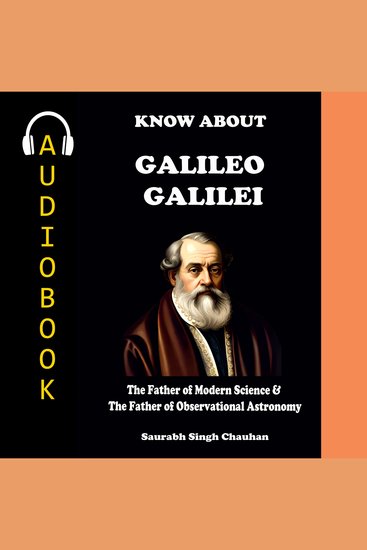
  • KNOW ABOUT "GALILEO GALILEI" - The Father of Modern Science & The Father of Observational Astronomy - cover

    KNOW ABOUT "GALILEO GALILEI" -...

    Saurabh Singh Chauhan

    • 0
    • 0
    • 0
    This is small copy off introduction of the book: Galileo Galilei (1564-1642) was an Italian astronomer, physicist, and engineer, sometimes described as a polymath. From a young age, Galileo showed a great aptitude for mathematics and science. He went on to study at the University of Pisa, where he made his first important scientific discovery: the laws of motion of a pendulum. 
    After leaving Pisa, Galileo taught mathematics at the University of Padua for nearly twenty years. During this time, he conducted a wide range of scientific experiments, including studies of inclined planes, falling bodies, and the motion of projectiles. He also invented the telescope, which he used to make groundbreaking observations of the heavens. 
    In 1610, Galileo published a book called The Starry Messenger, in which he described his telescopic observations of the Moon, Jupiter, and Venus. His discoveries included the four largest moons of Jupiter, which are now known as the Galilean moons. Galileo's work helped to overthrow the prevailing geocentric model of the universe, which placed the Earth at the center, and to establish the heliocentric model, which places the Sun at the center. 
    Galileo's support for the heliocentric model brought him into conflict with the Catholic Church, which at the time held great power and influence. In 1633, Galileo was put on trial by the Inquisition and forced to recant his views. However, he continued to work on his scientific theories in secret, and in 1638 he published his most important work, Two New Sciences.
    Show book