Join us on a literary world trip!
Add this book to bookshelf
Grey
Write a new comment Default profile 50px
Grey
Subscribe to read the full book or read the first pages for free!
All characters reduced
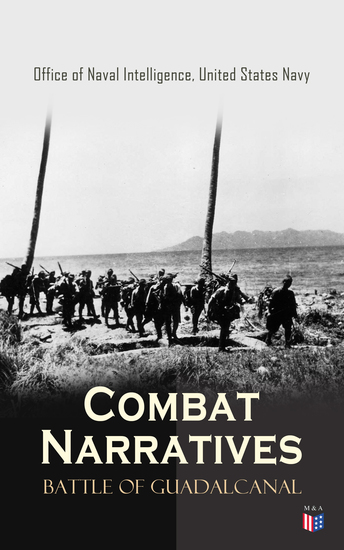
Combat Narratives: Battle of Guadalcanal - 11-15 November 1942 - cover

Combat Narratives: Battle of Guadalcanal - 11-15 November 1942

United States Navy, Office of Naval Intelligence

Publisher: Madison & Adams Press

  • 0
  • 0
  • 0

Summary

"Combat Narratives: Battle of Guadalcanal 11-15 November, 1942," published by the Office of Naval Intelligence, is an in-depth account of one of the critical engagements of World War II in the Pacific Theater. The book focuses on the events of the naval battles around Guadalcanal from 11th to 15th November 1942, a period marked by intense and decisive engagements that were pivotal in the Guadalcanal Campaign. Throughout the narrative, the book emphasizes the bravery and endurance of the sailors and aviators involved in these fierce battles. It also addresses the difficulties of command and decision-making in the heat of combat, providing insights into the complexities of naval warfare. "Combat Narratives: Battle of Guadalcanal" is not only a detailed historical document but also a tribute to the valor of the men who fought in one of the most challenging and consequential theatres of World War II. It serves as an essential resource for historians, military strategists, and anyone interested in the intricacies and impacts of naval warfare.
Available since: 11/27/2023.
Print length: 90 pages.


Other books that might interest you

  • The Parva Naturalia On Memory - cover

    The Parva Naturalia On Memory

    Aristotle

    • 0
    • 0
    • 0
    On Memory is a work of the Greek philosopher and scientist Aristotle, included in the collection Parva Naturalia.
    The Parva Naturalia (a conventional Latin title first used by Giles of Rome: "short treatises on nature") are a collection of seven works by Aristotle, which discuss natural phenomena involving the body and the soul. They form parts of Aristotle's biology.
    Show book
  • Intellectual Anarchy - The Art of Disruptive Innovation - cover

    Intellectual Anarchy - The Art...

    Patrick K Sullivan

    • 0
    • 0
    • 0
    So how do we move the future from the distant horizon to the present day? We need Intellectual Anarchy. 
    The accelerating challenges facing our planet—such as climate change, food scarcity, sustainable energy, overpopulation, nuclear proliferation, income inequality, and rising healthcare costs—are solvable. The question is not if, but when. 
    All these challenges directly impact our lives and our unwritten future. They have enormous economic consequences for humans and society. They also provide incredible opportunities for investors and innovators. This is a book about how we can find disruptive solutions to hard problems, problems so difficult that they can seem impossible. Problems of that magnitude demand radical new ideas—an incremental approach won’t work. Their solutions seemingly come out of left field, defying conventional wisdom, and overturning existing industries, practices, and business models. 
    This book details the Intellectual Anarchy methodology followed at Oceanit for generating disruptive solutions to these problems and taking them from the idea stage all the way to market—Mind-to-Market, including financing innovations to overcome the scarcity of venture capital anywhere away from the conventional tech hubs. 
    Oceanit operates from Hawai‘i, the most remote location in the world. Yet today Oceanit works across the world with just about everybody—the US government, Fortune 100 companies, and more than sixty universities—partnering and collaborating as we research, invent, and produce technology in energy, aerospace, life sciences, information technology, sustainability, and resiliency. 
    If Oceanit’s Intellectual Anarchy model works in Hawai‘i, it can work anywhere. 
    BOOK PDF FILE: drive.google.com/file/d/1_P9l1y5khTaO6bxavPnEzri-3ZByADNP/view
    Show book
  • The Mythology of the Aborigines - Dreamtime Stories from Australia - cover

    The Mythology of the Aborigines...

    Odessa Nightshade

    • 0
    • 0
    • 0
    Aboriginal mythology is one of the oldest and most enduring oral traditions in the world, deeply intertwined with the identity, spirituality, and way of life of Indigenous Australians. At the heart of this mythology is the concept of **Dreamtime**, the sacred era in which the land, people, and laws of existence were formed. Unlike Western myths, which often separate the past from the present, Dreamtime stories are timeless—continuing to shape and guide Aboriginal communities today.  
      
    One of the most profound aspects of Aboriginal mythology is its role in explaining the creation of the natural world. The Dreaming tells of powerful ancestral beings who shaped the land, created rivers and mountains, and gave life to animals and people. These stories are not just myths but sacred truths, passed down through generations as a way of preserving knowledge, laws, and cultural values. The **Rainbow Serpent**, for example, is a common figure in many Aboriginal cultures, often depicted as a creator spirit responsible for forming the land and waterways. Other tales speak of celestial beings, tricksters, and wise elders who teach important lessons about survival, respect, and harmony with nature.  
      
    Oral tradition is central to Aboriginal culture, ensuring that these sacred stories remain alive. Unlike written texts, Dreamtime stories are preserved through song, dance, rock art, and storytelling, allowing each generation to contribute to and maintain their significance. The stories are more than entertainment; they serve as maps for navigating the landscape, moral guides for behavior, and spiritual connections to the ancestors. They also emphasize a deep respect for the land, as many stories explain the sacred nature of particular sites, reinforcing the importance of environmental stewardship. 
    Show book
  • Flying Through the Ranks - The Extraordinary Experiences of Airmen to Air Marshals from the Cold War to the Gulf - cover

    Flying Through the Ranks - The...

    Air Marshal G.A. 'Black' Robertson

    • 0
    • 0
    • 0
    The inspiration for this brilliant anthology is the "I Learnt About Flying from That" articles that first appeared in the RAF flight safety magazine Air Clues in the 1940s and continue to feature in the magazine to this day. Flying Through the Ranks gets a five-star start with an extraordinary tale from a marshal of the Royal Air Force and continues in the same vein. Men and women of every rank—pilots, navigators, engineers, a RAF regiment officer, and airmen too—reveal similar intriguing experiences in both war and peace. Exciting, amusing, poignant too at times, their stories say as much about the development of the RAF and the making of the Cold War warrior as they do about the individuals themselves. It's impossible not to be moved by these rousing stories of courage and leadership, risk-taking and pressure, invention and adventure. Starkly exposing human fallibility at times, they highlight the skill and improvisation central to the flying business. Other common themes across some uncommon accounts are the sheer exhilaration of flying, the role that luck plays in everyone's life, and the unspoken bond of respect that binds aviation professionals together. Strap yourself in for a top flight experience!
    Show book
  • City Growth and Urban Form - Models and Theories - cover

    City Growth and Urban Form -...

    Lyric Vale

    • 0
    • 0
    • 0
    Urban growth and development have been central to human progress for centuries, shaping the landscape, economies, and cultures of societies around the world. As the global population continues to urbanize, cities are experiencing rapid expansion and transformation. This urbanization process, which involves the migration of people from rural to urban areas, is driven by a combination of economic, social, and political factors. Understanding the forces behind urban growth is essential for urban planners, policymakers, and scholars who aim to navigate the challenges and opportunities that come with it. 
    The rise of cities is closely linked to the development of agriculture, trade, and industry. In early history, cities were established as centers of commerce and governance, offering opportunities for social, political, and economic advancement. With the Industrial Revolution, cities became hubs of production, attracting large numbers of people seeking employment and better living conditions. This period marked a significant shift from agrarian economies to industrial economies, fueling the growth of urban centers across Europe and North America. 
    In the modern era, urbanization has reached unprecedented levels, with more than half of the world’s population now residing in urban areas. The growth of cities is not limited to developed countries but is also occurring rapidly in the developing world, particularly in regions of Asia, Africa, and Latin America. This has led to the expansion of megacities—urban areas with populations exceeding 10 million people—while smaller cities also experience considerable growth. The factors driving this global urbanization include the pursuit of better economic opportunities, access to education and healthcare, and the promise of improved living standards.
    Show book
  • DIALECTICAL BEHAVIORAL THERAPY COMPLETE GUIDE MADE EASY - Everything You Need to Know About DBT With Mindfulness to Manage Emotions Borderline Personality Disorder Depression Anxiety & Panic Attack - cover

    DIALECTICAL BEHAVIORAL THERAPY...

    Helen Campbell

    • 0
    • 0
    • 0
    "Dialectical Behavioral Therapy Complete Guide, Made Easy" by Helen Campbell is an essential literary companion for anyone seeking comprehensive knowledge and practical guidance on mastering Dialectical Behavioral Therapy (DBT) enriched with mindfulness. The book delves into a wealth of insightful information, providing readers with the tools and understanding needed to navigate the complexities of managing emotions, borderline personality disorder, depression, anxiety, and panic attacks. 
    Helen Campbell's expertly crafted guide is structured to seamlessly blend theory with actionable techniques, making the often intricate concepts of DBT and mindfulness approachable and applicable to everyday life. The author carefully breaks down the key principles of DBT, offering clear explanations and step-by-step strategies to help readers develop essential skills in emotional regulation, distress tolerance, interpersonal effectiveness, and mindfulness practices. 
    The integration of mindfulness adds a transformative dimension to managing emotions and mental health challenges, empowering readers to cultivate self-awareness, acceptance, and a balanced approach to emotional experiences. 
    Whether you're grappling with emotional turbulence, facing the challenges of borderline personality disorder, or dealing with the weight of depression, anxiety, or panic attacks, this book offers solace and guidance. Helen Campbell's expertise and compassionate approach shine through the pages, ensuring that listeners not only grasp the core concepts of DBT and mindfulness but also feel encouraged and supported in their journey towards emotional well-being and mental health resilience. 
    "Dialectical Behavioral Therapy Complete Guide, Made Easy" is a beacon of hope for individuals seeking a comprehensive roadmap to navigate the complexities of their emotions and mental health, fostering a path towards a more balanced, fulfilling, and mindful life.
    Show book