Join us on a literary world trip!
Add this book to bookshelf
Grey
Write a new comment Default profile 50px
Grey
Subscribe to read the full book or read the first pages for free!
All characters reduced
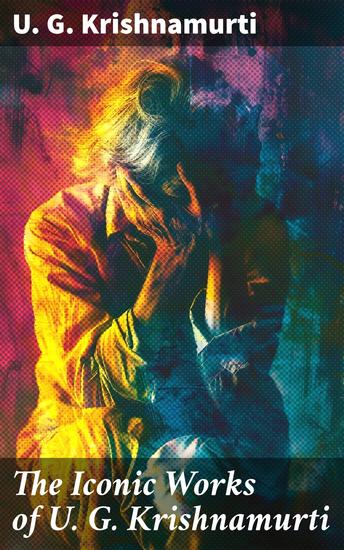
The Iconic Works of U G Krishnamurti - Enriched edition The Mystique of Enlightenment Courage to Stand Alone Mind is a Myth The Natural State - cover

The Iconic Works of U G Krishnamurti - Enriched edition The Mystique of Enlightenment Courage to Stand Alone Mind is a Myth The Natural State

U. G. Krishnamurti

Publisher: Good Press

  • 0
  • 0
  • 0

Summary

In "The Iconic Works of U. G. Krishnamurti," readers are invited into a profound exploration of consciousness and self-liberation, encapsulating the radical ideas of one of the 20th century's most intriguing thinkers. Krishnamurti's literary style is marked by a conversational yet piercing prose that seeks to dismantle conventional spirituality and philosophical constructs, urging readers to experience truth beyond dogma. The book delves into his core teachings, characterized by an emphasis on direct experience rather than inherited beliefs, which situates his work within the broader context of existential thought and non-duality. U. G. Krishnamurti, an Indian philosopher often regarded as the 'anti-guru,' lived a life steeped in the tension between tradition and individual insight. His past as a seeker, coupled with profound personal revelations, shaped his disdain for rituals and authority in spirituality. His journey, moving through various cultural landscapes and intellectual terrains, led him to articulate a philosophy that challenges the status quo and encourages radical personal introspection. For those seeking liberation from societal constraints and an authentic awakening, "The Iconic Works of U. G. Krishnamurti" serves not just as a philosophical text, but as an experiential guide. This book is highly recommended for spiritual seekers, philosophers, and anyone interested in breaking free from preconceived notions of existence.

In this enriched edition, we have carefully created added value for your reading experience:
- A comprehensive Introduction outlines these selected works' unifying features, themes, or stylistic evolutions.
- A Historical Context section situates the works in their broader era—social currents, cultural trends, and key events that underpin their creation.
- A concise Synopsis (Selection) offers an accessible overview of the included texts, helping readers navigate plotlines and main ideas without revealing critical twists.
- A unified Analysis examines recurring motifs and stylistic hallmarks across the collection, tying the stories together while spotlighting the different work's strengths.
- Reflection questions inspire deeper contemplation of the author's overarching message, inviting readers to draw connections among different texts and relate them to modern contexts.
- Lastly, our hand‐picked Memorable Quotes distill pivotal lines and turning points, serving as touchstones for the collection's central themes.
Available since: 12/22/2023.
Print length: 667 pages.

Other books that might interest you

  • The Art and Science of Connection - Why Social Health Is the Missing Key to Living Longer Healthier and Happier - cover

    The Art and Science of...

    Kasley Killam

    • 0
    • 0
    • 0
    A groundbreaking redefinition of what it means to be healthy that introduces the need for social health—the part of wellbeing that comes from feeling connected—to truly flourish. 
    Exercise. Eat a balanced diet. Go to therapy. Most wellness advice is focused on achieving and maintaining good physical and mental health. But Harvard-trained social scientist and pioneering social health expert Kasley Killam reveals that this approach is missing a vital component: human connection. 
    Relationships not only make us happier, but also are critical to our overall health and longevity. Research shows that people with a strong sense of belonging are 2.6 times more likely to report good or excellent health. Perhaps even more astonishingly, people who lack social support are up to 53% more likely to die from any cause. Yet social health has been overlooked and underappreciated—until now. 
    Just as we exercise our physical muscles, we can strengthen our social muscles. Weaving together cutting-edge science, mindset shifts, and practical wisdom, Killam offers the first methodology for how to be socially healthy. An antidote to the loneliness epidemic and an inspiring manifesto for seeing wellbeing as not only physical and mental, but also social, The Art and Science of Connection is a handbook for thriving. 
    In this essential book, you will:Learn a simple yet powerful framework to understand, evaluate, and bolster your social health.Discover the exact strategy or habit you need, as well as research-backed tips, to cultivate and sustain meaningful connection now and throughout your life.Glean actionable insights to develop a sense of community in your neighborhood, at work, and online from a spirited group of neighbors in Paris, the CEO of a major healthcare company, and an artificially intelligent chatbot.Get an insider look at the innovative ways that doctors, teachers, entrepreneurs, architects, government leaders, and everyday people are catalyzing a movement toward a more socially healthy society. 
    The Art and Science of Connection will transform the way you think about each interaction with a friend, family member, coworker, or neighbor, and give you the tools you need to live a more connected and healthy life—whether you are an introvert or extrovert, if you feel stretched thin, and no matter your age or background. Along the way, Killam will reveal how a university student, a newlywed, a working professional, and a retired widow overcame challenges to thrive through connection—and how you can, too. 
    Supplemental enhancement PDF accompanies the audiobook.
    Show book
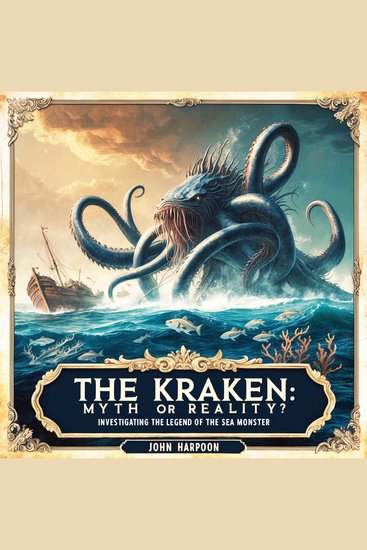
  • The Kraken - Myth or Reality? Investigating the Legend of the Sea Monster - cover

    The Kraken - Myth or Reality?...

    John Harpoon

    • 0
    • 0
    • 0
    The Kraken, a legendary sea monster whose name evokes images of terror and fascination, has captivated the imaginations of people for centuries. First emerging from the shadows of Scandinavian folklore, this giant creature—often described as a massive octopus or squid—has become one of the most iconic symbols of the unknown depths of the ocean. The allure of the Kraken lies in its mysterious nature, its ability to stir both fear and wonder, and the enduring question: is it merely a myth, or could there be some truth behind the legend? 
      
    For sailors of old, the Kraken represented the dangers of the sea, a vast and untamable force filled with peril. Tales of ships being pulled under the water, disappearing without a trace, were often attributed to the Kraken’s monstrous tentacles dragging them to their doom. These stories, passed down through generations, grew in magnitude and detail, transforming the Kraken into a creature of unimaginable size and strength. The Kraken’s enormous presence on the open sea symbolized the boundary between the known world and the vast, dark waters that were beyond human control. 
      
    Yet, despite its fearsome reputation, the Kraken has also been embraced as a symbol of mystery and curiosity. Its mythical status has made it an enduring figure in literature, art, and popular culture, where it is often portrayed as both a terrifying threat and an awe-inspiring force of nature. From the pages of Jules Verne’s *Twenty Thousand Leagues Under the Sea* to blockbuster films like *Pirates of the Caribbean*, the Kraken continues to embody humanity’s fascination with the sea and the creatures that may lie beneath its surface.
    Show book
  • Ferdinand Magellan: A short biography - 5 Minutes: Short on time - long on info! - cover

    Ferdinand Magellan: A short...

    5 Minutes, 5 Minute Biographies,...

    • 0
    • 0
    • 0
    Ferdinand Magellan, adventurer and discoverer: Life and work in a short biography! Everything you need to know, brief and concise. Infotainment, education and entertainment at its best!
    Show book
  • German Order of Battle - Panzer Panzer Grenadier and Waffen SS Divisions in WWII - cover

    German Order of Battle - Panzer...

    Samuel W Mitcham

    • 0
    • 0
    • 0
    The third volume in this definitive reference on the German Army in WWII, covering the organization, combat histories, and commanders of each division. Military historian Samuel Mitcham is a noted expert in Germany’s ground forces during the Second World War. In his three-volume German Order of Battle, he presents the most detailed and authoritative reference work on the subject to date. Mitcham’s narrative histories highlight the organization, commanders, experiences, and casualties of each division, as well as sources for further research.  Taken together, these volumes are the most comprehensive and accessible reference available on the Germany Army in World War II, unmatched in the information compiled on each division from inception to destruction. Volume Three covers the Panzer, Panzer Grenadier, and Waffen SS Divisions.
    Show book
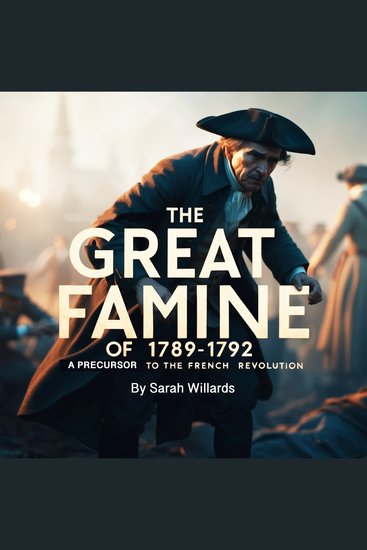
  • The Great Famine of 1789-1792 - A Precursor to the French Revolution - cover

    The Great Famine of 1789-1792 -...

    Sarah Willards

    • 0
    • 0
    • 0
    The Great Famine of 1789-1792 stands as one of the most significant preconditions to the French Revolution. It was a period marked by widespread food scarcity, severe hunger, and social unrest. Although the famine itself was a direct consequence of several intertwined factors, it was also the tipping point that exposed the deep flaws within the French system of governance and society. This chapter aims to provide a comprehensive overview of the famine, exploring its causes, the impact on the population, and the broader societal repercussions that contributed to the revolutionary atmosphere of the late 18th century. 
    At the heart of the famine was a series of poor harvests in France, exacerbated by harsh weather conditions. The years 1788 and 1789 saw a succession of bad weather, including a particularly harsh winter, followed by storms and a devastating hailstorm that destroyed much of the grain crops. These climatic anomalies caused a dramatic reduction in the food supply, especially in the vital grain harvests. With bread being the staple food for the majority of the population, the shortages led to skyrocketing prices. As bread became unaffordable for many, hunger spread rapidly, and it wasn’t just the peasantry but even urban dwellers who felt the pinch. 
    This agricultural crisis was further compounded by the weak response of the French monarchy and its institutions. King Louis XVI and his ministers were largely ineffective in addressing the immediate needs of the people. The government, which was already burdened by war debts and an inefficient taxation system, failed to ensure that food distribution was prioritized. The monarchy’s inability to manage the crisis led to widespread dissatisfaction and eroded any remaining faith the people had in their rulers.
    Show book
  • Eurotrash - Why America Must Reject the Failed Ideas of a Dying Continent - cover

    Eurotrash - Why America Must...

    Anonymous

    • 0
    • 0
    • 0
    Why should America try to be more like countries that are worse in nearly every way?  
    Europe has been declining under the weight of its antiquated institutions, economic fatigue, moral anemia and cultural surrender. Yet American politicians, technocrats, academics, and pundits argue, with increasing popularity, that Americans should look across the Atlantic for solutions to the nation’s problems, including on issues like health care, the welfare state, immigration, and a bloated bureaucracy. 
    In Eurotrash, David Harsanyi argues we are looking in the wrong place. By every economic and societal measure, the United States is more tolerant than Europe. It is more welcoming of immigrants, but also far more successful at assimilating them. Minorities do far better in United States. Our economy is dominant. Only one European company appears in top 10 corporate powerhouses in the world and only seven in the top 50. Americans make up nearly half of the list. 
    Americans are far more charitable and happier than Europeans. Our slightly lower life expectancy and our slightly higher infant mortality rate are not a result of substandard care, but a statistical misunderstanding based on the fact we treat every life as one worth saving. 
    In this biting, fast-moving, and well-researched polemic, Harsanyi debunks prevailing notions about European supremacy and makes an unapologetic case for American exceptionalism, offering insight and reasoned arguments to counter current policy prescriptions.
    Show book