Join us on a literary world trip!
Add this book to bookshelf
Grey
Write a new comment Default profile 50px
Grey
Subscribe to read the full book or read the first pages for free!
All characters reduced
Twenty Years After - cover

Twenty Years After

Alexandre Dumas

Publisher: E-Kitap Projesi & Cheapest Books

  • 0
  • 0
  • 0

Summary

Twenty Years After (French: Vingt ans après) is a novel by Alexandre Dumas, père, first serialized from January to August, 1845. A book of the D'Artagnan Romances, it is a sequel to The Three Musketeers and precedes The Vicomte de Bragelonne (which includes the sub-plot, Man in the Iron Mask).The novel follows events in France during La Fronde, during the childhood reign of Louis XIV, and in England near the end of the English Civil War, leading up to the victory of Oliver Cromwell and the execution of King Charles I. Through the words of the main characters, particularly Athos, Dumas comes out on the side of the monarchy in general, or at least the text often praises the idea of benevolent royalty. His musketeers are valiant and just in their efforts to protect young Louis XIV and the doomed Charles I from their attackers. This book is the least well-known of the Musketeer saga but works effectively as a sequel, with reappearances by most main characters (or children of main characters) and a number of subplots.The d'Artagnan Romances are a set of three novels by Alexandre Dumas telling the story of the musketeer d'Artagnan from his humble beginnings in Gascony to his death as a marshal of France in the Siege of Maastricht in 1673.The three novels are:The Three Musketeers, set in 1625; first published in 1844. Dumas claimed it was based on manuscripts he had discovered in the Bibliothèque Nationale.Twenty Years After, set in 1648; serialized from January to August, 1845.The Vicomte of Bragelonne: Ten Years Later, set between 1660 and 1673; serialized from October 1847 to January 1850. This vast novel has been split into four volumes; The Vicomte de Bragelonne, Ten Years Later, Louise de la Vallière and The Man in the Iron Mask.Alexandre Dumas, (1802-1870), also known as Alexandre Dumas, père, was a French writer, best known for his historical novels of high adventure. Translated into nearly 100 languages, these have made him one of the most widely read French authors in the world. Many of his novels, including The Count of Monte Cristo, The Three Musketeers, Twenty Years After, and The Vicomte de Bragelonne: Ten Years Later were originally published as serials. His novels have been adapted since the early twentieth century for nearly 200 films. Dumas' last novel, The Knight of Sainte-Hermine, unfinished at his death, was completed by a scholar and published in 2005, becoming a bestseller. It was published in English in 2008 as The Last Cavalier.Prolific in several genres, Dumas began his career by writing plays, which were successfully produced from the first. He also wrote numerous magazine articles and travel books; his published works totaled 100,000 pages. In the 1840s, Dumas founded the Théâtre Historique in Paris.
Available since: 11/29/2023.
Print length: 1000 pages.
Other books that might interest you

  • One Autumn Night - cover

    One Autumn Night

    Maxim Gorky

    • 0
    • 0
    • 0
    It's a touching tale of a young man who finds himself without shelter or food on a cold "Autumn Night" in Moscow. The strong opening lines of the narrator set the stage nicely: "Once in the autumn I happened to be in a very unpleasant and inconvenient position. In the town where I had just arrived and where I knew not a soul, I found myself without a farthing in my pocket and without a night's lodging."Scavenging for something to eat around the "steamship wharves," he encounters another poor wretch, the young woman, Natasha, in similar circumstance if for different reasons. Together they scrounge a loaf of bread and take refuge from the elements (a bitterly cold, freezing rain) under an upside down skiff. Here he learns a little of her circumstances, including how her face came to be marked up, although he could probably already guess that. Her abusive husband has thrown her out, leaving her with a somewhat low opinion of the male of the species: "What wretches all you men are! I'd burn you all in an oven; I'd cut you in pieces. If any one of you was dying I'd spit in his mouth, and not pity him a bit. Mean skunks! You wheedle and wheedle, you wag your tails like cringing dogs, and we fools give ourselves up to you, and it's all up with us! Immediately you trample us underfoot… Miserable loafers."Famous Novels of the author Maxim Gorky: Goremyka Pavel, Published in English as Orphan Paul, Foma Gordeyev, Three of Them,  Also translated as Three Men, The Mother, The Life of a Useless Man,  A Confession, Okurov City, The Life of Matvei Kozhemyakin, The Artamonov Business, Life of Klim Samgin.
    Show book
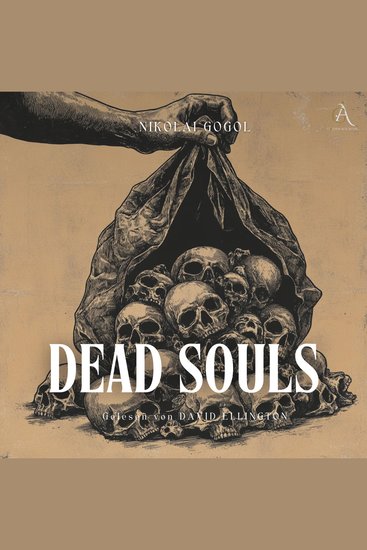
  • Dead Souls - Audiobook - cover

    Dead Souls - Audiobook

    Nikolái Gógol, Classic...

    • 0
    • 0
    • 0
    In Dead Souls, Nikolai Gogol crafts a brilliant satirical portrait of 19th-century Russian society. The novel follows the mysterious and cunning Pavel Ivanovich Chichikov as he travels from town to town, attempting to buy the ownership rights to dead serfs in order to gain wealth and status through a bizarre loophole in the Russian system.Through absurdity, irony, and vivid characterization, Gogol exposes the moral decay and bureaucratic nonsense of imperial Russia. At once comedic and deeply philosophical, Dead Souls is considered one of the great masterpieces of Russian literature, a novel that is as relevant and haunting today as it was in Gogol's time.
    Show book
  • God Sees the Truth But Waits - From their pens to your ears genius in every story - cover

    God Sees the Truth But Waits -...

    Leo Tolstoy

    • 0
    • 0
    • 0
    Leo Tolstoy was born in 1828 in the Russian province of Tula to a wealthy noble family. As a child, he had private tutors but he showed little interest in any formal education. When he went to the University of Kazan in 1843 to study oriental languages and law, he left without completing his courses.  Life now was relaxed and idle but with some writing also taking place.  Gambling debts forced an abrupt change of path and he joined the army to fight in the Crimean War.  He was commended for his bravery and promoted but was appalled at the brutality and loss of life.  He recorded these and other earlier experiences in his diaries which formed the basis of several of his works. 
    In 1852 ‘Childhood’ was published to immediate success and was followed by ‘Boyhood’ and ‘Youth’. 
    His experience in the army and the horrors he witnessed resulted in ‘The Cossacks’ in 1862 and the trilogy ‘Sevastopol Tales’. After the war he travelled around Europe, visiting London and Paris and meeting such luminaries as Victor Hugo and Charles Darwin.  
    It was now that Tolstoy began his masterpiece, ‘War and Peace’. Published in 1869 it was an epic work that changed literature. He quickly followed this with ‘Anna Karenina’.  
    These successes made Tolstoy rich and helped him accomplish many of his dreams but also brought problems as he grappled with his faith and the lot of the oppressed poor. These revolutionary views became so popular that the authorities now kept him under surveillance.  
    He led a life of asceticism and vegetarianism and put his socialist ideals into practice by establishing numerous schools for the poor and food programmes. He also believed in giving away his wealth, which caused much discord with his wife.  
    His writing continued to bring forth classics such as ‘The Death of Ivan Ilyich’ and many brilliant and incisive short stories such as ‘How Much Land Does A Man Need’.  
    In 1901 Tolstoy was excommunicated from the Church and controversially deselected for the Nobel Prize for Literature. 
    Whilst undertaking a pilgrimage by train in October 1910 with his daughter Aleksandra he caught pneumonia in the nearby town of Astapovo.  Leo Tolstoy died on November 9th, 1910, he was 82.
    Show book
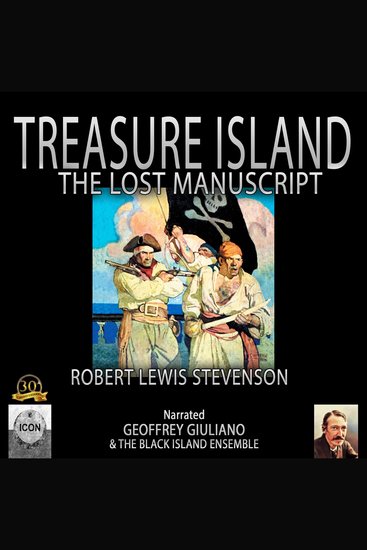
  • Treasure Island The Lost Manuscript - cover

    Treasure Island The Lost Manuscript

    Robert Lewis Stevenson

    • 0
    • 0
    • 0
    Treasure Island is an adventure novel by Scottish author Robert Louis Stevenson, narrating a tale of "buccaneers and buried gold 
     
    Its influence has been popular on its perceptions of pirates, including such elements as treasure maps marked with an "X", schooners, the Black Spot, tropical islands, and one-legged seamen bearing parrots on their shoulders.
    Show book
  • About Love - cover

    About Love

    Anton Chekhov

    • 0
    • 0
    • 0
    "About Love" is an 1898 short story by Anton Chekhov. The third and final part of the Little Trilogy, started by "The Man in the Case" and continued by "Gooseberries".
    The story begins with the love affair between the cook of the house, Nikanor and servant (beautiful woman) Pelageya. Nikanor, who is a drunkard, often verbally abuses and even beats his lover Pelageya when he is drunk. So Pelageya only wants to live with him without getting married. On the other hand, Nikanor doesn't want to be with her without getting married.
    Show book
  • Sherlock Holmes: The Adventure of the Bruce Partington Plans - cover

    Sherlock Holmes: The Adventure...

    Sir Arthur Conan Doyle

    • 0
    • 0
    • 0
    The Adventure of the Bruce-Partington Plans is one of the 56 Sherlock Holmes short stories written by Sir Arthur Conan Doyle, and one of eight stories in the volume His Last Bow. 
    Sir Arthur Conan Doyle (May 22, 1859-July 7, 1930) was a British author most noted for his stories about the detective Sherlock Holmes, which are generally considered a major innovation in the field of crime fiction. 
    Public Domain (P)2017 Listen & Live Audio
    Show book