Junte-se a nós em uma viagem ao mundo dos livros!
Adicionar este livro à prateleira
Grey
Deixe um novo comentário Default profile 50px
Grey
Assine para ler o livro completo ou leia as primeiras páginas de graça!
All characters reduced
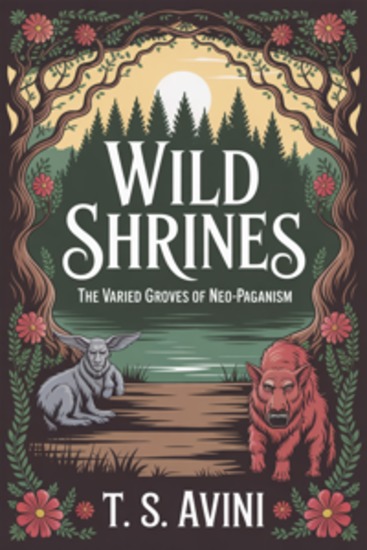
Wild Shrines - The Varied Groves of Neo-Paganism - cover
LER

Wild Shrines - The Varied Groves of Neo-Paganism

T.S Avini

Editora: T.S Avini

  • 1
  • 0
  • 0

Sinopse

Embark on a transformative journey through the mystical realms of Neo-Paganism and uncover the sacred stories etched beneath the canopy of ancient forests and starlit skies. "Wild Shrines: The Varied Groves of Neo-Paganism" invites you into a world where the whispers of the natural world intertwine with timeless spiritual traditions. Discover your connection to the divine as you:- Explore the resurgence of ancient beliefs harmonized with contemporary lifestyles, and find solace in nature's sanctuary.- Dive into captivating chapters about the role of forests, mountains, and rivers as vital, spiritual venues, enriching your understanding of nature's mystical attributes and their profound impact on humanity.Through detailed narratives and hands-on practices, this book equips you to embark on your own spiritual journey, whether you're a solitary explorer or part of a thriving community. It's time to embrace the sacred rhythms, honor the Earth, and weave yourself into the vibrant tapestry of Neo-Paganism. Answer nature’s call today, and let the wild shrines guide your soul's awakening.
Disponível desde: 10/09/2025.
Comprimento de impressão: 245 páginas.

Outros livros que poderiam interessá-lo

  • Why AI Undermines Democracy and What to Do About It - cover

    Why AI Undermines Democracy and...

    Mark Coeckelbergh

    • 0
    • 0
    • 0
    Across the world, AI is used as a tool for political manipulation and totalitarian repression. Stories about AI are often stories of polarization, discrimination, surveillance, and oppression. Is democracy in danger? And can we do anything about it? 


    In this compelling and balanced book, Mark Coeckelbergh reveals the key risks posed by AI for democracy. He argues that AI, as currently used and developed, undermines fundamental principles on which liberal democracies are founded, such as freedom and equality. How can we make democracy more resilient in the face of AI? And, more positively, what can AI do for democracy? Coeckelbergh advocates not only for more democratic technologies, but also for new political institutions and a renewal of education to ensure that AI promotes, rather than hinders, the common good for the twenty-first century. 


    Why AI Undermines Democracy and What to Do About It is a must-listen for anyone who is concerned about the fate of democracy.
    Ver livro
  • Make Hollywood Great Again - Cinema in the Era of President Trump - cover

    Make Hollywood Great Again -...

    Michael Jolls

    • 0
    • 0
    • 0
    Hollywood and MAGA don’t get along. There are plenty of right wingers who won’t even touch this book because "Hollywood" is on the cover. Meanwhile, there are plenty of snowflake leftists who are fighting back tears because they assume this book is propaganda from “orange Thanos” to take over Tinseltown. And then there’s you, the American. Conservative or liberal, you realize that Hollywood and MAGA are at war with each other and that it’s a battle worth examining. Make Hollywood Great Again navigates through 2017 – 2020’s theatrical releases examining journalism, conspiracy and the media, as well as a bevy of other topics. Filmmakers have addressed their undesired tenet in the White House through a variety of stories, mostly non-fiction. The book privileges The Post, Blackkklansman, The Front Runner, Dark Waters, Richard Jewell, and The Hunt among others.
    Ver livro
  • Ar'n't I a Woman? - Female Slaves in the Plantation South - cover

    Ar'n't I a Woman? - Female...

    Deborah Gray White

    • 0
    • 0
    • 0
    "One of those rare books that quickly became the standard work in its field." ―Anne Firor Scott, Duke University 


    Living with the dual burdens of racism and sexism, slave women in the plantation South assumed roles within the family and community that contrasted sharply with traditional female roles in the larger American society. 


    This revised edition of Ar'n't I a Woman? reviews and updates the scholarship on slave women and the slave family, exploring new ways of understanding the intersection of race and gender and comparing the myths that stereotyped female slaves with the realities of their lives. Above all, this groundbreaking study shows us how black women experienced freedom in the Reconstruction South—their heroic struggle to gain their rights, hold their families together, resist economic and sexual oppression, and maintain their sense of womanhood against all odds. 


    Winner of the Letitia Woods Brown Memorial Book Prize awarded by the Association of Black Women Historians.
    Ver livro
  • I Am the Law - How Judge Dredd Predicted Our Future - cover

    I Am the Law - How Judge Dredd...

    Michael Molcher

    • 0
    • 0
    • 0
    He is the law—and you better believe it! 


    Judge, jury, and executioner, Judge Dredd is the brutal comic book cop policing the chaotic future urban jungle of Mega-City One, created by John Wagner and Carlos Ezquerra and launching in the pages of 2000 AD in 1977. 


    But what began as a sci-fi action comic quickly evolved into a searing satire on hardline, militarized policing and "law and order" politics, its endless inventiveness and ironic humor acting as a prophetic warning about our world today—and with important lessons for our future. 


    Blending comic book history with contemporary radical theories on policing, I Am The Law takes key Dredd stories from the last forty-five years and demonstrates how they provide a unique wake up call about our gradual, and not so gradual, slide towards authoritarian policing. 


    From the politicization of policing to "zero tolerance," from violent suppression of protest to the rise of the surveillance state, I Am The Law examines how a comic book warned us about the chilling endgame of today's "law and order" politics.
    Ver livro
  • Medieval Medicine - Practices and Beliefs - cover

    Medieval Medicine - Practices...

    Harris Ropes

    • 0
    • 0
    • 0
    Medieval medicine was deeply rooted in the knowledge and traditions inherited from antiquity. The healing practices of this era were shaped by ancient medical texts, religious doctrine, and the widespread belief in the humoral theory. These influences created a medical system that blended scientific understanding with spiritual and superstitious elements, guiding both diagnosis and treatment. 
    Ancient medical texts played a crucial role in shaping medieval medical thought. The works of Greek and Roman physicians, particularly Hippocrates and Galen, were preserved and studied throughout the Middle Ages. Their teachings on anatomy, physiology, and disease informed medical practice for centuries. Galen’s theories, in particular, dominated medieval medicine, as they were seen as authoritative explanations of bodily functions and imbalances. Additionally, medical knowledge from the Islamic world, especially from scholars such as Avicenna and Al-Razi, was translated into Latin and integrated into European medical education. These texts provided new insights and expanded the understanding of disease and treatment methods. 
    Religion was a dominant force in medieval medical practices. The Christian Church played a central role in both medical care and the dissemination of medical knowledge. Many hospitals were founded and operated by religious institutions, and healing was often associated with divine intervention. Monks and priests studied medical texts, offering treatments based on both practical remedies and spiritual practices. Prayers, relics, and pilgrimages to sacred sites were commonly sought as cures for illnesses. Saints were believed to have healing powers, and their relics were used in healing rituals. Despite the reliance on faith-based healing, religious institutions also preserved and transmitted valuable medical knowledge, ensuring that ancient texts survived and continued to influence medieval medical practices.
    Ver livro
  • The Gambler - A Brilliant Exploration of Obsession Risk and Fortune - cover

    The Gambler - A Brilliant...

    Fyodor Dostoevsky, Tim Zengerink

    • 0
    • 0
    • 0
    What if you could win everything—and lose yourself? 
    The Gambler is Fyodor Dostoevsky’s electrifying story of risk, addiction, and emotional collapse.  
    Based on his own gambling struggles, the tale follows Alexei Ivanovich, a young tutor whose descent into obsession begins with a spin of the roulette wheel—and spirals into madness, financial ruin, and unrequited love. 
    This modern translation captures the rush and tension of every high-stakes decision, immersing listeners in a world where luck is cruel, and every bet could be your last. 
    What You’ll Discover in This Audiobook: 
    -A Thrilling Psychological Descent – Follow a man’s unraveling through risk, pride, and desperation. 
    -A Tale of Passion and Power – Navigate love, obsession, and manipulation among the European elite. 
    -A Brilliantly Modernized Dostoevsky Classic – Narrated with clarity, urgency, and heart for today’s audience. 
    -Themes of Greed, Addiction, and Redemption – A cautionary parable that still strikes with force. 
    Place your bet—but be warned: in Dostoevsky’s world, the house always wins.
    Ver livro