Join us on a literary world trip!
Add this book to bookshelf
Grey
Write a new comment Default profile 50px
Grey
Subscribe to read the full book or read the first pages for free!
All characters reduced
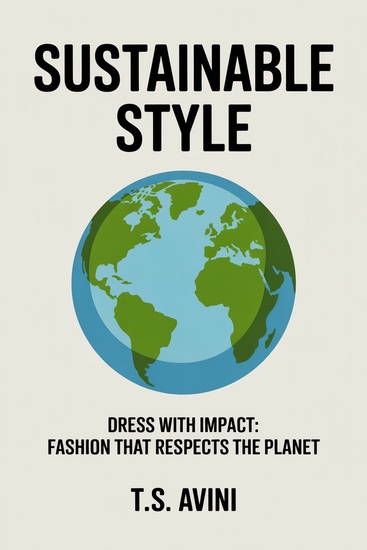
Sustainable Style - Dress with Impact: Fashion That Respects the Planet - cover

Sustainable Style - Dress with Impact: Fashion That Respects the Planet

T.S Avini

Publisher: T.S. AVINI

  • 0
  • 0
  • 0

Summary

Step into a world where fashion meets sustainability with "Sustainable Style: Dress with Impact." This captivating non-fiction guide takes you on a journey through the vibrant tapestry of eco-conscious fashion. Explore the evolution of style from its environmental pitfalls to groundbreaking solutions:- Discover how materials matter with eco-friendly fabrics that not only enhance your wardrobe but also support planetary health.- Learn the power of the circular fashion model and upcycling to transform waste into wearable art.Gain insights from trailblazing brands and influencers who exemplify ethical production and inspire global change. Uncover how technology shapes the future of eco-fashion, paving the way for a sustainable industry. Whether you're a fashion enthusiast or a conscious consumer, transform your closet into a sanctuary for the planet. Take the first step toward a more stylish and responsible future—embrace sustainable fashion today!
Available since: 08/13/2025.
Print length: 196 pages.

Other books that might interest you

  • The Smart Nonprofit - Staying Human-Centered in An Automated World - cover

    The Smart Nonprofit - Staying...

    Allison H. Fine, Beth Kanter

    • 0
    • 0
    • 0
    A pragmatic framework for nonprofit digital transformation that embraces the human-centered nature of your organization 


    In The Smart Nonprofit: Staying Human-Centered in an Automated World, a team of dedicated nonprofit thought leaders delivers a discussion of the information and tools nonprofit staffers and board members need to effectively use artificial intelligence without alienating the human stakeholders and donors on whom they rely. 


    Each chapter of the book offers a narrative discussion of how AI affects a particular functional area in an organization that includes case studies and practical tips for the ethical use of AI. You'll discover explorations of: 


    ● The steps you need to take to become a smart nonprofit and how to effectively lead a digitally transformed organization 


    ● How to automate program delivery, fundraising, and the back office 


    ● Likely future developments in AI for nonprofit work, including a more diverse field of programmers and data scientists and data sovereignty 


    Perfect for nonprofit leaders, board members, employees, managers, and founders, The Smart Nonprofit also belongs on the bookshelves of anyone interested in the intersection of leadership and technology.
    Show book
  • Foraging - How to Recognize Edible Toxic and Poisonous Plants and Mushrooms in the Wild - cover

    Foraging - How to Recognize...

    Matt Weathers

    • 0
    • 0
    • 0
    In the vast tapestry of nature, foraging serves as a timeless connection between humans and the abundance of the wild. Whether you're a seasoned enthusiast or a curious beginner, the journey into foraging promises a profound understanding of the natural world, unveiling the secrets of edible treasures and cautionary tales of toxic counterparts. 
    Why Foraging Matters 
    Foraging is not merely a survival skill; it's a celebration of biodiversity and a doorway to sustainable living. This chapter explores the intrinsic value of foraging, highlighting its ecological significance and the rewards it offers to those who engage with the environment in a meaningful way. 
    The Thrill of the Hunt 
    Embark on a journey through the ages, where foraging has been an integral part of human history. Discover the thrill of the hunt, the satisfaction of gathering your own food, and the stories that connect us to our ancestors and the landscapes they once traversed. 
    Responsible Foraging Practices 
    With great knowledge comes great responsibility. Delve into the ethics of foraging, understanding the delicate balance between enjoying the gifts of nature and preserving its delicate ecosystems. This section sets the tone for the entire guide, emphasizing the importance of sustainable and ethical foraging practices. 
    As we open the pages of "Foraging: How to Recognize Edible, Toxic, and Poisonous Plants and Mushrooms in the Wild," let the spirit of exploration and reverence for nature be your guide. May this journey lead you to a deeper connection with the natural world and a newfound appreciation for the wonders that await in the untamed landscapes. Happy foraging!
    Show book
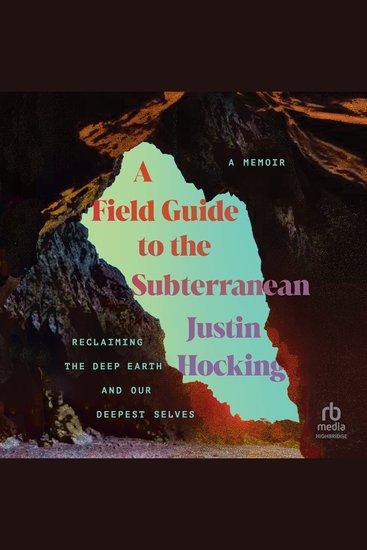
  • A Field Guide to the Subterranean - Reclaiming the Deep Earth and Our Deepest Selves - cover

    A Field Guide to the...

    Justin Hocking

    • 0
    • 0
    • 0
    Justin Hocking grew up in a part of Colorado where so many things happened beneath the surface—mining exploits, underground nuclear testing just thirty miles from his family's home, and geothermal activity that heats one of the world's largest hot spring pools. His homelife, too, was plagued by hidden patterns of abuse and virulent masculinity. A Field Guide to the Subterranean charts the author's lifelong process of unearthing the past and reclaiming his own identity and connection to the natural world. 


    How might we transform our traumas into deeper care for one another and the landscapes that sustain us? How do we transcend the mythos of the rugged American male so rooted in extraction and exploitation? And how far can we move beyond the self in a memoir? Hocking explores these and other vital questions by combining personal introspection with expansive narratives that examine geology, ecology, gender theory, mining history, labor rights, and even skateboarding. 


    Abundant with historical research and teeming with birdlife—and ranging in location from remote caves and mountains to secluded surf breaks in Costa Rica—A Field Guide to the Subterranean heralds a boldly original and kaleidoscopic approach to the genres of memoir and nature writing.
    Show book
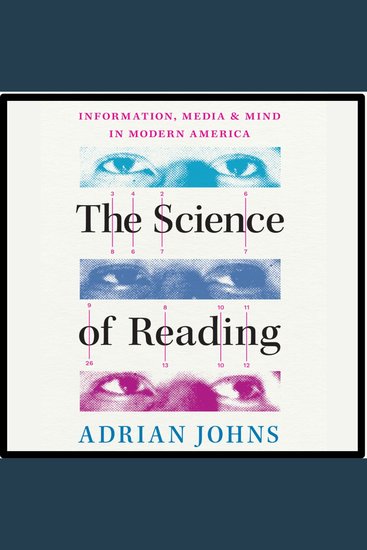
  • The Science of Reading - Information Media and Mind in Modern America - cover

    The Science of Reading -...

    Adrian Johns

    • 0
    • 0
    • 0
    For the first time, the story of how and why we have plumbed the mysteries of reading, and why it matters today. 
      
    Reading is perhaps the essential practice of modern civilization. For centuries, it has been seen as key to both personal fulfillment and social progress, and millions today depend on it to participate fully in our society. Yet, at its heart, reading is a surprisingly elusive practice. This book tells for the first time the story of how American scientists and others have sought to understand reading, and, by understanding it, to improve how people do it. 
     
    Starting around 1900, researchers—convinced of the urgent need to comprehend a practice central to industrial democracy—began to devise instruments and experiments to investigate what happened to people when they read. They traced how a good reader’s eyes moved across a page of printed characters, and they asked how their mind apprehended meanings as they did so. In schools across the country, millions of Americans learned to read through the application of this science of reading. At the same time, workers fanned out across the land to extend the science of reading into the social realm, mapping the very geography of information for the first time. Their pioneering efforts revealed that the nation’s most pressing problems were rooted in drastic informational inequities, between North and South, city and country, and white and Black—and they suggested ways to tackle those problems. 
     
    Today, much of how we experience our information society reflects the influence of these enterprises. This book explains both how the science of reading shaped our age and why, with so-called reading wars still plaguing schools across the nation, it remains bitterly contested.
    Show book
  • Mathematical Biology - A Very Short Introduction - cover

    Mathematical Biology - A Very...

    Philip K. Maini

    • 0
    • 0
    • 0
    Why are English Premier League football shirt patterns very similar to animal coat markings? And what do invasive species have in common with cancer cells in the body? Mathematical biology develops models which answer these questions, as they are applied to processes from the spread of a gene in a population, to predator-prey dynamics in an ecosystem, to the growth of tumors.In this Very Short Introduction Philip K. Maini describes the art of modeling, what it is, why we do it, and illustrates how the abstract way of thinking that is the essence of mathematics enables us to transfer knowledge from one area of research to another. Using numerous examples, he explains how the same fundamental ideas have been used in different fields, and shows how mathematics is the language of science. The author also points to cases in science where the traditional scientific modelling approach—verbal reasoning—is incorrect and shows how mathematics can uncover, and correct, such flawed reasoning while, at the same time, enhance our intuition. This book provides a guide to the trajectory of mathematical biology from a niche subject in the 1970s to a well-established, popular subject that is truly inter-disciplinary, and points to exciting future challenges.
    Show book
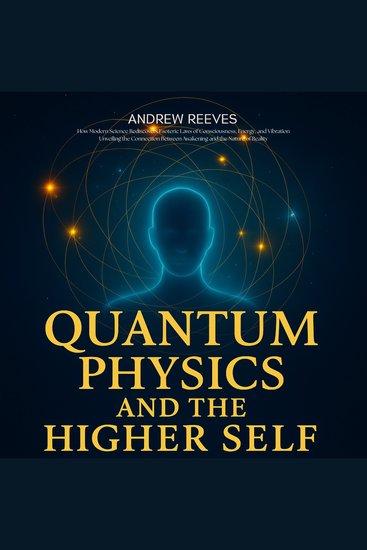
  • Quantum Physics and the Higher Self - How Modern Science Rediscovers Esoteric Laws of Consciousness Energy and Vibration Unveiling the Connection Between Awakening and the Nature of Reality - cover

    Quantum Physics and the Higher...

    Anonymous

    • 0
    • 0
    • 0
    What if consciousness is not created by the brain, but the field from which all reality emerges? 
    What if observation itself shapes the world you experience, collapsing infinite potential into form? 
    What if the discoveries of quantum physics are not new at all—but a scientific echo of ancient esoteric knowledge? 
    With this audiobook you will discover how thought, emotion, and attention interact with energy; how inner observation transforms perception; and how self-remembering—long taught by esoteric schools—finds confirmation in the laws of quantum science. 
    Inside this book you will learn: 
    • How the “observer effect” mirrors self-remembering — and why awareness itself is the true creative act. 
    • Why the zero-point field is the physical counterpart of meditation — where stillness and infinite energy coexist. 
    • How consciousness behaves as the fifth state of matter, beyond solid, liquid, gas, and plasma. 
    • Why emotional energy is alchemical fuel — and how conscious suffering converts vibration into light. 
    • Why synchronicity is not coincidence but feedback from a conscious universe responding to alignment. 
    • How Gurdjieff’s “inner laboratory” parallels modern physics in transforming energy through attention. 
    • What quantum entanglement reveals about shared awareness and the unity of all beings. 
    • How time, memory, and recurrence operate like quantum loops, echoing the eternal return. 
    • Why awakening is a negentropic process — the reorganization of energy through understanding. 
    ... and much more!
    Show book