Join us on a literary world trip!
Add this book to bookshelf
Grey
Write a new comment Default profile 50px
Grey
Subscribe to read the full book or read the first pages for free!
All characters reduced
Plan Lessons Time and Progress with Ease - cover

Plan Lessons Time and Progress with Ease

T.S Avini

Publisher: T.S. AVINI

  • 0
  • 0
  • 0

Summary

In today's ever-changing educational landscape, "Plan Lessons, Time, and Progress with Ease" serves as an indispensable guide for educators striving to cultivate optimal learning environments while maintaining personal well-being. This book delves into the core areas of lesson planning, time management, and progress tracking with a wealth of practical strategies:- Learn how to craft engaging and structured lesson plans that resonate with diverse learners, fostering a vibrant classroom atmosphere.- Discover innovative ways to incorporate technology, engaging students and streamlining administrative tasks.By focusing on efficiency and adaptability, this book encourages educators to harness collaboration with peers, balance multiple objectives, and continuously refine their teaching practices. Equip yourself with the knowledge and tools to not only meet today's educational challenges but to thrive amid them. Begin your journey toward educational mastery today, and inspire success in every student you teach.
Available since: 08/06/2025.
Print length: 231 pages.

Other books that might interest you

  • Space Crone - cover

    Space Crone

    Ursula K. Le Guin

    • 0
    • 0
    • 0
    Winner of the Locus Award 2024 for Non-Fiction  
      
    Ursula K. Le Guin witnessed and contributed to many of the twentieth century’s rebellions and upheavals, including women’s liberation, the Civil Rights movement and US anti-war and environmental activism. Spanning fifty years of her life and work, Space Crone brings together Le Guin’s writings on feminism and gender for the first time, offering new insights into her imaginative, multispecies feminist consciousness: from its roots in deep ecology and philosophies of non-violence to her self-education about racism and her writing on motherhood and ageing.
    Show book
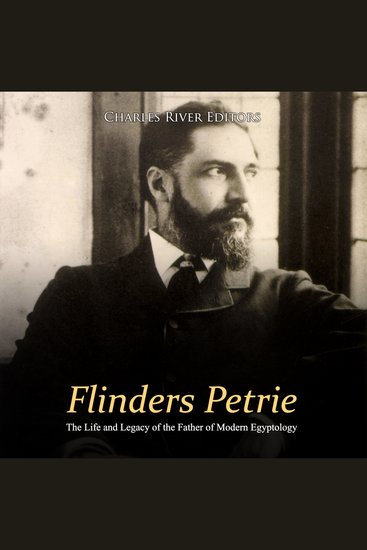
  • Flinders Petrie: The Life and Legacy of the Father of Modern Egyptology - cover

    Flinders Petrie: The Life and...

    Charles River Editors

    • 0
    • 0
    • 0
    Though he couldn’t have known it, the various scholars and scientists that Napoleon Bonaparte brought to Egypt during his military campaigning there kicked off modern Egyptology, and a general fascination across the West. Until about 200 years ago, the writing of the ancient Egyptians was an enigma to the world, but that changed when an ancient Egyptian monument known today as the Rosetta Stone was discovered (or rediscovered serendipitously) by French soldiers in Egypt in 1799. Now one of the most famous monuments in the world, the Rosetta Stone is a black granite stele that was inscribed with texts in Greek and two different scripts of the ancient Egyptian language: demotic and hieroglyphs. Stelae like the Rosetta Stone were monuments that ancient Egyptian kings inscribed texts on, usually to proclaim a battle victory or a legal decree. Since the kings who commissioned stelae to be built believed that the information they contained were important, they were usually large, as is the case with the Rosetta Stone. Although damaged over time, the Rosetta Stone still stands nearly four feet tall and over two feet wide, and it originally stood probably between five and six feet tall (Andrews 1982, 12). The discovery of the Rosetta Stone finally provided researchers with a way of reading the Egyptian language based on an understanding of the Greek translation. 
    As more individuals headed for Egypt and made more groundbreaking discoveries, the interest in Egypt heightened, as did knowledge about ancient history, despite the fact it happened so long ago and covered an immense span of time. William Mathew Flinders Petrie, more commonly known as Flinders Petrie, was among the second wave of Egyptologists who saw the need to modernize the study of ancient Egypt by introducing scientific techniques from other fields of study. During his life and career, Petrie discovered many tombs, developed several influential theories, and changed the way in which modern archaeology is practiced. Petrie’s methods are, for the most part, still used today, and archaeologists from a wide array of studies owe a debt of gratitude to the Englishman. 
    Petrie’s life was fascinating in many respects beyond the firsts he recorded in the fields of archaeology and Egyptology. As Petrie excavated in Egypt and Palestine and taught and wrote in England, his career and life crossed paths with the famous and the yet to become famous. Petrie worked - and sometimes quarreled - with most luminaries in his fields, and while he influenced several of them, he was always willing to learn from others. In the process, he met important statesmen, philosophers, fellow explorers, and even a one-armed resistance leader. Thanks to all these efforts, modern Egyptologists have been able to learn an incredible amount about different periods through reading the surviving texts currently preserved in museums throughout the world and in the many temples and tombs in Egypt. 
    Flinders Petrie: The Life and Legacy of the Father of Modern Egyptology examines Petrie’s greatest triumphs, both personal and professional, as well as some of the things he got wrong. Along with pictures depicting important people, places, and events, you will learn about Flinders Petrie like never before.
    Show book
  • Brainjacking - The Science of Influence and Manipulation - cover

    Brainjacking - The Science of...

    Brian Clegg

    • 0
    • 0
    • 0
    Brainjacking takes us on a journey through advertising and marketing's attempts to understand and influence our thoughts and desires, from the earliest billboards to the technologies of the future. To discover how science intersects with our desires and decisions, the book pulls together three strands that have a huge impact on our lives: advertising, how much privacy we can and should have in the new electronic world, and how to draw the line been information and influence. 
     
    With Brian Clegg as your guide, this is a book that will help you unpick the insidious world of brainjacking. Expertly pulling together different strands on disparate topics including AI, Big Data, subliminal advertising and more, this essential investigation shows how new and old technology and science can be combined to influence human behaviour and beliefs.
    Show book
  • Leadership - outdated theories and emerging non-traditional leadership - cover

    Leadership - outdated theories...

    Dr. Warren Martin

    • 0
    • 0
    • 0
    Qualitative Leadership study that examined outdated leadership theories and the phenomenon of organizational leaders transitioning from academically recommended leadership theories to their own non-traditional leadership practices. Continual change was identified as an ongoing phenomenon. Current leadership theories are outdated and not keeping pace with continual change, vast technological advancements, and expectations by stakeholders for transparency. 
    An eye opener for leadership and management professionals.
    Show book
  • Socialized Medicine - cover

    Socialized Medicine

    Ronald Reagan

    • 0
    • 0
    • 0
    In 1961 Reagan spoke out against socialized medicine. Since 1965 when Medicare and Medicaid were enacted, the federal government controls payment for most U.S. healthcare: hospitals, drugs, doctors, nurses, and so on. Has this been a blessing or a curse? 
    Milton Friedman, the small, talkative, smiling genius, perhaps the best economist ever, argued that governments should give the deserving needy money to buy education, housing, and healthcare, but should never give goods or services such as govenment schools, government housing, or medical services. 
    Would this small change make a big difference? Prior to 1965, U.S. health insurance was medically underwritten. When a person applied for insurance, they were weighed and tested to see how healthy they were. If they were unhealthy, premiums were high, and coverage limited. 
    The result was that people had powerful financial incentives to adopt a healthy diet and lifestyle. Under Medicare, Medicaid, and Obamacare, medical underwriting is illegal and the financial incentive for a healthy diet is eliminated. Epidemics of obesity, type 2 diabetes, and chronic disease since 1965 are the result. And the cost of medical services without market competition has exploded. 
    If the elderly and needy were paid in cash rather than medical services, and purchased medical services in competitive, risk-based markets, people would have strong incentive to adopt fiber-based diets of vegetables, fruit, nuts, seeds, and whole grains, and avoid animal foods and low-fiber processed foods that promote chronic disease. 
    The left blames the food industry for our poor diet, but the federal government’s control of medical services and abolition of medical underwriting are the true causes of the obesity and diabetes crisis that afflicts America, and the reason healthcare is so amazingly expensive. Competitive markets would benefit the elderly, the needy, and the country. 
    AspenLeafMedia.com
    Show book
  • Veteran's Lament - Is This the America Our Heroes Fought For? - cover

    Veteran's Lament - Is This the...

    Oliver North, David Goetsch

    • 0
    • 0
    • 0
    Based on interviews of military veterans by the authors, this book explains why so many of our American 
    military heroes—those willing to put their lives on the line to protect the United States—now question if our 
    nation is still the country they fought for. 
     
    What is happening to our country? This question is heard more and more frequently these days as Americans 
    worry about the unrelenting attacks by so-called progressives on the foundation, core values, and history of our nation. 
    Nobody is more concerned than those Americans who volunteered to serve in uniform and willingly put their lives on 
    the line to protect the United States and all it represents. Based on interviews by the authors, this book explains why 
    many of our American heroes believed in and loved our nation enough to go into harm’s way to defend it, and why 
    so many of them now question if America is still the country they fought for. More importantly, it asks—is America 
    still worth fighting for?
    Show book