¡Acompáñanos a viajar por el mundo de los libros!
Añadir este libro a la estantería
Grey
Escribe un nuevo comentario Default profile 50px
Grey
Suscríbete para leer el libro completo o lee las primeras páginas gratis.
All characters reduced
BrainBoost - Maximizing Cognitive Performance Naturally - cover

BrainBoost - Maximizing Cognitive Performance Naturally

T.S Avini

Editorial: T.S. AVINI

  • 0
  • 0
  • 0

Sinopsis

Discover the transformative power of natural strategies designed to unlock your cognitive potential. "BrainBoost:Maximizing Cognitive Performance Naturally" delves into a diverse array of practices and lifestyle changes thatsupport brain health and enhance mental acuity. From nutrition to mindfulness, this book offers a comprehensiveguide to holistic brain enhancement.
 
-Learn how specific foods and nutrients feed your brain, boosting function and clarity.-Uncover the hidden power of exercise and stress management in enhancing cognitive performance.
 
-Tap into the wisdom of meditation, sleep, and social connections to elevate mental sharpness.Whether you're looking to improve memory, heighten focus, or cultivate critical thinking, this book provides thetools you need to nurture your mind effectively. Embark on a journey toward optimal brain health and longevitytoday, ensuring you're well-equipped to meet the cognitive demands of modern life.
Disponible desde: 20/08/2025.
Longitud de impresión: 232 páginas.

Otros libros que te pueden interesar

  • Poems to Enjoy Book 3 - An Anthology of Poems - cover

    Poems to Enjoy Book 3 - An...

    Verner Bickley, editor Verner...

    • 0
    • 0
    • 0
    Poems to Enjoy Book 3 is read by a husband and wife couple, experienced educationists & readers with a life-long love for literature and performance. In tandem with his professional career in different countries as educationist and cultural diplomat, Dr Verner Bickley, MBE, PhD, MA (London), BA(Hons), DipEd (Cardiff), LRAM, LGSM, FIL, FRSA, has played major theatrical roles, acted in films starring Jackie Chan, Leon Lai and Jet Li, regularly appeared in radio and TV series, done BBC continuity and documentary voice-overs. He has traveled frequently to judge public-speaking competitions and for many years regularly adjudicated verse- and prose-speaking and reading, as well as drama and choral speaking. He is Chairman Emeritus of the English-Speaking Union (HK). Dr Gillian Bickley, PhD (Leeds), M.Litt, BA (Hons), CertEd (Brist), FRSA, has held university positions in different countries, teaching Literature in English. She is a published poet and writer, regularly sharing her work with the public, and also has considerable experience in examining oral performance. Together, Gillian and Verner are Co-Founders of the International Proverse Prizes for unpublished writing submitted in English. These poems, chosen by Verner Bickley, are by many different, varied writers, some world-famous. All can thoroughly enjoy Poems to Enjoy Book 3. Adults can renew and extend their own youthful enjoyment, finding long-familiar and also new poems; while students can make enjoyable discoveries. Younger and older can enjoy the poems together, in ways suggested by their arrangement as Poems to Speak, Pictures in Poetry and A Tale is Told. Also useful as solo/group teaching materials particularly paired with Ebk or pbk editions of PTE3.
    Ver libro
  • How to Be Queer - An Ancient Guide to Sexuality (Ancient Wisdom for Modern Readers) - cover

    How to Be Queer - An Ancient...

    Sarah Nooter

    • 0
    • 0
    • 0
    The idea of sexual fluidity may seem new, but it is at least as old as the ancient Greeks, who wrote about queer experiences with remarkable frankness, wit, and insight. How to Be Queer is an infatuating collection of these writings about desire, love, and lust between men, between women, and between humans and gods, in lucid and lively new translations. 


    How to Be Queer starts with Homer's Iliad and moves through lyric poetry, tragedy, comedy, philosophy, and biography, drawing on a wide range of authors, including Sappho, Plato, Anacreon, Pindar, Theognis, Aristophanes, and Xenophon. It features both beautiful poetry and thought-provoking prose, emotional outpourings and humorous anecdotes. From Homer's story of the relationship between Achilles and Patroclus, one of the most intense between men in world literature, to Sappho's lyrics on the pleasures and pains of loving women, these writings show the many meanings of what the Greeks called eros. 


    Complete with brief introductions to the selections, How to Be Queer reveals what the Greeks knew long ago—that the erotic and queer are a source of life and a cause for celebration.
    Ver libro
  • My Blue Book of Grammar for Class 6 - cover

    My Blue Book of Grammar for Class 6

    Meigha Rawat

    • 0
    • 0
    • 0
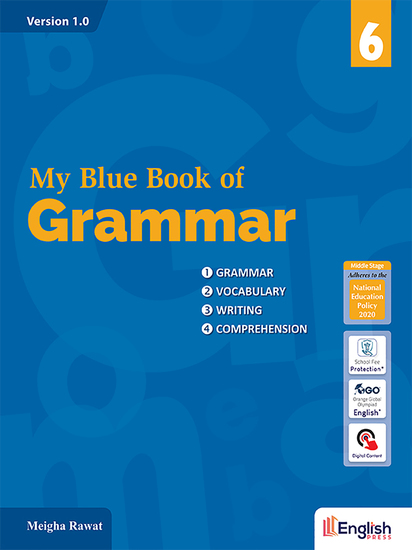
    A Grammar Series That Uses the Functional Approach 
    
    KEY FEATURES 
    - Functional approach to grammar teaching, using exemplars to illustrate the usage before defining the structure and rules 
    - Vocabulary taught through language-in-use to build the learners’ vocabulary through use rather than memorisation of rules 
    - Contemporary topics to inculcate 21-century skills amongst learners 
    - Use of literature to help learners understand how grammar is used in text 
    - A comprehension section comprising texts from different genres so that learners may relate grammar to different types of works produced in English 
    - Phonics in Grades 1 and 2 to teach the very basis of language 
    - Uniquely stylised illustrations 
    - Activities such as puzzles, crosswords, word grids and games to aid the facilitator in using the concept of ‘flipped classroom’ 
    - Periodic tests to help the learners self-assess the acquisition of concepts 
    - Digital component to cater to a technology-driven classroom 
    
    DESCRIPTION: 
    My Blue Book of Grammar is a course that has been conceptualized and designed keeping in mind the increasingly dynamic role of the English language in today’s world. Especially in our country, where English serves as the lingua franca, a grammar course has to offer not only an exposition of the pedagogy but also the exhibition of the utility of that pedagogy. The aim of a grammar series should be to encourage the development of competency amongst learners, even though their proficiency levels may vary. While the level of exposure to English of all learners may be different, a grammar series should aid in the development of a certain level of confidence amongst the learners, with the end result being that they are able to converse without hesitation in English. 
    
    WHAT WILL YOU LEARN 
    - Understand grammar concepts 
    - Learn how to use different vocabulary concepts taught through language-in-use 
    - Learn 21-century skills 
    - Develop deeper understanding of and appreciation for literature 
    - Have clearer pronunciation through a better understanding of phonics 
    
    WHO THIS BOOK IS FOR: 
    School students of Grades 6 
    
    TABLE OF CONTENTS 
    GRAMMAR 
    1. Types of Clauses – Let’s Recall 
    2. Simple, Compound and Complex Sentences 
    3. Pronoun–Antecedent Agreement 
    4. Reflexive and Intensive Pronouns 
    5. Auxiliaries and Modals – Revision 
    6. Transitive and Intransitive Verbs 
    8. Future Continuous Form 
    9. Future Perfect Form 
    10. Future Perfect Continuous Form 
    11. Types of Adjectives 
    12. Hyphens in Compound Adjectives 
    13. Adjectives vs Adverbs 
    14. Colon 
    15. Punctuating Addresses 
    Test Paper 1 
    VOCABULARY 
    16. Noun–Noun Collocations 
    17. Prefix: sub–, non– 
    18. Latin and Greek Roots of Words 
    19. Analogies 
    20. Idioms and Adages 
    21. Formal and Informal Language 
    22. Words with Multiple Meanings 
    23. Clichés 
    24. Shades of Meaning 
    25. Figures of Speech 
    Test Paper 2 
    WRITING 
    26. Formal Letter Writing 
    27. Informal Letter Writing 
    28. Writing a Formal Email 
    29. Writing an Informal Email 
    30. Interview Transcription 
    31. Writing a Story 
    32. Writing an Itinerary 
    33. Writing a Poem 
    34. Using Imagery in Poems 
    35. Avoiding Clichés When Writing a Poem 
    Test Paper 3 
    COMPREHENSION 
    36. Message to the Grassroots 
    37. Mallakhamb 
    38. Luka 
    39. The Solitude of Latin America 
    Orange Global Olympiad – English Sample Paper
    Ver libro
  • Jews in Post-War Wrocław and L'viv: Official Policies and Local Responses in Comparative Perspective 1945-1970s - Official Policies and Local Responses in Comparative Perspective 1945-1970s - cover

    Jews in Post-War Wrocław and...

    Izabela Kazejak

    • 0
    • 0
    • 0
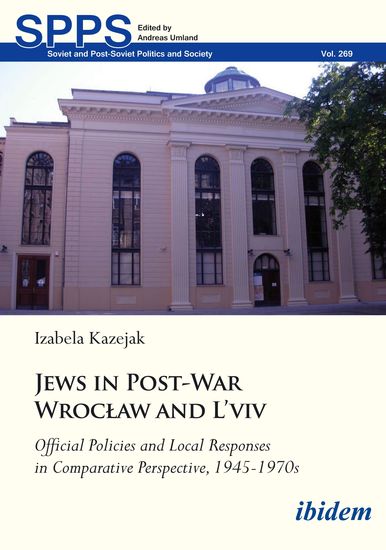
    This book examines the process of re-establishment of Jewish communities in two post-war European cities
    Ver libro
  • Exploring the Poles: The History of the Initial Expeditions that Attempted to Reach the North Pole and South Pole - cover

    Exploring the Poles: The History...

    Editors Charles River

    • 0
    • 0
    • 0
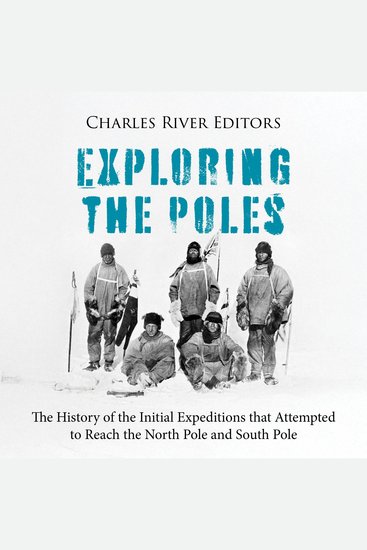
    Exploration of Earth’s wilderness areas became an international obsession in the late 19th and early 20th centuries, as economically advantaged nations, in particular European powers and the United States were well equipped to mount exhaustive expeditions. From previously inaccessible forests and jungle country to the world’s great mountain ranges, adventurers sought out the greatest extremes of climate and terrain in a race to plant the first flag where humanity struggled to survive. 
    	An earlier wave of explorers led to the opening of the New World, and early polar expeditions saw ancient ships of various nations sail along the coastlines of Greenland and within reach of the Arctic and Antarctic continents. Many 19th century figures approached the polar region with an eye to traversing it. Most notable among them was British explorer Sir James Clark Ross, who took the Erebus and the HMS Terror to the southernmost coastlines of the planet. Ross is probably the first explorer to realize that Antarctica was a continent and not just a large chain of islands, and he discovered the section of the shelf that was to become the Victoria Barrier. Asian nations also took part in Antarctic exploration when Nobu Shirase of Japan mounted his 1911 expedition, while Sir Edgeworth David, a Welsh-Australian, was the first person to successfully reach the summit of Mt. Erebus. Richard Evelyn Byrd is believed to be the first pilot to cross the Antarctic continent, and even well past the era of great polar expeditions, British figures such as Edmund Hillary, conqueror of Mount Everest, made several expeditions to the South Pole. 
    	Nevertheless, the golden age of polar exploration of the furthermost continents did not reach its zenith until the turn of the 20th century, and national rivalries abounded between the major seafaring nations of the world.
    Ver libro
  • A Constitution for the Common Good - Strengthening Scottish Democracy After 2014 - cover

    A Constitution for the Common...

    W Elliot Bulmer

    • 0
    • 0
    • 0
    If Scotland has voted YES on 18 September, how can a written Constitution be good for the people of Scotland?
    
    If Scotland has voted NO, how could a new Constitution protect and enhance Scottish democracy within a restructured UK?
    
    Whether YES or NO, a reconstituted Scotland is possible and good for all its citizens.
    
    
    Nearly every democracy in the world is built upon a written constitution, and constitutions have been at the core of citizens' demands for better governance in places as disparate as Kenya, Tunisia and Ukraine. With the Scottish National Party promising a written constitution in the event of a YES vote and other parties suggesting other possible options for constitutional change in the event of a NO vote, constitutional change looks certain to remain central to the political agenda in Scotland for some time to come.


    But what is a constitution for? Is it a defensive charter to protect the basic structures of democratic government, or is it a transformative covenant for a better society? How can the Constitution sustain democracy and promote ethical politics while at the same time recognising and accommodating differences in society? What difference would a good Constitution make to the poor? How can the Constitution help ensure that the common good of the citizenry prevails over private vested interests?


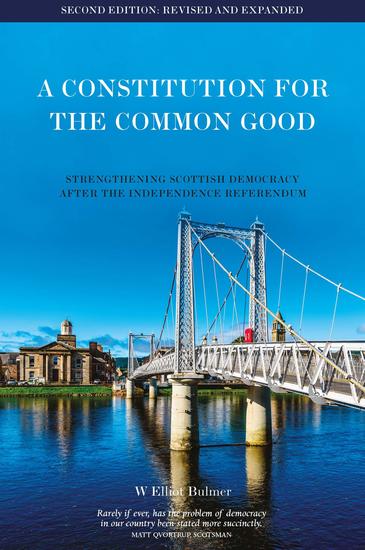
    In addressing these questions, this book sets out a vision for how Scotland could reconstitute itself. It emphasises the connection between the constitution, democracy and the common good, arguing that democratic self-government is the true prize, regardless of the relationship of Scotland to the rest of the UK.


    This book not only makes a vital contribution to Scotland's current and on-going constitutional debate, whatever the outcome in September 2014, but also engages with fundamental questions of constitutionalism and democracy that are of enduring relevance to both citizens and scholars around the world.
    Ver libro