Junte-se a nós em uma viagem ao mundo dos livros!
Adicionar este livro à prateleira
Grey
Deixe um novo comentário Default profile 50px
Grey
Assine para ler o livro completo ou leia as primeiras páginas de graça!
All characters reduced
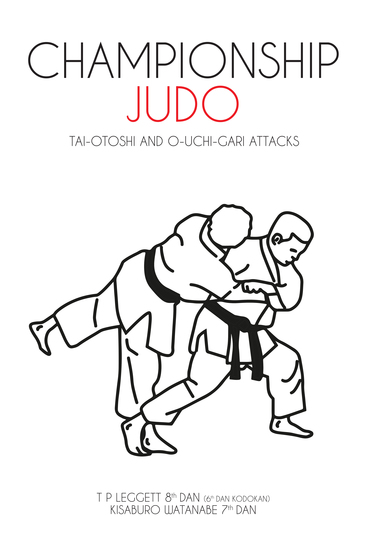
Championship Judo - cover
LER

Championship Judo

Trevor Leggett

Editora: TLAYT

  • 0
  • 0
  • 0

Sinopse

Trevor Pryce Leggett lived for a number of years in Japan where he learnt the Japanese language and studied Judo and Zen. He was the first foreigner to hold the sixth dan in Judo from the Kodokan in Japan. And he was 9th Dan from the BJA. A Senior Instructor at the Budokwai and founder of the Renshuden in London he was one of the leading teachers of Judo in the United Kingdom. He was the author of Kata Judo (with Dr Jigoro Kano) which was the authorised text of the British Judo Association. He was head of the Japanese Service of the BBC from 1946 to 1970 and was the author of books on Yoga and Zen including 'Zen and the Ways, 'Samurai Zen', 'The Spirit of Budo, and
'The Complete Commentary by Sankara on the Yoga Sutras'. He died on 2nd August 2000 at the age of 85.
Kisaburo Watanabe was 7th Dan from the Kodokan. He was famous as a Judo stylist and for his attacking Judo. He captained his University team and the Japanese National team that defeated the USA in 1957. He was a gold medallist at the Asian Games in 1958 and a bronze medallist at the All Japan Championship in 1959. From 1962 to 1967 he was based in London where he was a senior instructor at the Budokwai and Renshuden and for three years was a National Judo Coach. In 1967 he returned to Japan to join the Nippon Budokan until his retirement in 2001. His last visit to London was in February 2018 to attend the Centenary of the Budokwai. He died on 25th September 2019 at the age of 83.
Disponível desde: 10/01/2022.
Comprimento de impressão: 145 páginas.
Outros livros que poderiam interessá-lo

  • Motherland - A Journey through 500000 Years of African Culture and Identity - cover

    Motherland - A Journey through...

    Luke Pepera

    • 0
    • 0
    • 0
    A groundbreaking exploration of 500,000 years of African history, cultures, and identity. 


    Historian, archaeologist, and anthropologist Luke Pepera takes us on a personal journey discovering 500,000 years of African history and cultures in order to reclaim and reconnect with this extraordinary heritage. He tackles the question many people of African descent ask—Who are we? Where do we come from? What defines us? And it explores how knowledge of this deeper history might affect current understandings of African identity. 


    Through thematically-linked chapters that explore aspects of African identity from nomadic culture and matriarchal society to beliefs about the afterlife and the tradition of oral storytelling, and interwoven with Luke's own experiences of exploring his Ghanaian family history and his personal questions of identity, this is a comprehensive, relevant, and beautifully told new history of Africa, and how it has shaped the world we know today.
    Ver livro
  • The Young Turks' Crime against Humanity - The Armenian Genocide and Ethnic Cleansing in the Ottoman Empire - cover

    The Young Turks' Crime against...

    Taner Akçam

    • 0
    • 0
    • 0
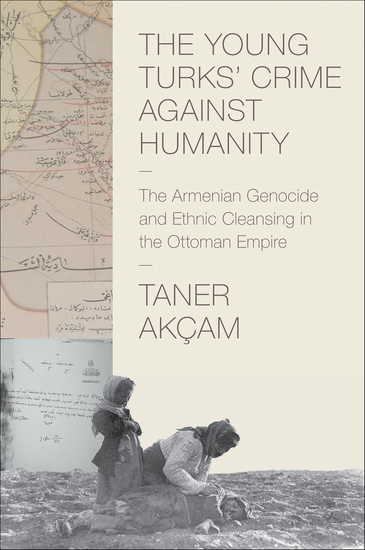
    An unprecedented look at secret documents showing the deliberate nature of the Armenian genocideIntroducing new evidence from more than 600 secret Ottoman documents, this book demonstrates in unprecedented detail that the Armenian Genocide and the expulsion of Greeks from the late Ottoman Empire resulted from an official effort to rid the empire of its Christian subjects. Presenting these previously inaccessible documents along with expert context and analysis, Taner Akçam's most authoritative work to date goes deep inside the bureaucratic machinery of Ottoman Turkey to show how a dying empire embraced genocide and ethnic cleansing.Although the deportation and killing of Armenians was internationally condemned in 1915 as a "crime against humanity and civilization," the Ottoman government initiated a policy of denial that is still maintained by the Turkish Republic. The case for Turkey's "official history" rests on documents from the Ottoman imperial archives, to which access has been heavily restricted until recently. It is this very source that Akçam now uses to overturn the official narrative.The documents presented here attest to a late-Ottoman policy of Turkification, the goal of which was no less than the radical demographic transformation of Anatolia. To that end, about one-third of Anatolia's 15 million people were displaced, deported, expelled, or massacred, destroying the ethno-religious diversity of an ancient cultural crossroads of East and West, and paving the way for the Turkish Republic.By uncovering the central roles played by demographic engineering and assimilation in the Armenian Genocide, this book will fundamentally change how this crime is understood and show that physical destruction is not the only aspect of the genocidal process.
    Ver livro
  • Lenin - Responding to Catastrophe Forging Revolution - cover

    Lenin - Responding to...

    Paul LeBlanc

    • 0
    • 0
    • 0
    Vladimir Lenin lies in a tomb in Moscow's Red Square. History has not been kind to this Russian leader, his teachings reviled by modern mainstream politics. But in today's capitalist society, riven by class inequality and imperialist wars, perhaps it is worth returning to this communist icon's demand for "Peace, Land and Bread", and his radical understanding of democracy. 


    Lenin was wrestling with the question of "what is to be done?" when facing the catastrophes of his own time. Against the odds, the Bolshevik party succeeded in rejecting both the corrupt and decaying Romanov dynasty, as well as the capitalist economic system which had started to take root in Russia. 


    To understand how this happened, and what we can learn from him today, Paul Le Blanc takes us through Lenin's dynamic revolutionary thought, how he worked as part of a larger collective, and how he centered the labor movement in Russia and beyond, uncovering a powerful form of democracy that could transform our activism today.
    Ver livro
  • Ecce Homo - cover

    Ecce Homo

    Friedrich Nietzsche

    • 0
    • 0
    • 0
    “Without music, life would be a mistake.”“It is not a lack of love, but a lack of friendship that makes unhappy marriages.” ...“That which does not kill us makes us stronger.”“I'm not upset that you lied to me, I'm upset that from now on I can't believe you.” 
    Nietzsche 
     
    The philosopher Friedrich Nietzsche's autobiography, Ecce Homo, was the last prose work that he wrote before his illness in 1889. Coming at the end of an extraordinarily productive year in which he had produced The Twilight of the Idols and The Antichrist, Nietzsche shuns any pretense at modesty with chapter titles include “Why I am so Wise”, “Why I am so Clever” and “Why I Write Such Excellent Books”. His translator Anthony M. Ludovici states, Ecce Homo “is not only a coping-stone worthy of the wonderful creations of that year, but also a fitting conclusion to his whole life, in the form of a grand summing up of his character as a man, his purpose as a reformer, and his achievement as a thinker. 
     
    Friedrich Wilhelm Nietzsche was a German philosopher, cultural critic and philologist whose work has exerted a profound influence on modern intellectual history. He began his career as a classical philologist before turning to philosophy.
    Ver livro
  • Pathway to the Podium - How to Win a US Election - cover

    Pathway to the Podium - How to...

    Howie Todoit

    • 0
    • 0
    • 0
    Embark on your American political journey with "Pathway to the Podium: How to Win a U.S. Election," your essential guide from aspiration to inauguration! Understand the U.S. political system, election types, and strategic insights. Learn to build a core team, craft a compelling political platform, navigate campaign finance, and master voter outreach, leveraging the power of social media. 
     
    Discover the importance of public speaking and debating skills, with dedicated chapters on impactful speeches, media interviews, and political debates. Post-election, analyze results and plan your future endeavors. Extra tips for triumphing in U.S. elections solidify your political career. Your pathway to the podium begins now—grab your copy today!
    Ver livro
  • History of Chile - Colonialism Independence and Political Reform - cover

    History of Chile - Colonialism...

    Kelly Mass

    • 0
    • 0
    • 0
    The history of Chile spans thousands of years, with evidence suggesting that the region was inhabited as early as 10,000 years ago. Migrating Native Americans are believed to have settled in the fertile valleys and coastal areas, forming over a dozen distinct Amerindian cultures. These early inhabitants may have arrived via the Pacific coast in a rapid expansion predating the Clovis civilization or through trans-Pacific migration. Archaeological sites such as Monte Verde, Cueva del Milodón, and the Pali Aike Crater provide critical evidence of this early human activity. Monte Verde, in particular, predates the Clovis site by thousands of years, challenging traditional theories of the first human migrations to the Americas. 
    By the time of Spanish exploration in the 16th century, various indigenous groups occupied the land. The Mapuche, who inhabited south-central Chile, were the most significant and resilient, maintaining their independence through centuries of conflict with Spanish colonizers and later the Chilean state. Their resistance was emblematic of the challenges faced by Spanish conquistadors who arrived in 1540 under the leadership of Pedro de Valdivia. Despite fierce resistance, Valdivia founded Santiago in 1541, marking the beginning of Chile's colonial era. 
    Chile was part of the Spanish Empire from 1540 to 1818. During this period, the colony developed an economy centered on agriculture and the extraction of natural resources like saltpeter and, later, copper. While these resources bolstered the economy, they also led to over-reliance on commodity exports and tensions with neighboring countries. The War of the Pacific (1879–1884) exemplified such conflicts, as Chile battled Bolivia and Peru over control of the nitrate-rich Atacama Desert.
    Ver livro