Join us on a literary world trip!
Add this book to bookshelf
Grey
Write a new comment Default profile 50px
Grey
Subscribe to read the full book or read the first pages for free!
All characters reduced
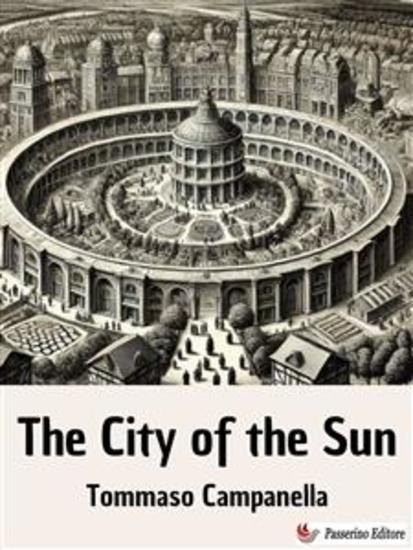
The City of the Sun - cover

The City of the Sun

Tommaso Campanella

Publisher: Passerino

  • 0
  • 0
  • 0

Summary

The City of the Sun is a philosophical work by the Italian Dominican philosopher Tommaso Campanella. It is an important early utopian work. The work was written in Italian in 1602, shortly after Campanella's imprisonment for heresy and sedition. A Latin version was written in 1613–14 and published in Frankfurt in 1623.

Tommaso Campanella (5 September 1568 – 21 May 1639), baptized Giovanni Domenico Campanella, was an Italian Dominican friar, philosopher, theologian, astrologer, and poet.
Campanella was prosecuted by the Roman Inquisition for heresy in 1594 and was confined to house arrest for two years. Accused of conspiring against the Spanish rulers of Calabria in 1599, he was tortured and sent to prison, where he spent 27 years. He wrote his most significant works during this time, including The City of the Sun, a utopia describing an egalitarian theocratic society where property is held in common.
Available since: 06/20/2024.
Other books that might interest you

  • Tequila Wars - Jose Cuervo and the Bloody Struggle for the Spirit of Mexico - cover

    Tequila Wars - Jose Cuervo and...

    Ted Genoways

    • 0
    • 0
    • 0
    At the dawn of the twentieth century, José Cuervo inherited his family's humble distillery, La Rojeña, in the Tequila Valley. Within a decade, it would become Mexico's leading producer of tequila. But when the Mexican Revolution erupted, a charge of treason and a death threat against him by Pancho Villa forced Cuervo to flee. His disappearance turned him into an obscure, shadowy historical figure. 


    In Tequila Wars, award-winning author Ted Genoways restores Cuervo to his place as a key player in Mexico's formative period. Before the revolution, Cuervo's acclaim spread worldwide, and once war broke out, Cuervo remained an impresario, kingmaker, and cultural force. In the face of his own government's corruption and the nationalism of his northern neighbors, Cuervo reached American drinkers by establishing Mexico’s covert form of cross-border commerce with the United States. As the largest and most important distilleries in the Tequila Valley recognized the threat posed by Mexico's unraveling, Cuervo also lobbied for suspending normal competition in favor of "a union of tequila makers"—what would become the first Mexican cartel. 


    The first biography of Cuervo, Tequila Wars uncovers the history of the man who would forever change not only the business of tequila, but international relations between Mexico and the United States.
    Show book
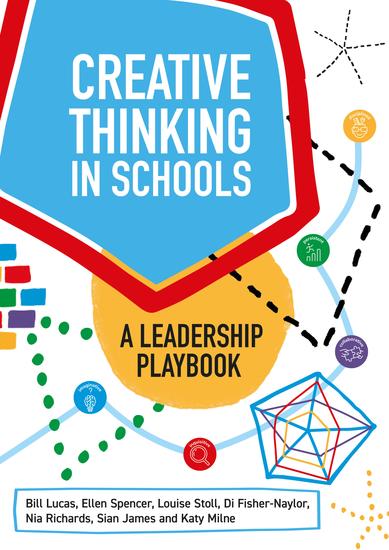
  • Creative Thinking in Schools - A Leadership Playbook - cover

    Creative Thinking in Schools - A...

    Bill Lucas, Nia Richards, Ellen...

    • 0
    • 0
    • 0
    This leadership playbook has been published to coincide with the global release of the first PISA test results on creative thinking, the Creativity Collaboratives under way in England and the growing importance of creative thinking in countries across the world.Creative Thinking in Schoolsfocuses on how leaders can create capacity among their staff to embed creative thinking, both in their own lives and in the lives of their pupils. Itoffers a framework for improving creative thinking based on the widely used five creative habits framework developed by the Centre for Real-World Learning. The framework focuses on developing learners who are inquisitive, persistent, collaborative, disciplined and imaginative.
    Underpinned by research and analysis of practice in hundreds of schools across the world, and more recently by an in-depth study of fifty schools in England,Creative Thinking in Schoolsprovides a range of accessible resources, planning tools and practical examples. These support leaders to reflect on their core purposes, understand the changes needed to embed creative thinking, develop leaders across their staff, facilitate the development of their teachers, plan, teach and assess creative thinking, and work with external partners, all the while developing a vibrant professional learning community.
    Complemented by a dedicated website which contains additional downloadable materials and case studies,the playbook will allow leaders and teachers around the world to connect with each other and share their own experiences in order to develop, spread, extend and evaluate creative thinking within and across schools.
    Creative Thinking in Schoolswill support a professional learning community of leaders and teachers who see creative thinking as a core purpose of education and are interested in making it a priority in their school. It will encourage pupils to develop their creativity in the classroom, allowing future generations to thrive in a world that is increasingly complex.
    Creative Thinking in Schools: A Leadership Playbookhas been supported by the Mercers Company, Creativity, Culture and Education and the Arts Council of Wales.
    Suitable for school and system leaders, teacher leaders and policy makers who see creative thinking as a core purpose in education.
    Show book
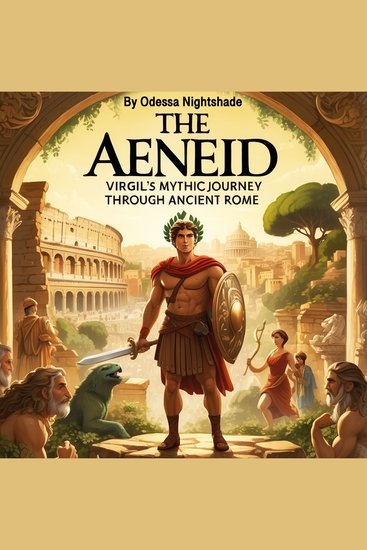
  • The Aeneid - Virgil's Mythic Journey through Ancient Rome - cover

    The Aeneid - Virgil's Mythic...

    Odessa Nightshade

    • 0
    • 0
    • 0
    The Aeneid stands as one of the most influential literary works of the ancient world, a masterpiece that shaped Rome’s cultural and political identity. Written by the poet Virgil between 29 and 19 BCE, this epic tells the story of Aeneas, a Trojan hero destined to lay the foundations for what would become Rome. Blending myth, history, and divine intervention, Virgil crafted a narrative that not only honored Rome’s past but also justified its imperial destiny. Commissioned during the reign of Augustus, The Aeneid served as both a patriotic epic and a moral guide, emphasizing duty, sacrifice, and perseverance.  
      
    At its core, The Aeneid explores Rome’s divine origins through the trials and triumphs of Aeneas. His journey mirrors the struggles of Rome itself—facing adversity, enduring loss, and ultimately fulfilling a grand destiny. Unlike Homer’s heroes, Aeneas is driven by pietas, a sense of duty to the gods, his people, and his future nation. This concept of duty over personal desire defines him, setting him apart from figures like Achilles, who is ruled by rage, or Odysseus, who relies on cunning. Through Aeneas, Virgil presents an ideal Roman leader—one who sacrifices personal happiness for the greater good.  
      
    The themes of fate and duty play a central role in The Aeneid, reinforcing the idea that Rome’s supremacy was preordained by the gods. From the moment Aeneas flees Troy, his path is guided by prophecy. Though he faces obstacles—such as the wrath of Juno, the temptations of love, and the horrors of war—his unwavering commitment to his destiny ensures that he prevails. Virgil uses this theme to legitimize Augustus’ rule, portraying Rome’s rise as part of a divine plan rather than mere political ambition. 
    Show book
  • 20 Game Changers in History (Series 2) - A Note on the Lives and Impact of these Great Minds & Historical Figures (Tesla Jung Napoleon Anne Frank Darwin Aurelius Mandela Plato and more) - cover

    20 Game Changers in History...

    Patrick Marcus

    • 0
    • 0
    • 0
    Want to learn about the most INSPIRING figures in history, without the information overload? Then keep reading. 
    Whether it’s the Greatest: Military Leaders, Flawed Geniuses, Religious Leaders, Polar Explorers, Revolutionaries, or Ground-Breaking Scientists… this book has what you need. Add in the most notable Ancient Philosophers, Emperors, Musicians, Artists, Con-Artists, and more—and there is someone here for everyone. 
    This book contains:Summaries of the Greatest Historical Figures that ever lived.Their impact and ACHIEVEMENTS which changed the world.The unique stories of each character told an easy-to-follow, engaging manner.The ADVERSITIES and SETBACKS they faced.The moments of INSPIRATION they found in their darkest hour.Rare characteristics and and their most inspirational QUOTES. 
    The List of Historical Figures Includes:Nikola TeslaCarl JungMarcus AureliusProphet MuhammadRoald AmundsenMiyamoto MusashiNapoleon BonaparteRagnar LothbrokNelson MandelaAnne FrankFrank AbagnaleVictor E FranklCharles DarwinGeorges LemaitreMichelangeloMarie CuriePlatoLudwig van BeethovenRosa ParksLucifer
    Show book
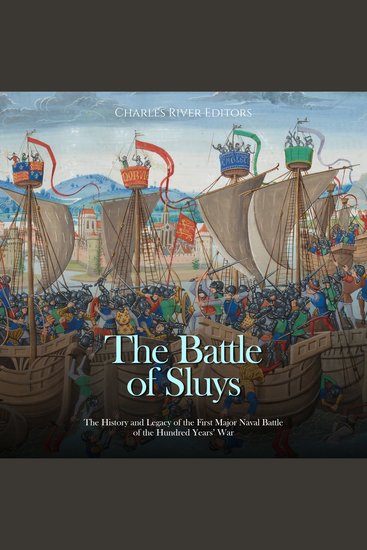
  • Battle of Sluys The: The History and Legacy of the First Major Naval Battle of the Hundred Years’ War - cover

    Battle of Sluys The: The History...

    Editors Charles River

    • 0
    • 0
    • 0
    Although it ended over 550 years ago, the Hundred Years’ War still looms large in the historical consciousness of England and France, even if the name of the famous war is a misnomer. Actually a series of separate conflicts between the English and French monarchies, interspersed with periods of peace, its historical image is an odd one, in part because its origins were based on royal claims that dated back centuries and the English and French remained adversaries for nearly 400 years after it ended.  
    	That said, the war was transformative in many respects, and the impact it had on the geopolitical situation of Europe cannot be overstated. While some might think of the war as being a continuation of the feudal tradition of knights and peasants, the Hundred Years’ War revolutionized Western European warfare, and it truly helped to usher in the concept of nationalism on the continent. In England, it is remembered as a period of grandeur and success, even though the English lost the war and huge swathes of territory with it, while the French remember it as a strategic victory that ensured the continued independence of France and the denial of English hegemony. The legacy of the war has lived on ever since, helping determine how England became politically severed from the continent, how the knightly chivalric tradition slid into irrelevance, and how battlefield dominance can still leave a nation a loser in war. 
    	At the same time, the English forged a reputation for naval superiority, and one of their first demonstrations came at the Battle of Sluys. The town of Sluys (in Dutch Sluis and in French l’Ecluse) is located on the west coast of the region of Zeelandic Flanders in the province of Zeeland in the Netherlands. It has a population of about 23,000 and is relatively isolated, but its main claim to fame today is being the site of one of the first military encounters of the Hundred Years’ War in 1340.
    Show book
  • Why It's OK to Eat Meat - cover

    Why It's OK to Eat Meat

    Dan C. Shahar

    • 0
    • 0
    • 0
    In Why It's OK to Eat Meat, Dan C. Shahar argues the answer is no: it's entirely possible to be an ethical person while continuing to eat meat—and not just the "fancy" offerings from the farmers' market but also the regular meat we find at most supermarkets and restaurants. Shahar's examination forcefully echoes vegetarians' concerns about the meat industry's impacts on animals, workers, the environment, and public health. However, he shows that the most influential ethical arguments for avoiding meat on the basis of these considerations are ultimately unpersuasive. Instead of insisting we all become vegetarians, Shahar argues each of us has broad latitude to choose which of the world's problems to tackle. 


    Key Features include: 


    ● First book-length defense of meat-eating written for a popular audience 


    ● Punchy, accessible introduction to the multifaceted debate over the ethics of eating meat 


    ● Includes pioneering new examinations of humane labeling practices 


    ● Shows why appeals to universalized patterns of behavior can't vindicate vegetarians' claims that there's a duty to avoid meat 


    ● Develops a novel theory of ethical activism with potential applications to a wide range of other issues
    Show book