Join us on a literary world trip!
Add this book to bookshelf
Grey
Write a new comment Default profile 50px
Grey
Subscribe to read the full book or read the first pages for free!
All characters reduced
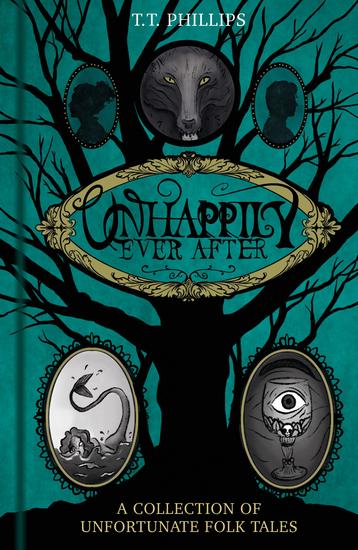
Unhappily Ever After - A Collection of Unfortunate Folk Tales - cover

Sorry, the publisher does not allow users to read this book from the country from which you are connecting.

Unhappily Ever After - A Collection of Unfortunate Folk Tales

Tom Phillips

Publisher: The History Press

  • 0
  • 1
  • 1

Summary

'And they all lived happily ever after…' or so we are told in folk and fairy stories when we are young – but then we grow up and realise that life isn't all roses and happy endings. Life is hard, life is brutal, life is raw and we just have to pick our way through it the best we can.
These traditional folk tales for adults explores the unhappily ever afters we so rarely see in stories. Each tale is expanded and the world built around them, bringing them to life, each posing a different moral question. It's not all serious, but take heed of the lessons they teach, and use them to avoid an unhappy ever after of your own...
Available since: 08/21/2025.
Print length: 160 pages.

Other books that might interest you

  • Enjoy Your Stay at the Shamrock Motel - cover

    Enjoy Your Stay at the Shamrock...

    Andrew Kaufman

    • 0
    • 0
    • 0
    Aesop meets Anaïs Nin in these absurdist stories of very unexpected redemption 
    Getting to the Shamrock Motel isn’t easy. It’s just off Concession #18, but you can’t get there through a sequence of lefts and rights. To find the Shamrock you have to be lost – not just on the map, but in your heart and soul. 
    The Shamrock Motel does not accept reservations. The only way to get a room is by walking into the office and asking Rosemary, the owner/operator for one. Try not to stare at her hair. 
    Fair warning: no one spends the night, or even an hour at the Shamrock without experiencing some form of transformation. Whether it’s accidentally sleeping with a bear, turning yourself into a river, or getting entirely too intimate with the sun, time spent at the Shamrock will make you wiser, stronger, sexier, and more yourself. Even if that’s the last thing you want. 
    These linked stories explore the intersection of personality and desire, love and lust, the joy and sadness of being alive and in love. Heated pool, cable TV, and a shot at redemption: the Shamrock Motel offers it all. Credit cards are accepted, but cash is preferred.
    Show book
  • Top 10 Short Stories The - America - The 1880's - The top 10 short stories written from 1880 to 1889 by American authors - cover

    Top 10 Short Stories The -...

    Edith Wharton, Mark Twain,...

    • 0
    • 0
    • 0
    Short stories have always been a sort of instant access into an author’s brain, their soul and heart.  A few pages can lift our lives into locations, people and experiences with a sweep of landscape, narration, feelings and emotions that is difficult to achieve elsewhere. 
     
    In this series we try to offer up tried and trusted ‘Top Tens’ across many different themes and authors. But any anthology will immediately throw up the questions – Why that story? Why that author?  
     
    The theme itself will form the boundaries for our stories which range from well-known classics, newly told, to stories that modern times have overlooked but perfectly exemplify the theme.  Throughout the volume our authors whether of instant recognition or new to you are all leviathans of literature. 
     
    Some you may disagree with but they will get you thinking; about our choices and about those you would have made.  If this volume takes you on a path to discover more of these miniature masterpieces then we have all gained something. 
     
    In this volume our authors explore the America that has expanded across the continent from Coast to Coast and is steadily adding industrial and military might to its rapidly growing and diverse population.  But, all the while, tensions among those huddled masses simmer and ferment
    Show book
  • Orbiting Love: A Space-Time Romance - cover

    Orbiting Love: A Space-Time Romance

    Ella Stories

    • 0
    • 0
    • 0
    A renowned, daredevil female astronaut falls in love with a shy, bookish man who runs a small town library. During a mishap on a space mission, she gets stuck in a time loop where every 24 hours she relives her last day on Earth, forcing her to reevaluate her life, ambitions, and the love she left behind. Through heartbreak and revelations, she learns the bittersweet truth of love's power over time.
    Show book
  • A Chameleon - From their pens to your ears genius in every story - cover

    A Chameleon - From their pens to...

    Anton Chekhov

    • 0
    • 0
    • 0
    Anton Pavlovich Chekhov was born on 29th January 1860 in Taganrog, on the south coast of Russia.  
    His family life was difficult; his father was strict and over-bearing but his mother was a passionate story-teller, a subject Chekhov warmed to. As he later said; ‘our talents we got from our father, but our soul from our mother’.  
    At school Chekhov was distinctly average. At 16 his father mis-managed his finances and was declared bankrupt. His family fled to Moscow. Chekhov remained and eked out a living by various means, including writing and selling short sketches to newspapers, to finish his schooling. That completed and with a scholarship to Moscow University obtained he rejoined his family. 
    He was able to help support them by selling satirical sketches and vignettes of Russian lifestyles and gradually obtained further commissions. In 1884, he qualified as a physician and, although it earned him little, he often treated the poor for free, he was fond of saying ‘Medicine is my lawful wife, and literature is my mistress.’ 
    His own health was now an issue as he began to cough up blood, a symptom of tuberculosis.  Despite this his writing success enabled him to move the family into more comfortable accommodation.  
    Chekhov wrote over 500 short stories which included many, many classics including ‘The Kiss’ and ‘The Lady with a Dog’.  His collection ‘At Dusk’ won him the coveted Pushkin Prize when was only 26.  
    He was also a major playwright beginning with the huge success of ‘Ivanov’ in 1887.   
    In 1892 Chekhov bought a country estate north of Moscow. Here his medical skills and money helped the peasants tackle outbreaks of cholera and bouts of famine. He also built three schools, a fire station and a clinic.  It left him with less time for writing but the interactions with real people gained him detailed knowledge about the peasantry and their living conditions for his stories.  
    His most famous work, ‘The Seagull’ was received disastrously at its premiere in St Petersburg. It was later restaged in Moscow to highlight its psychological aspects and was a huge success. It led to ‘Uncle Vanya’, ‘The Three Sisters’ and ‘The Cherry Orchard’.  
    Chekhov suffered a major lung hemorrhage in 1897 while visiting Moscow. A formal diagnosis confirmed tuberculosis and the doctors ordered changes to his lifestyle.  
    Despite a dread of weddings the elusive literary bachelor quietly married the actress Olga Knipper, whom he had met at rehearsals for ‘The Seagull’, on 25th May 1901. 
    By May 1904 with his tuberculosis worsening and death imminent he set off for the German town of Badenweiler writing cheerful, witty letters to his family and assuring them his health was improving.  
    On 15th July 1904 Anton Chekhov died at Badenweiler.  He was 44.
    Show book
  • To Avenge a Dead Glacier - cover

    To Avenge a Dead Glacier

    Shane Tivenan

    • 0
    • 0
    • 0
    Winner of the RTÉ Francis MacManus Short Story Prize and the John McGahern Award, Shane Tivenan is a remarkable new talent. This debut collection simmers with style, verve, tension and humour. Throughout the stories in To Avenge a Dead Glacier, Tivenan explores the lives of rural Irish outsiders. His characters are artists, sean-nós singers, members of the queer community, the gifted, the neurodivergent, the environmentally concerned, people with memory problems, the spiritual people, the non-human.
    In the title story, a man attends the funeral of a glacier in Iceland without fully knowing why he is there. In another, a midlands graffiti artist warns his townspeople through his throw-ups about the dangers of the way they are living, but neglects his own mind in the process. In 'Honey Brown', a ninety-two-year-old woman who suffers from Charles Bonnet syndrome tries to celebrate her birthday in a nursing home in Roscommon while fighting back the hallucinations brought on by her condition. In 'Resurrection of a Corncrake', a semi-retired plasterer is haunted by the silencing of the birds in his townland, a silencing which he knows he took part in.
    These are stories rich in the essential detail of human life, in the fraught exchanges that make up our every relationship, and very often of life lived beyond the confines of safety or simplicity.
    Show book
  • After the Race - From their pens to your ears genius in every story - cover

    After the Race - From their pens...

    James Joyce

    • 0
    • 0
    • 0
    James Augustine Aloysius Joyce was born on the 2nd February 1882 in Dublin into a middle-class family, and the eldest of ten surviving siblings 
    Admired as a brilliant student he briefly attended the Christian Brothers-run O'Connell School before excelling at the Jesuit schools of Clongowes and Belvedere.  From there he went on to attend University College Dublin from 1898, studying English, French and Italian 
    In 1902, Joyce was now in his early twenties, and went to Paris to study Medicine but soon abandoned his teachings.  Back in Dublin to attend to his dying Mother he met Nora Barnacle. They bonded immediately into a life-long match. Together they decided to emigrate to Europe.  The couple lived in Trieste, Rome, Paris, and finally Zürich where Joyce pursued a variety of jobs and ventures to supplement his literary pursuits but none of these paid off.  
    After publishing a poetry volume, ‘Chamber Music’, in 1907, his short story collection ‘The Dubliners’, in 1914, helped establish his talent in the rapidly changing world.  
    Although far from home Joyce’s literary heart and works were set in his recollections of Dublin.  Characters are close resemblances of family and friends and indeed enemies.  His landmark work ‘Ulysses’, published in 1922, is set in the streets and alleyways of the city as it parallels Homer’s Odyssey in a variety of styles including its famed stream of consciousness. 
    His pen continued to produce classics of the order of ‘A Portrait of the Artist as A Young Man’ and ‘Finnegan’s Wake’ together with several volumes of poetry and a play ‘The Exiles, in 1918.   
    On the 11th January 1941, Joyce underwent surgery in Zürich for a perforated duodenal ulcer. The next day he fell into a coma. On the 13th after a brief period of lucidity in which he called for his wife and son he passed.  He was 58.
    Show book