Join us on a literary world trip!
Add this book to bookshelf
Grey
Write a new comment Default profile 50px
Grey
Subscribe to read the full book or read the first pages for free!
All characters reduced
The Ballycotton Job - An incredible true story of IRA Pirates - cover

The Ballycotton Job - An incredible true story of IRA Pirates

Tom Mahon

Publisher: Mercier Press

  • 0
  • 0
  • 0

Summary

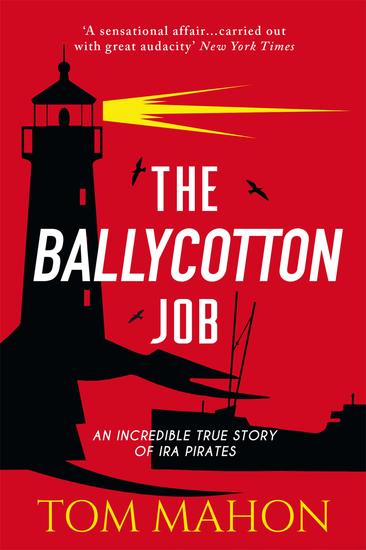
A 'sensational affair.. carried out with great audacity' - New York Times. An astonishing act of piracy, the capture of the British war ship, the Upnor changed the course of Ireland's Civil War. Flawless in its planning and execution, while Winston Churchill remarked on Irish 'genius for conspiracy', a furious Michael Collins accused the British of deliberately arming his enemies. Indeed, it's highly likely that the bullet that killed him originated in the Upnor.
The Ballycotton Job brings this riveting story to life, its cast of disparate characters and strands of adventure beautifully woven together. This book sees events leading up to the capture as well as the consequences of the Upnor seizure discussed in detail. Based on years of archival research, it tells a unique story of both sides, Irish and British. The book's fast-paced narrative is enlivened by dialogue and details obtained from interviews with participants.
Ireland teetered on the verge of civil war, the IRA splitting into anti-Treaty and pro-Treaty stance, Michael Collins and the Provisional Government on the pro-Treaty side. Cork's Sean O'Hegarty, the local anti-Treaty IRA leader, prevented Collins' National Army from entering the city. As the British evacuated soldiers and equipment back to England, O'Hegarty came up with a brilliant plan to capture the munitions en route. Commandeering a tugboat from the Royal Navy base at Queenstown/Cobh, they sped out of the fortified harbour on a mission. Simultaneously, over eighty trucks and lorries were hijacked all across Cork, leaving citizens mystified as to what was going on.
In a clever ruse, the IRA squad captured arms ship Upnor, bringing it into the small port of Ballycotton. The village, now under the control of IRA fighters, witnessed the unloading of weaponry onto waiting lorries then driven off to secret arms dumps throughout Cork. O'Hegarty's men seized eighty tons of arms, subsequently distributed to southern IRA divisions during the Civil War. This audacious act of piracy caused a sensation. A field day for the newspapers, The Irish Independent called it 'an amazing exploit'; The Times 'a clever and daring coup'.
Available since: 04/12/2022.
Print length: 256 pages.


Other books that might interest you

  • Eternal capitalist trickery - cover

    Eternal capitalist trickery

    Anonymous

    • 0
    • 0
    • 0
    The concentration of power and wealth in the hands of a small predatory class, repeated crises, the inability of politicians to influence the course of events, worsening inequalities and the end of growth are the hallmarks of today's capitalism.  Since the fall of communism, capitalism has had no competitors. Will it die one day? Not in the short term: the system is stronger than governments, its worst scoundrels enjoy widespread impunity, and while economists have little or no understanding of how it works, no clear alternative is emerging. Above all, no one seems to be seriously considering a fundamental reform of modern financial capitalism. Curiously, a century earlier, this same situation had been analyzed by Nikolai Dimitrievich Kondratieff, a famous economist and committed player in the Russian Revolution of 1917. Kondratieff was executed by Stalin in 1938 for having scientifically demonstrated the eternity of capitalism. Would he have the same opinion about capitalism today?
    Show book
  • Summary: The End of the World Is Just the Beginning - Mapping the Collapse of Globalization By Peter Zeihan: Key Takeaways Summary & Analysis - cover

    Summary: The End of the World Is...

    Brooks Bryant

    • 0
    • 0
    • 0
    DISCLAIMER: THIS IS NOT THE OFFICIAL BOOK. 
    This is a summary, & it does not accompany the official 
    In 'The End of the World Is Just the Beginning' by Peter Zeihan, the author examines the unraveling of globalization, a phenomenon characterized by increasing speed, efficiency, and affordability of global trade and supply chains, largely driven by America. However, Zeihan argues that this era is coming to an end as America withdraws from its role in sustaining it. He highlights the critical role played by the U.S. Navy, the American dollar, and American consumer demand supporting global systems. 
    Zeihan predicts a future where nations must become self-reliant in producing goods, food, energy, and security due to shrinking and aging populations. He emphasizes that only a select few countries can adapt to this new reality, leading to a profound transformation in how the world manufactures products, grows food, generates energy, and manages global logistics. 
    In this thought-provoking and somewhat alarming book, Zeihan takes readers on a journey into a world on the brink of significant change, offering insights, humor, and his unique perspective on the future.
    Show book
  • Mary Shelley - A Very Short Introduction - cover

    Mary Shelley - A Very Short...

    Charlotte Gordon

    • 0
    • 0
    • 0
    In 1816, when eighteen-year old Mary Godwin began writing Frankenstein, the idea that a woman could dream up such a tale was as far-fetched as raising a being from the dead. But Mary wasn't just any woman. The daughter of two notorious radicals, Mary had become an outcast from English society when she was only sixteen. A lifelong advocate for the rights of women, she refused to be governed by social conventions, running away with a married man, having children out of wedlock, and authoring books, stories, and essays that broke literary conventions. 


    This Very Short Introduction explores the context, background, and important themes contained in Shelley's most famous novel, Frankenstein, as well as demonstrating the importance of her work after Frankenstein. Over the course of her long career, Shelley developed a distinctive voice, and a political and philosophical stance. Exploring key themes throughout Shelley's work, Charlotte Gordon shows how she devoted herself to the propositions her mother, Mary Wollstonecraft, outlined in A Vindication of the Rights of Woman: that women are equal to men; that all people deserve the same rights; that human reason and the capacity for love can reform the world; and that every person is entitled to justice and freedom.
    Show book
  • Navigating Conflict and Anger in the Workplace - cover

    Navigating Conflict and Anger in...

    Dr. Shelley Reciniello

    • 0
    • 0
    • 0
    Conflict and anger are inevitable in the workplace, but understanding them at a deeper level can transform the way we navigate professional challenges. In this insightful audio course, Dr. Shelley Reciniello – a clinical psychologist, executive coach, and award-winning author – guides you through the psychology of conflict, revealing how unconscious emotions shape our reactions. Drawing from over 40 years of experience, she explores the link between anxiety and anger, offering practical strategies for increasing self-awareness, fostering tolerance, and mastering workplace dynamics. Whether you're a leader, team member, or simply seeking a more positive work environment, this course provides the tools to turn tension into productive dialogue.
    Show book
  • Ghostriders 1968-1975 - "Mors De Caelis" Combat History of the AC-130 Spectre Gunship Vietnam Laos Cambodia (1) - cover

    Ghostriders 1968-1975 - "Mors De...

    William Walter

    • 0
    • 0
    • 0
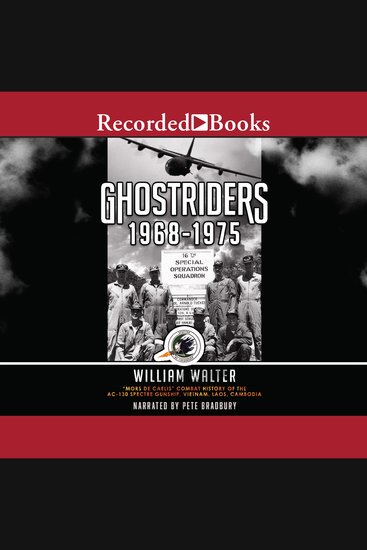
    If necessity is the mother of invention, the AC-130 gunship was definitely her offspring. 
     
    Ghostriders: Mors De Caelis is a comprehensive history of AC-130 gunship combat operations in Vietnam, Laos, and Cambodia. The story begins with the first AC-130 in 1968, and ends in 1975 at the end of the war in Vietnam. It tells the life and  
    death stories of Spectre crews, who faced extreme danger while hunting trucks on the Ho Chi Minh Trail and providing fire support for US and allied ground forces. Though the AC-130 was credited with 10,000 trucks destroyed, this phenomenal  
    achievement came with a hefty price. Fifty-two Spectre crewmen and six AC-130s were lost during combat operations in Laos and Vietnam. 
     
    Written in third-person omniscient point of view by an experienced combat veteran and Spectre historian, all aspects of the story are derived from official declassified records and personal interviews. The level of detail and context  
    figuratively puts the reader in the aircraft as an observer, flying alongside a Spectre crew in combat. Above all, this is the story of Spectre—accurate, detailed, compelling, and unique.
    Show book
  • Economic Impacts of Imperialism - How Empire Building Shaped Global Trade and Economics - cover

    Economic Impacts of Imperialism...

    Arlo Holders

    • 0
    • 0
    • 0
    Imperialism, as a driving force in global history, established the foundation for much of the modern world's economic and political systems. The roots of imperialism stretch back to ancient civilizations, where conquest and control of territories provided the resources and labor necessary for expansion and prosperity. Over time, the concept evolved, shaped by cultural ambitions, geopolitical competition, and economic incentives. By the late 15th century, the age of exploration began a new phase of empire building, marked by the European powers seeking wealth and influence beyond their borders. 
    At the heart of imperialism was the pursuit of economic gain. Wealth from foreign lands, particularly precious metals, spices, and other coveted resources, spurred the earliest imperial endeavors. These ventures not only enriched nations but also fueled rivalry among emerging powers. The drive for resources and markets intensified during the Renaissance and the early modern period, as advancements in navigation and maritime technology made long-distance expeditions feasible. Imperial powers sought to expand their influence by establishing colonies, which would serve as sources of raw materials and as markets for manufactured goods. 
    Cultural and ideological factors also played a role in shaping imperialism. The belief in the superiority of certain civilizations over others justified the conquest and subjugation of indigenous peoples. Religion was another motivator, with missionary efforts often accompanying territorial expansion. Christianity, in particular, became a tool for legitimizing imperial control, as colonizing powers framed their endeavors as missions to civilize and convert native populations. This intertwined economic exploitation with a sense of moral and cultural obligation, creating a complex dynamic between the colonizers and the colonized.
    Show book