Junte-se a nós em uma viagem ao mundo dos livros!
Adicionar este livro à prateleira
Grey
Deixe um novo comentário Default profile 50px
Grey
Assine para ler o livro completo ou leia as primeiras páginas de graça!
All characters reduced
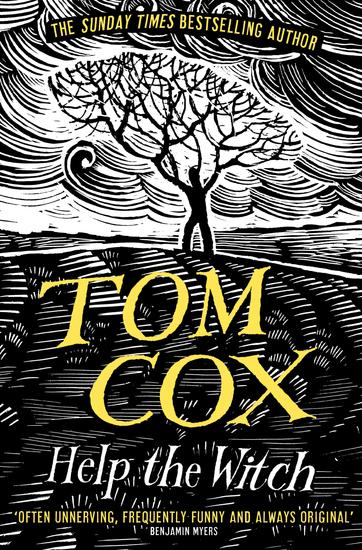
Help the Witch - cover
LER

Help the Witch

Tom Cox

Editora: Swift Press

  • 0
  • 0
  • 0

Sinopse

Inspired by our native landscapes, saturated by the shadows beneath trees and behind doors, listening to the run of water and half-heard voices, Tom Cox s first collection of short stories is a series of evocative and unsettling trips into worlds previously visited by the likes of M. R. James and E. F. Benson.
Railway tunnels, the lanes and hills of the Peak District, family homes, old stones, shreds fluttering on barbed wire, night drawing in, something that might be an animal shifting on the other side of a hedge: Tom has drawn on his life-long love of weird fiction, folklore and nature s unregarded corners to write a collection of stories that will delight fans old and new, and leave them very uneasy about turning the reading lamp off.
Disponível desde: 19/06/2025.
Comprimento de impressão: 256 páginas.

Outros livros que poderiam interessá-lo

  • Blackmail - From their pens to your ears genius in every story - cover

    Blackmail - From their pens to...

    John Galsworthy

    • 0
    • 0
    • 0
    John Galsworthy was born on the 14th August 1867 on the family estate, Parkfield, in Kingston-upon-Thames.  His family’s wealth came from the shipping industry 
    At age nine he began his education at Saugeen, a Bournemouth preparatory school, before moving to Harrow school in 1881, distinguishing himself as an athlete.  
    Galsworthy attended New College, Oxford to read law and left with a second-class degree with honours in 1889. The bar called him in 1890 but Galsworthy decided he would rather run the family’s shipping business. This also meant travelling to destinations such as Vancouver, South Africa and Australia. 
    In 1895 Galsworthy began a decade long affair with Ada Nemesis Pearson Cooper, the wife of his first cousin. It was only when, in 1905, she divorced and married Galsworthy that their affair became known. 
    His literary career began in 1897 with a short story volume, ‘From the Four Winds’, with the pseudonym John Sinjohn as were three further works. Under his own name, in 1904, came ‘The Island Pharisees’, a novel of social observation, seasoned with flashes of satire and propaganda. He also switched from small, independent publishers to the larger Heinemann and to whom he remained for the duration of his career. 
    1906 saw first major play, ‘The Silver Box’, and the novel ‘The Man of Property’. Each to considerable acclaim. The latter was the first in ‘The Forsyte Saga’ trilogy written between 1906 and 1921. It dealt with the questions of status, class and materialism through Soames Forsyte, who is acutely aware of his ‘new money’ status. Jealous of his wife, his machinations drive her into the arms of another. Soames engages in a terrible revenge with terrible consequences.  
    His social agenda was enlightened particularly in his condemnation over the use of solitary confinement in prisons, his attacks on theatrical censorship and campaigning for animal rights. 
    Galsworthy, having been passed over for active service, spent much of the First World War working as an orderly in a field hospital in France. 
    Despite his it was only in 1920 that he had his first blockbuster play ‘The Skin Game’, a melodrama dealing with ethics, property and class.  
    In 1920 ‘In Chancery’ also arrived with further discourse on the marital disharmony between Soames Forsyte and his wife.  
    The appreciation of his work gradually shifted from plays to novels, particularly through his detailing English social difference, tension and pretension with the Forsytes.  A second trilogy, ‘A Modern Comedy’, followed, examining his love for his daughter Fleur and the English commercial upper-middle class, its ideologies and Soames’ poisonous materialism.  
    Having rejected a knighthood in 1918 he was appointed, in 1929, to the Order of Merit. Galsworthy spent his last years writing a third Forsythe trilogy, ‘End of the Chapter’.   
    In 1932 he was awarded the Nobel Prize, but by now failing health meant he was too ill to attend the ceremony. 
    John Galsworthy died at his Hampstead home of a brain tumour on 31st January, 1933. He was cremated and his ashes scattered from an aeroplane over the South Downs.
    Ver livro
  • Man-size in Marble - cover

    Man-size in Marble

    Edith Nesbit

    • 0
    • 0
    • 0
    A young couple finds the perfect country cottage with one caveat - it has a horrible legend attached to it.  
    Edith Nesbit wrote under the name E. Nesbit, and is most famous for her stories for children, and has influenced the likes of J.K. Rowling, C.S. Lewis and P.L. Travers. She wrote over 60 books, including The Railway Children, Five Children and It, and The Story of the Treasure Seekers.  
    Her second, darker reputations was as a purveyor of horror stories, which are sublime in their elegance and simplicity. This story is quite simple, but when you take into account the beauty of the language, the skill of the plot movement, and the intriguing supporting characters, it really ranks high when it comes to classic ghost stories.
    Ver livro
  • Mrs Packletide's Tiger - From their pens to your ears genius in every story - cover

    Mrs Packletide's Tiger - From...

    Saki Saki

    • 0
    • 0
    • 0
    Hector Hugh Munro, more familiarly known by his pen-name ‘Saki’ was born in what was then Akyab in British Burma on 18th December 1870. His father was an Inspector General for the Indian Imperial Police, and his mother the daughter of a Rear Admiral. 
    When he was 2 his mother died and he and his siblings were sent back to England to be raised by their grandmother and paternal maiden aunts in a strict, puritanical household near Barnstaple, Devon. Educated by governesses Saki used many of these women as character models for his later writing. 
    At 17 his father retried and returned to England and then embarked on a series of European travels with Saki and his siblings. 
    After a short stint working in Burma with the Indian Imperial Police Saki decided to move to London to make a living as a writer. Initially he wrote as a journalist for a number of newspapers and magazines before attempting an historical study, ‘The Rise of the Russian Empire’, whose real value lay in directing him to writing short stories instead, the first of which, ‘Dogged’, he published in 1899. 
    From here it was a short stab of the pen to writing political satire before in 1902 he became the foreign correspondent for The Morning Post, first in the Balkans, then Russia, Paris and back to London in 1908, where 'the agreeable life of a man of letters with a brilliant reputation awaited him.'  
    Collections of his short stories full of witty, mischievous and often macabre stories that satirized Edwardian society and two novels now appeared in the years up to the Great War.  At its’ outbreak he was 43 but managed to join as an ordinary trooper. More than once he returned to the battlefield when officially too sick or injured.  
    On 14th November 1916 Hector Hugh Munro was sheltering in crater during the Battle of the Ancre, when he was shot and killed by a German sniper. According to several sources, his last words were "Put that bloody cigarette out!"
    Ver livro
  • Flappers and Philosophers - cover

    Flappers and Philosophers

    F. Scott Fitzgerald

    • 0
    • 0
    • 0
    "Flappers and Philosophers" by F. Scott Fitzgerald offers an enchanting collection of eight short stories that vividly capture the spirit of the Jazz Age. From the whimsical charm of flapper protagonists to the profound introspections of complex characters, Fitzgerald weaves tales of romance, ambition, and the quest for identity. This enthralling anthology stands as a testament to Fitzgerald's mastery in painting the roaring twenties' glamour and its underlying disillusionment.
    Ver livro
  • The Moon is Trending - cover

    The Moon is Trending

    Clare Fisher

    • 0
    • 0
    • 0
    This new short story collection from Clare Fisher explores of feelings of failure around gender, sexuality, and work, that arise in a success-obsessed capitalist culture. Dazzling, playful, and experimental, it veers between the real, the surreal and the absurd.
    Ver livro
  • The Viewing Party - cover

    The Viewing Party

    Yong Shu Hoong

    • 0
    • 0
    • 0
    Singapore Literature Prize winner Yong Shu Hoong’s latest book features more than just poetry. There is also a ghostly tale at its core, complete with prose poems and micro fiction of exactly 100 words each, as well as annotated excerpts from an abandoned work. 
     
    In this viewing party, readers are invited to take a peek into the domain of death and cinema. You are part of a mob of dispassionate onlookers. Sometimes, you get to play the voyeuristic judge. 
     
    Winner of the 2014 Singapore Literature Prize for English Poetry 
     
    “There’s a warm easiness to Yong’s voice that’s balanced by a sharpness of insight. He cuts through the layers of familial and social habit to the unseen images and urges that give the mundane the sheen of the numinous. If the book is a viewing party, Yong is a genial and attentive host, inviting us in to absorbing scenes of everyday curiosity and surprise.” 
    -Jen Crawford, Assistant Professor and Coordinator of Creative Writing Programme at Nanyang Technological University, Singapore
    Ver livro