Join us on a literary world trip!
Add this book to bookshelf
Grey
Write a new comment Default profile 50px
Grey
Subscribe to read the full book or read the first pages for free!
All characters reduced
1000 Amazing Horror Movie Facts - cover

1000 Amazing Horror Movie Facts

Tom Chapman

Publisher: BookRix

  • 0
  • 0
  • 0

Summary

Think you know all there is to know about horror movies? Well, think again. 1000 Amazing Horror Movie Facts is chock full of fascinating and unusual facts about classic (and not so classic) horror movies. Blockbusters, B-movies, slashers, ghost stories, video nasties, anthologies, sequels, gore, cursed productions, what might have been, casting, controversy, and so on. So dim the lights and prepare to enter the spooky and blood drenched world of horror movies....
Available since: 12/21/2023.
Print length: 244 pages.
Other books that might interest you

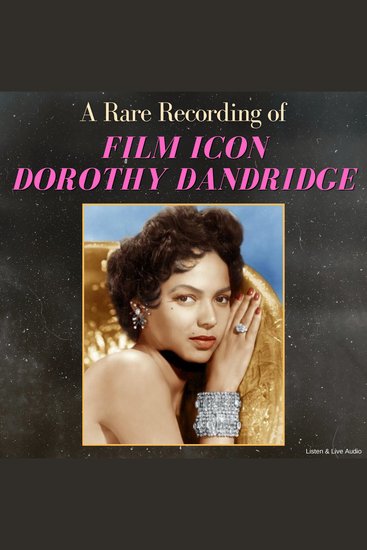
  • A Rare Recording of Film Icon Dorothy Dandridge - cover

    A Rare Recording of Film Icon...

    Dorothy Dandridge

    • 0
    • 0
    • 0
    Dorothy Jean Dandridge (November 9, 1922 to September 8, 1965) was an American actress and singer. She was the first African-American film star to be nominated for the Academy Award for Best Actress for Carmen Jones (1954). Dandridge had also performed as a vocalist in venues such as the Cotton Club and the Apollo Theater. During her early career, she performed as a part of the Wonder Children, later the Dandridge Sisters, and appeared in a succession of films. In 1959, Dandridge was nominated for a Golden Globe Award for Porgy and Bess. The following recordings are from a television interview in 1954, Dandridge's presentation of the Film Editing Oscar at the 1955 Academy Awards, and a speech at a freedom rally at Wrigley Field on May 26, 1963.
    Show book
  • Chronicle The - Book One - Full-cast dramatisation - cover

    Chronicle The - Book One -...

    Mr Punch

    • 0
    • 0
    • 0
    The Chronicle: BOOK ONE (January to March) 
     
    This is history at its best and most entertaining! One moment Liselotte, the Duchess of Orleans (1678) is observing the Prince of Orange consummating his marriage in thick woollen drawers… and the next, Harold Nicolson (1936) is at the Savoy Grill dining with the Prince of Wales and Mrs Simpson who is, "bejewelled, eyebrow-plucked, virtuous and wise". There's the young medical student watching his friend Samuel Wright (1864) bowing to the crowd as he is hanged on the roof of Horsemonger Lane Gaol. And then Joe Orton and the Beatles (1967), Philip Larkin and Kingsley Amis (1980), Captain Robert Scott and the South Pole (1912), John Betjeman, Barbara Castle, Joyce Grenfell, Alan Clark, Kenneth Williams and many other contributors… and not forgetting the anonymous but harrowing account of a witch’s trial by water (1731) 
      
    “It’s WONDERFUL.  In fact, I would describe it as one of the all-time audio greats... an unmissable five-star production.”  (The Guardian) 
    “I recommend the reader to hunt down and buy this series wherever it may be found.”  (The Spectator) 
    “The whole endeavour is a beguiling jigsaw”  (Sunday Times) 
     
    Dramatised and performed by a distinguished cast of over 30 actors, including Charles Dance, Harriet Walter, David Suchet, Timothy West, James Bolam, Maureen Lipman, Robert Powell, Jenny Agutter, Joss Ackland, Eleanor Bron, John Sessions, Imogen Stubbs. 
     
    Also available as part of the CHRONICLE BOX SET, over 11 hours of audio bliss.
    Show book
  • The Science of Music - How Technology has Shaped the Evolution of an Artform - cover

    The Science of Music - How...

    Andrew May

    • 0
    • 0
    • 0
    Music is shaped by the science of sound.
    
    How can music - an artform - have anything to do with science? Yet there are myriad ways in which the two are intertwined, from the basics of music theory and the design of instruments to hi-fi systems and how the brain processes music.
    
    Science writer Andrew May traces the surprising connections between science and music, from the theory of sound waves to the way musicians use mathematical algorithms to create music.
    
    The most obvious impact of science on music can be seen in the way electronic technology has revolutionised how we create, record and listen to music. Technology has also provided new insights into the effects that different music has on the brain, to the extent that some algorithms can now predict our reactions with uncanny accuracy, which raises a worrying question: how long will it be before AI can create music on a par with humans?
    Show book
  • Vinyl Record Collecting For Dummies - cover

    Vinyl Record Collecting For Dummies

    Dave Thompson

    • 0
    • 0
    • 0
    Get on the vinyl train and learn about this captivating hobby 


    Vinyl Record Collecting For Dummies teaches you how to start a collection, grow your collection, and make that collection sound excellent. You'll learn how to shop for new, used, and rare records, and how to select the turntable that's right for you. Learn how to determine a record's value, build your collection on a budget, and properly store and maintain your records. This handy Dummies guide also gives you the background knowledge you'll need to hold your own in conversations with vinyl enthusiasts—all about music genres, the pros and cons of vinyl types, how records are made, and even the history of record collecting itself. Now you can start collecting rare records, new releases, and everything in between. 


    ● Learn the basics of buying records at record shops, secondhand stores, and online 


    ● Determine the value of your collection and learn how to recognize great deals 


    ● Select the turntable and sound system that are right for your needs 


    ● Explore the history of recorded music and learn why people are going wild for vinyl
    Show book
  • Yuan Dynasty - Mongol Rule and the Blending of Cultures - cover

    Yuan Dynasty - Mongol Rule and...

    Rolf Hedger

    • 0
    • 0
    • 0
    The Yuan Dynasty emerged from the ambitions of Kublai Khan, the grandson of Genghis Khan, who sought to consolidate Mongol rule over China. Before the establishment of the Yuan, the Mongols had waged a relentless military campaign against the Song Dynasty, the ruling power in southern China. After decades of conflict, Kublai Khan successfully defeated the Song in 1279, marking the first time in history that all of China was under foreign rule. His ascension to the throne not only signified the dominance of the Mongols but also introduced a new era of governance that blended Mongol traditions with Chinese administration. 
    Kublai Khan declared himself emperor in 1271 and named his dynasty "Yuan," meaning "Great Origin," a term rooted in Chinese philosophy and symbolic of the vast scope of Mongol rule. Unlike his predecessors, who maintained a nomadic lifestyle, Kublai recognized the necessity of adopting Chinese customs to effectively govern a vast and diverse population. He moved the capital from Karakorum to Dadu, present-day Beijing, reinforcing his commitment to ruling as a Chinese emperor while still maintaining Mongol authority. His reign sought to balance the military-driven expansion of his ancestors with the complexities of ruling a settled, bureaucratic society. 
    Despite his efforts to integrate into Chinese political traditions, Kublai faced challenges in legitimizing his rule. Many Han Chinese viewed the Mongols as outsiders and resisted their authority. To solidify his claim, Kublai adopted Confucian principles and retained elements of the Chinese imperial structure, appointing Chinese officials in lower government positions while keeping key positions reserved for Mongols and trusted foreign allies. This approach ensured Mongol dominance while utilizing the administrative expertise of the Chinese.
    Show book
  • The History of Art - Painting from Giotto to the Present Day - cover

    The History of Art - Painting...

    A. N. Hodge

    • 0
    • 0
    • 0
    Take a tour through the history of painting from the Early Renaissance to modern day in this guide.
     
    Great artists change the way we look at the world. From Manet to Goya, and Rothko to Caravaggio, this comprehensive guide traces the development of artistic styles and the spot connections between them. Discover the major movements in western painting, and the life and times of the influential artists whose experimentation paved the way.
    
    Suitable for everybody, from the casual reader to students of art history
    A clear chronological structure allows the reader to see each movement in its historical context and to appreciate the patterns that emerge
    A comprehensive overview of painting, from the sacred beauty of Giotto's The Raising of Lazarus to Gerhard Richter and Luc Tuymans
    Includes an essay on the development of painting techniques throughout the ages
    
     
    This is an ideal introduction for students, artists and enthusiasts looking to refresh their knowledge of the story of western art.
    Show book