Join us on a literary world trip!
Add this book to bookshelf
Grey
Write a new comment Default profile 50px
Grey
Subscribe to read the full book or read the first pages for free!
All characters reduced
The Magic Mountain - [Complete & Annotated] - cover

The Magic Mountain - [Complete & Annotated]

Thomas Mann

Publisher: E-Kitap Projesi & Cheapest Books

  • 0
  • 0
  • 0

Summary

The Magic Mountain (German: Der Zauberberg) is a novel by Thomas Mann, first published in German in November 1924. It is widely considered to be one of the most influential works of twentieth-century German literature.

Mann started writing what was to become The Magic Mountain in 1912. It began as a much shorter narrative which revisited in a comic manner aspects of Death in Venice, a novella that he was preparing for publication. The newer work reflected his experiences and impressions during a period when his wife, who was suffering from a lung complaint, resided at Dr. Friedrich Jessen's Waldsanatorium in Davos, Switzerland for several months. In May and June 1912, Mann visited her and became acquainted with the team of doctors and patients in this cosmopolitan institution. According to Mann, in the afterword that was later included in the English translation of his novel, this stay inspired his opening chapter ("Arrival").

The outbreak of World War I interrupted his work on the book. The savage conflict and its aftermath led the author to undertake a major re-examination of European bourgeois society. He explored the sources of the destructiveness displayed by much of civilised humanity. He was also drawn to speculate about more general questions related to personal attitudes to life, health, illness, sexuality and mortality. Given this, Mann felt compelled to radically revise and expand the pre-war text before completing it in 1924. Der Zauberberg was eventually published in two volumes by S. Fischer Verlag in Berlin.

The narrative opens in the decade before World War I. It introduces the protagonist, Hans Castorp, the only child of a Hamburg merchant family. Following the early death of his parents, Castorp has been brought up by his grandfather and later, by a maternal uncle named James Tienappel. Castorp is in his early 20s, about to take up a shipbuilding career in Hamburg, his home town. Before beginning work, he undertakes a journey to visit his tubercular cousin, Joachim Ziemssen, who is seeking a cure in a sanatorium in Davos, high up in the Swiss Alps. In the opening chapter, Castorp leaves his familiar life and obligations, in what he later learns to call "the flatlands", to visit the rarefied mountain air and introspective small world of the sanatorium.
Available since: 12/17/2023.
Print length: 1000 pages.

Other books that might interest you

  • The Nightingale And the Rose - cover

    The Nightingale And the Rose

    Oscar Wilde

    • 0
    • 2
    • 0
    A nightingale finds a young romantic student in tears because he cannot find a red rose for his beautiful ball partner. There are no red roses in the garden. The nightingale visits all the rose-trees in the area, and one of the roses tells her there is a way to produce a red rose, but only if the nightingale is prepared to sing the sweetest song for the rose all night with her heart pressing into a thorn, sacrificing her life. Seeing the student in tears, and valuing his human life above her bird life, the nightingale carries out the ritual. Read in English by Josh Verbae, unabridged.
    Show book
  • The Room in the Tower - cover

    The Room in the Tower

    E.F. Benson

    • 0
    • 0
    • 0
    🎬 Experience the atmospheric visual edition of this tale by searching “Jonathan Dunne Horror” on YouTube. 
    Title: The Room in the Tower 
    Series Name: Timeless Terrors 
    Series Entry: 147 
    Author: E. F. Benson 
    Narrator: Jonathan Dunne 
    Original Publication: 1912 
    Public Domain: Yes 
    Description: 
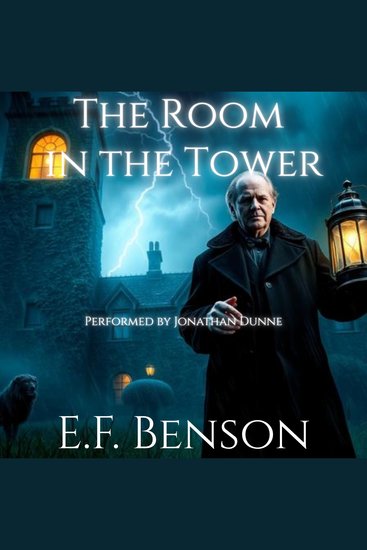
    The Room in the Tower is a chilling tale of recurring nightmares, mounting dread, and vampiric horror from E. F. Benson. 
    For years, a man is haunted by the same disturbing dream: a decaying house, a looming tower, and a terrible room waiting for him night after night. But when fate leads him to a country estate that mirrors the nightmare exactly, he realizes the dream may have been a warning — and that something ancient and hungry is waiting within the house. 
    With its dreamlike atmosphere, slow-building tension, and unforgettable sense of supernatural terror, The Room in the Tower remains one of Benson’s most eerie and celebrated ghost stories.
    Show book
  • Poor Folk - cover

    Poor Folk

    Fyodor Dostoevsky

    • 0
    • 0
    • 0
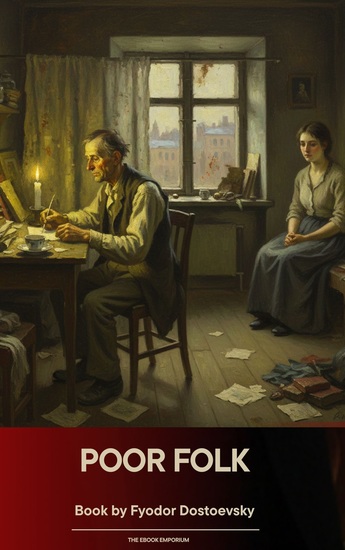
    "We are poor people, we are simple people, but we have hearts and souls too."
    
    Before the psychological labyrinths of Crime and Punishment, a young Dostoevsky captured the world's attention with this exquisite epistolary novel. Through a series of increasingly desperate letters, we witness the relationship between Makar Devushkin, a lowly, aging copy clerk, and Varvara Dobroselova, a fragile young seamstress. Living in squalid rooms across a dismal St. Petersburg courtyard, they exchange words of comfort, shared bread, and the flickering hope of a better life. Poor Folk is a searingly intimate portrait of the "little man" struggling to maintain his humanity in a society that views him as nothing more than a smudge on a ledger.
    
    The Birth of Psychological Realism: Dostoevsky takes the traditional "sentimental" epistolary form and infuses it with a brutal, modern realism. He elevates the clerk—a figure usually mocked in Russian literature—to a tragic hero. Makar's obsession with his social standing and his desperate attempts to appear "respectable" even as he starves reveal the deep psychological scars of class inequality.
    
    A Tragedy of Self-Sacrifice: As their financial situation deteriorates, the letters become a battleground between love and survival. Makar's selfless devotion to Varvara leads him to ruin, while Varvara is forced to make a heart-shattering choice between the man who loves her and the safety of a wealthy, predatory suitor. It is a story that proves the greatest tragedies are often the quietest ones, occurring behind closed doors in the poorest corners of the city.
    
    Witness the soul of a genius in its first bloom. Purchase "Poor Folk" today and experience the novel that changed Russian literature forever.
    Show book
  • Ring Around the Sun - cover

    Ring Around the Sun

    Isaac Asimov

    • 0
    • 0
    • 0
    "Ring Around the Sun" is a science fiction short story by American writer Isaac Asimov. It was first published in the March 1940 issue of Future Fiction and reprinted in the 1972 collection The Early Asimov. "Ring Around the Sun" was the fifth story Asimov wrote, and also the fifth to be published.
    Show book
  • The Jilting of Jane - A Classic Victorian Satire of Heartbreak Social Ambition and Sweet Revenge - cover

    The Jilting of Jane - A Classic...

    H. G. Wells

    • 0
    • 0
    • 0
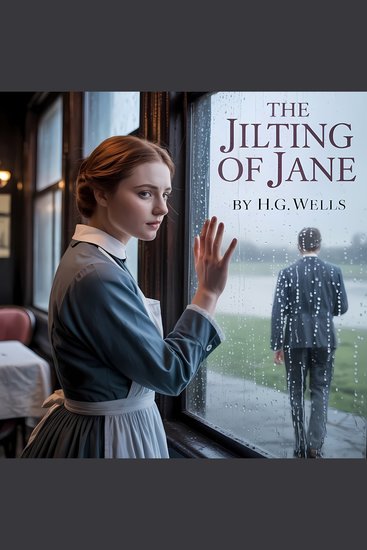
    He was her "perfect" gentleman - until he decided she wasn't "lady" enough. Jane is a devoted housemaid who spent three years building a future around William. She beamed with pride as he climbed from shop porter to a "gentleman" in silk hats, never realizing he was climbing right out of her life. When a sophisticated rival lures him away with piano music and social airs, Jane is left with a shattered heart and a house filled with bitter silence. But H.G. Wells doesn't give us a tragic victim. As William’s wedding day approaches, Jane’s grief turns into a quiet, calculated resolve. She isn't just going to watch him walk down the aisle; she’s bringing a heavy bag and a score to settle. Will she win him back, or will she ensure his "perfect" day is one he’ll never forget? Witty and wickedly sharp, "The Jilting of Jane" is a classic satire about social ambition, heartbreak, and the unpredictable power of a woman pushed too far. Press play and witness the unforgettable moment Jane finally gets her say!
    Show book
  • Frankenstein - Or the Modern Prometheus - cover

    Frankenstein - Or the Modern...

    Mary Shelley

    • 0
    • 0
    • 0
    Frankenstein - or, The Modern Prometheus - is considered to be one of the earliest examples of science fiction. Written by Mary Shelley, it tells the story of scientist Victor Frankenstein and the catastrophic consequences of his attempts to create a perfect new being by activating a group of body parts with an electrical charge. The hideous monster that is born of Frankenstein's experiment wreaks havoc when it realises that it will never know the happiness that mere mortals can enjoy. Today, Frankenstein continues to captivate readers worldwide through its enduring themes of ambition, alienation and human nature.
    Show book