Join us on a literary world trip!
Add this book to bookshelf
Grey
Write a new comment Default profile 50px
Grey
Subscribe to read the full book or read the first pages for free!
All characters reduced
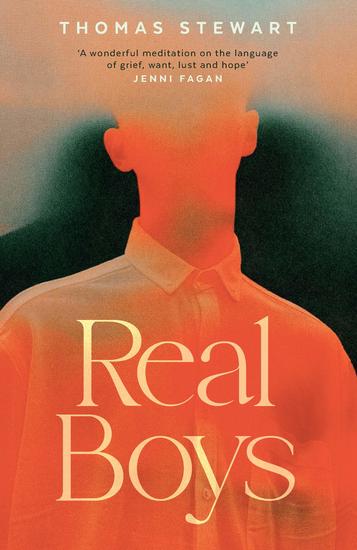
Real Boys - cover

Real Boys

Thomas Stewart

Publisher: Polygon

  • 0
  • 0
  • 0

Summary

The remarkable debut from Thomas Stewart.
In his debut collection, Real Boys, Thomas Stewart examines the death of his father and explores questions of grief, guilt, mental health, identity, sexuality and masculinity. As these poems unfold, a hallway of mirrors is created. Through the lens of father-son relationships, cinema, art and Welsh mythology are expanded and rethought. This collection grapples with what it means to be a father, a son and a self. Subverting the notions of gender, Stewart addresses both the damage of old stereotypes and the passage of generational trauma, questioning how we might change.
'A wonderful meditation on the language of grief, want, lust and hope' – Jenni Fagan
'A beautiful and wistful collection which wrangles with life's ample grief and heartache' – Andrés N. Ordorica
'These poems are a revelation. I took great comfort from Thomas Stewart's collection' – Lotte Jeffs
Available since: 08/01/2024.
Print length: 112 pages.

Other books that might interest you

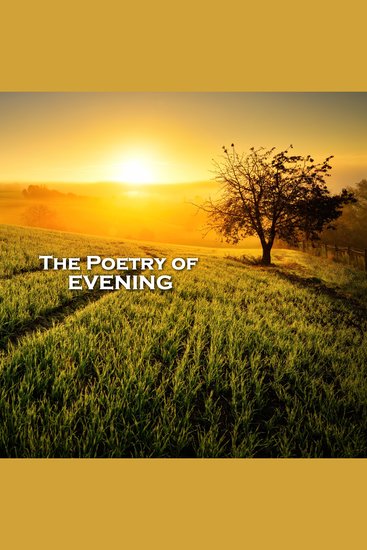
  • The Poetry of Evenings - The perfect poems to pair with dinner and glass of wine - cover

    The Poetry of Evenings - The...

    John Keats, Sara Teasdale,...

    • 0
    • 0
    • 0
    In England summer evenings remind us of the falling of the light, of village greens and the thump of willow on leather.  In winter, evenings are dark, unlit and a time to be inside. 
    The evening light, of twilight, of sunset, has another name in the movie business. They call it ‘magic hour’ and sometimes it is just that. The heavy, golden light suffuses everything with a glow and fullness that gladdens our hearts and delights our eyes. 
    For our poets this was a time of mystery and wonder; between the bright day and the canopy of stars that heralded sleep. 
     This volume comes to you from Portable Poetry, a specialized imprint from Deadtree Publishing.  Our range is large and growing and covers single poets, themes, and many compilations.
    Show book
  • Faults - cover

    Faults

    Sara Teasdale

    • 0
    • 0
    • 0
    LibriVox volunteers bring you 22 recordings of Faults by Sara Teasdale. This was the Weekly Poetry project for March 7th, 2010.
    Show book
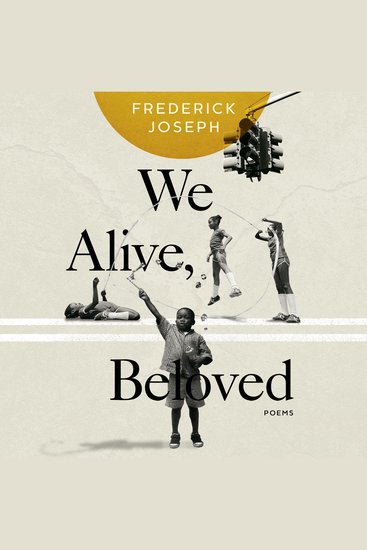
  • We Alive Beloved - Poems - cover

    We Alive Beloved - Poems

    Frederick Joseph

    • 0
    • 0
    • 0
    NYT Bestselling Author, Frederick Joseph, explores a new genre in this captivating poetry collection that seeks to find joy in moments of difficulty whether through illuminating the beauty of being Black, highlighting the hope that can be found in childhood, or by sharing intimate truths revealed on a mental health journey. This book will appeal to both new and established readers of poetry. 
     
    Step into the world of We Alive, Beloved, where its words will resonate within the deepest corners of your soul, leaving a mark on your heart and a renewed appreciation for the beauty of being alive. 
     
    We Alive, Beloved moves beyond being a poetry collection; it's a celebration of the profound aspects of our existence. Each poem seeks to immortalize the fleeting moments of joy, love, resilience, and inspiration that often slip through the grasp of our fast-paced lives. 
     
    In this poetic testament, we defy the ephemeral nature of beauty and goodness, daring to clutch onto these facets of life for just a little longer. With words that stand as guardians against the relentless march of time and the ceaseless tides of change, trauma, and grief, this collection becomes a sanctuary of light in a world that sometimes seems dim. 
     
    We Alive, Beloved explores a rich tapestry of themes, from the intricacies of relationships and the heartache of loss, to the wide-eyed wonder of existence and the challenges of exploring the possibility of parenthood in our modern age. Each poem reaches out to readers, offering a mirror to their own journeys and emotions, inviting them to be seen and acknowledged in its lyrical embrace.
    Show book
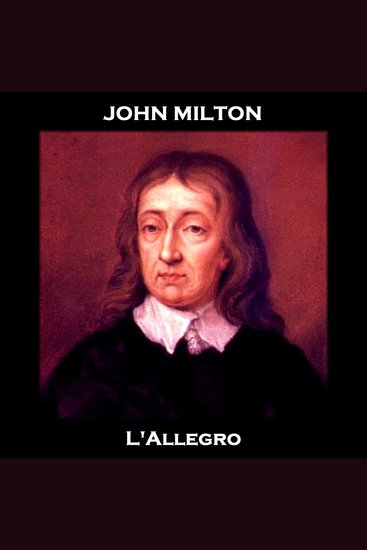
  • L'Allegro - From their pens to your ears genius in every story - cover

    L'Allegro - From their pens to...

    John Milton

    • 0
    • 0
    • 0
    John Milton was born in Bread Street, London, on December 9th, 1608.  His early years were privately tutored before gaining a place at St Paul’s School and in 1625 he matriculated at Christ's College, Cambridge, earning a BA in 1629 and an MA in 1632. At Cambridge he had developed a reputation for poetic skill but also experienced alienation from his peers and university life as a whole.  
    The next 6 years were spent in private study. He read both ancient and modern works of theology, philosophy, history, politics, literature and science, in preparation for a poetical career.  Milton mastered Latin, Greek, Hebrew, French, Spanish, and Italian. To these he would add Old English (whilst researching his History of Britain) and also acquired more than a passing acquaintance in Dutch.  
    Although he was studying, some of his poetry from this time is remarkable; L’Allegro and Il Penseroso in 1631 and Lycidias in 1638. 
    In May 1638, Milton embarked upon a 15 month tour of France and Italy. These travels added a new and direct experience of artistic and religious traditions, especially Roman Catholicism.  He cut the journey short to return home during the summer of 1639 because of what he claimed were "sad tidings of civil war in England."  
    Once home, Milton wrote prose tracts against episcopacy, in the service of the Puritan and Parliamentary cause.  
    He married 16-year-old Mary Powell in June 1643 but she left him after only a few months during which he wrote and published several writings on divorce. Mary did return after 3 years and their life thereafter seemed harmonious.  Milton received a hostile response to the divorce tracts and drove him to write Areopagitica, his celebrated attack on pre-printing censorship.  
    With the parliamentary victory in the Civil War, Milton wrote The Tenure of Kings and Magistrates (1649) which defended popular government and implicitly sanctioned the regicide which led to his appointment as Secretary for Foreign Tongues by the Council of State.  
    On 24 February 1652 Milton published his Latin defense of the English People, Defensio Pro Populo Anglicano, also known as the First Defense. Milton's Latin prose and intellectual sweep, quickly gained him a European reputation.  
    Tragically his first wife, Mary, died on May 5th, 1652 following the birth of their fourth child.   The following year Milton had become totally blind, probably due to glaucoma.  He then had to dictate his verse and prose to helpers, one of whom was the poet Andrew Marvell.  
    He married again to Katherine Woodcock but she died in February 1658, less than four months after giving birth to a daughter, who also tragically died.  
    Though Cromwell’s death in 1658 caused the English Republic to collapse Milton stubbornly clung to his beliefs and in 1659 he published A Treatise of Civil Power, attacking the concept of a state-dominated church. Upon the Restoration in May 1660, Milton went into hiding for his life. An arrest warrant was issued and his writings burnt. He re-emerged after a general pardon was issued, but was nevertheless arrested and briefly imprisoned before influential friends, such as Marvell, now an MP, intervened 
    His third marriage was to Elizabeth Mynshull. Despite a 31-year age gap, the marriage seemed happy and Milton spent the remaining decade of his life living quietly in London, apart from a short spell in Chalfont St. Giles, during the Great Plague of London.  
    Milton was to now publish his greatest works, which had been gestating for many years.  Paradise Lost, perhaps the classic English Epic poem was originally published in 10 books in 1667.  This was followed by Paradise Regained and Samson Agonistes in 1671.  Because of his anti-monarchy views their reception was muted but over the centuries since Milton has established himself as second only to Shakespeare.  He died of kidney failure on November 8th, 1674 and was buried in the church of St Giles Cripplegate.
    Show book

  • Beautiful Bad - The fourteen rivers of life - cover

    Beautiful Bad - The fourteen...

    Radi Ibrahim Nuhu

    • 0
    • 0
    • 0
    The poet believes that life is like a river and the Audiobook takes a total of fourteen poems that express how life is painfully beautiful
    Show book
  • Short Poetry Collection 117 - cover

    Short Poetry Collection 117

    Various

    • 0
    • 0
    • 0
    This is a collection of 21 poems read by LibriVox volunteers for February 2013.
    Show book