Join us on a literary world trip!
Add this book to bookshelf
Grey
Write a new comment Default profile 50px
Grey
Subscribe to read the full book or read the first pages for free!
All characters reduced
THOMAS PAINE Ultimate Collection: Political Works Philosophical Writings Speeches Letters & Biography (Including Common Sense The Rights of Man & The Age of Reason) - cover

THOMAS PAINE Ultimate Collection: Political Works Philosophical Writings Speeches Letters & Biography (Including Common Sense The Rights of Man & The Age of Reason)

Thomas Paine

Publisher: Good Press

  • 0
  • 0
  • 0

Summary

In the expansive anthology, "THOMAS PAINE Ultimate Collection," readers are offered a meticulously curated compendium of Paine's seminal political works, philosophical writings, speeches, letters, and biography. Spanning the tumultuous backdrop of the late 18th century, this collection includes iconic texts such as "Common Sense," which galvanized American independence, "The Rights of Man," advocating for civil liberties and self-governance, and "The Age of Reason," a critique of institutionalized religion. Paine's accessible prose and impassioned rhetoric reflect the Enlightenment's fervor for reason and progress, positioning him as a radical thinker whose ideas challenged the status quo and inspired revolutionary movements globally. Thomas Paine'Äôs life was marked by a relentless pursuit of social justice and equality, reflecting the principles he fervently espoused in his writings. Born in England, Paine emigrated to America in the early 1770s, where he became a pivotal figure in the fight against tyranny while advocating for the rights of the common man. His experiences as an artisan and his deep dissatisfaction with monarchical power fueled his compelling arguments, enabling him to articulate the aspirations of a burgeoning nation. This collection is essential for anyone seeking to comprehend the roots of modern democracy and human rights. Paine's works remain remarkably relevant, encouraging critical engagement with governance, social justice, and reason. This anthology is not only a historical document but also a clarion call for readers to reflect on the enduring principles of liberty and equality.
Available since: 01/13/2024.
Print length: 1738 pages.

Other books that might interest you

  • Agents of Influence - Britain's Secret Intelligence War Against the IRA - cover

    Agents of Influence - Britain's...

    Aaron Edwards

    • 0
    • 0
    • 0
    Recruited by British Intelligence to infiltrate the IRA and Sinn Féin during the height of the Northern Ireland Troubles, they were ‘agents of influence’. With codenames like INFLICTION, STAKEKNIFE, 3007 and CAROL, these spies played a pivotal role in the fight against Irish republicanism. Now, for the first time, some of these agents have emerged from the shadows to tell their compelling stories. Agents of Influence takes you behind the scenes of the secret intelligence war which helped bring the IRA’s armed struggle to an end. 
     
    Historian Aaron Edwards, the critically acclaimed author of UVF: Behind the Mask, explains how the IRA was penetrated by British agents, with explosive new revelations about the hidden agendas of prominent republicans like Martin McGuinness and Freddie Scappaticci and lesser-known ones like Joe Haughey and John Joe Magee. Bringing to light recently declassified TOP SECRET documents and the firsthand testimonies of agents and their handlers, Edwards reveals how British Intelligence gained extraordinary access to the IRA’s inner circle and manipulated them into engaging with the peace process. 
     
    With new insights into the spy masters behind the scenes, their strategies and tactics, and Britain’s international intelligence network in Northern Ireland, Europe, and beyond, Agents of Influence offers a rare and shocking glimpse into the clandestine world of secret agents, British intelligence strategy and the betrayal at the heart of militant Irish republicanism during the vicious decades of the Troubles.
    Show book
  • Macron’s defeat - The Story of the French Fall in Africa - cover

    Macron’s defeat - The Story of...

    Leslie Varenne

    • 0
    • 0
    • 0
    Emmanuel Macron lands for the first time in Africa at the Barkhane base in Gao, Mali, on May 14, 2017. His determination is complete: “Operation Barkhane will only end the day there are no more Islamist terrorists in the region and the full sovereignty of the Sahel states is restored. Not before.” 
    Seven years on, jihadists are on the rise, and the French army has been forced to leave Mali, Burkina Faso, Niger, and Chad may follow… This debacle is not a military one, it’s a political one. With the end of its influence in Africa, France has weakened its army, lost its allies at the United Nations and bid farewell to its singular voice on the international stage.
    Leslie Varenne retraces Emmanuel Macron’s itinerary in Africa since 2017. She recounts a long sequence of lack of strategy, vision, ignorance of African realities, technocratic approaches, mistakes and setbacks that have led to this defeat. To this inventory must be added the problem posed by Emmanuel Macron’s personality and his relations with his peers.
    Show book
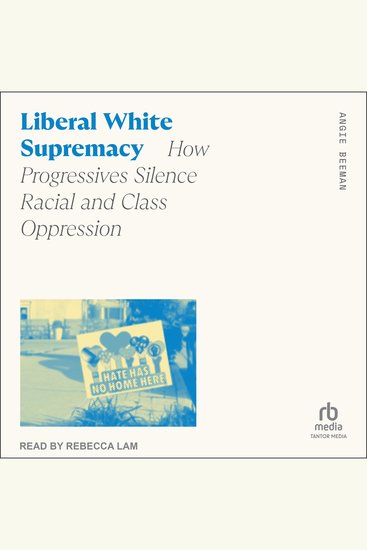
  • Liberal White Supremacy - How Progressives Silence Racial and Class Oppression - cover

    Liberal White Supremacy - How...

    Angie Beeman

    • 0
    • 0
    • 0
    In Liberal White Supremacy, Angie Beeman argues that white supremacy is maintained not only by right-wing conservatives or stereotypically uneducated working-class racial bigots but also by progressives who operate from a liberal ideology of color-blindness, racism-evasiveness, and class elitism. This distinction provides insight on divisions among progressives at the local level, in community organizations, and at the national level, in the Democratic Party. By distinguishing between liberal and radical approaches to racism, class oppression, capitalism, and social movement tactics, Beeman shows how progressives continue to be limited by liberal ideology and perpetuate rather than dismantle white supremacy, all while claiming to be antiracist. 


    She conceptualizes this self-serving process as "liberal white supremacy," the tendency for liberal European Americans to constantly place themselves in the superior moral position in a way that reinforces inequality. Beeman advances what she calls action-oriented and racism-centered intersectional approaches as alternatives to progressive organizational strategies that either downplay racism in favor of a class-centered approach or take a talk-centered approach to racism without developing explicit actions to challenge it.
    Show book
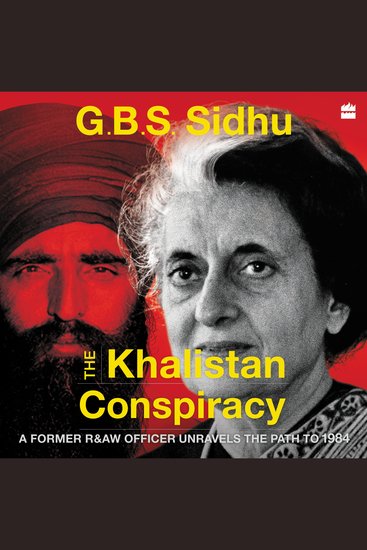
  • The Khalistan Conspiracy - A Former R&AW Officer Unravels the Path to 1984 - cover

    The Khalistan Conspiracy - A...

    G.B.S. Sidhu

    • 0
    • 0
    • 0
    The author, a former Special Secretary of India's external intelligence agency, the Research and Analysis Wing (R&AW) of the Cabinet Secretariat, examines a series of interconnected events that led to the rise of the Khalistan movement, Operation Blue Star, the assassination of Prime Minister Indira Gandhi in 1984 and the anti-Sikh violence unleashed thereafter. With a timeline that moves from seven years before to a decade after 1984, the book strives to answer critical questions that continue to linger till today. 
    The narrative moves from Punjab to Canada, the US, Europe and Delhi, looking to sift the truth from political obfuscation and opportunism, examining the role that the ruling party allegedly played, and the heart-rending violence that devoured thousands of innocent lives in its aftermath.
    Show book
  • Hillbilly Nationalists Urban Race Rebels and Black Power - Interracial Solidarity in 1960s-70s New Left Organizing - cover

    Hillbilly Nationalists Urban...

    James Tracy, Amy Sonnie

    • 0
    • 0
    • 0
    Some of the most important and little-known activists of the 1960s were poor and working-class radicals. Inspired by the Civil Rights movement, the Black Panthers, and progressive populism, they started to organize significant political struggles against racism and inequality during the 1960s and into the 1970s. 


    Historians of the period have traditionally emphasized the work of white college activists who courageously took to the streets to protest the war in Vietnam and continuing racial inequality. Poor and working-class whites have often been painted as spectators, reactionaries, and, even, racists. But authors James Tracy and Amy Sonnie disprove that narrative. 


    Through over ten years of research, interviewing activists along with unprecedented access to their personal archives, Tracy and Sonnie tell a crucial, untold story of the New Left. Their deeply sourced narrative history shows how poor and working-class individuals from diverse ethnic, rural and urban backgrounds cooperated and drew strength from one another. The groups they founded redefined community organizing, and transformed the lives and communities they touched.
    Show book
  • The Coronation - cover

    The Coronation

    Charles Eisenstein

    • 0
    • 0
    • 0
    Renowned public speaker, bestselling author, social critic, and activist Charles Eisenstein offers a way forward from our present moment through a series of unforgettable essays that give us a new model of sense-making. Through a series of piercing essays, The Coronation takes listeners through the initiation of the Covid era?exploring topics like despair, hope, courage, division, and reunion?in this stunning collection. Paired with each essay is the author’s commentary locating the essay in a social, political, and spiritual journey. After all, it wasn’t only outward normality that the pandemic disrupted. Of all the social crises that COVID-19 has revealed, The Coronation addresses the most profound: the crisis in our sense-making. An old reality has disintegrated. This book reveals just how deep that breakdown is. Acknowledging it, we might build something more sound, more whole, and more sane. Underneath the shifting sands of the arguments and narratives, something else calls to us: the possibility of renewal, a revolution in the agreements and myths that organize society. *Individually, these essays have been read, shared, and discussed by tens of thousands of people around the globe, but they are collected together here for the first time!
    Show book