Join us on a literary world trip!
Add this book to bookshelf
Grey
Write a new comment Default profile 50px
Grey
Subscribe to read the full book or read the first pages for free!
All characters reduced
Utopia - cover

Utopia

Thomas Moore

Publisher: Ancient Chapters

  • 0
  • 0
  • 0

Summary

A groundbreaking work of political and philosophical imagination.

In Utopia, Thomas More describes an ideal society built upon reason, cooperation, education, and justice. Through thoughtful discussion and social critique, the book examines politics, law, wealth, and human behavior.

Intelligent and thought-provoking, the work remains one of the most influential texts in political philosophy and literary history.

Written by Thomas More.

Discover a timeless vision of society and human possibility—download your copy today.
Available since: 05/21/2026.
Print length: 155 pages.
Other books that might interest you

  • Escaping the Gulags: The History of the Most Famous Attempts to Escape the Soviet Union’s Notorious Labor Camps - cover

    Escaping the Gulags: The History...

    Editors Charles River

    • 0
    • 0
    • 0
    One of the most idiosyncratic horrors of Soviet Russia was the Gulag system, an extensive network of forced labor and concentration camps. Part of the rationale behind this system was that it could serve as slave labor in the drive for industrialization, while also serving as a form of punishment. The name Gulag is in fact an acronym, approximating to “Main Administration of Camps” (in Russian: Glavnoe Upravlenie Lagerei) and operated by the Soviet Union’s Ministry of the Interior.[1] The Gulag consisted of internment camps, forced labor camps, psychiatric hospital facilities, and special laboratories, and its prisoners were known as zeks. Such was the closed and secretive nature of the Soviet state that to this day, knowledge of the Gulag system comes mainly from Western studies, firsthand accounts by prisoners such as Aleksandr Solzhenitsyn, and some local studies after the fall of communism. 
    	The most recognisable version of the Gulag, a term that was never pluralized in Russia itself, existed from the 1930s-1950s, a period in which a huge network of camps and prisons was established across the vast Soviet federation. Prisoners were often used as forced labor, made to do physically arduous and soul-destroying tasks. Some workers helped to build large infrastructure projects, and indeed the system was partly rationalized in terms of economics.  
    	By the early 1960s, Gulags were synonymous with various forms of punishments, including house arrest, imprisonment in isolated places, or confinement to a mental hospital where a prisoner would be declared insane or diagnosed with a “political” form of psychosis. In its later years, the Gulags held a particular place in the public’s imagination, both within the USSR and in the outside world. They could mean exile, brutal punishment, or simply being banished to Siberia.
    Show book
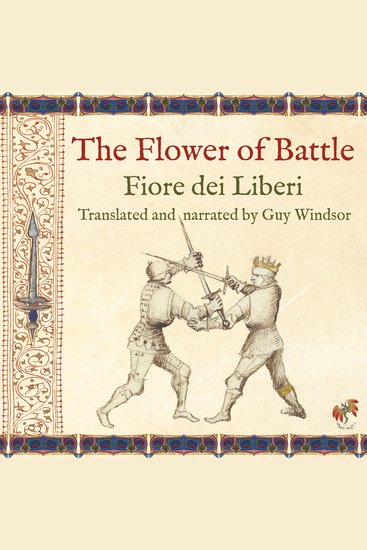
  • Flower of Battle by Fiore dei Liberi The: Translated and narrated by Guy Windsor - Il Fior di Battaglia by Fiore dei Liberi - cover

    Flower of Battle by Fiore dei...

    Guy Windsor, Fiore dei Liberi

    • 0
    • 0
    • 0
    Il Fior di Battaglia, the Flower of Battle, was written by the great Italian master at arms Fiore dei Liberi around the year 1400. It covers knightly combat on foot and on horseback, in armour and without, in great depth and detail. The sections of the manuscript include an introduction, then plays of wrestling, the dagger, the sword in one hand, the sword in two hands, the sword in armour, the pollax, the spear, the lance on horseback, the sword on horseback, and wrestling on horseback.  
    This audiobook is the translation into English by Dr. Guy Windsor.
    Show book
  • No Democracy Lasts Forever - How the Constitution Threatens the United States - cover

    No Democracy Lasts Forever - How...

    Erwin Chemerinsky

    • 0
    • 0
    • 0
    No Democracy Lasts Forever argues that the Constitution has become a threat to American democracy and must be dramatically changed or replaced if secession is to be avoided. 


    Deeply troubled by the Constitution's inherent flaws, Erwin Chemerinsky, the renowned dean of Berkeley law school, came to the sobering conclusion that our nearly 250-year-old founding document is responsible for the crisis now facing American democracy. Pointing out that just fifteen of the 11,848 amendments proposed since 1789 have passed, Chemerinsky contends that the very nature of our polarization results from the Constitution's "bad bones," which have created a government that no longer works or has the confidence of the public. Yet political armageddon can still be avoided, Chemerinsky writes, if a new constitutional convention is empowered to replace the Constitution of 1787, much as the Founding Fathers replaced the outdated Articles of Confederation. If this isn't possible, Americans must give serious thought to forms of secession—including a United States structured like the European Union—based on a recognition that what divides us as a country is, in fact, greater than what unites us.
    Show book
  • Battle of Chickamauga - A History from Beginning to End - cover

    Battle of Chickamauga - A...

    Hourly History

    • 0
    • 0
    • 0
    The American Civil War was a long and bloody conflict whose effects are still felt today in the United States. The descendants of the men who fought in the war continue to pay the fallen their respects and remember the events of the war, the various battles, and the personalities of the many leaders involved.
     
    One of those battles was the Battle of Chickamauga, the second-deadliest battle of the entire Civil War. While some have judged this battle to have been unnecessary, the debate about it has raged over the decades following the war. As far as Union General William Rosecrans was concerned, the fighting at Chickamauga was absolutely essential as it would have an impact on not only the subsequent Battles for Chattanooga but also the outcome of the Civil War. This book describes not only the battle itself but also the events leading up to it, as well as the key figures involved.
    Show book
  • 30 Occult and Supernatural masterpieces in one book - cover

    30 Occult and Supernatural...

    Charles Dickens, Louisa May...

    • 0
    • 0
    • 0
    What lies beyond the veil of the ordinary world?
    
    30 Occult and Supernatural Masterpieces in One Book is a chilling collection of classic stories that explore humanity's fascination with the unknown. From haunted houses and ghostly visitations to forbidden knowledge, dark rituals, and cosmic terror, these timeless works reveal what happens when unseen forces cross into the human world.
    
    Written by master storytellers of classic horror, gothic fiction, and weird literature, this anthology blends atmosphere, suspense, and psychological dread. Each story stands on its own, yet together they form a rich journey through the shadows of fear, belief, and imagination.
    
    This collection captures the roots of modern horror and supernatural fiction—where mystery lingers, reason falters, and terror quietly grows.
    
    Inside this eBook, you'll encounter:
    
    30 classic tales of occult and supernatural horror
    
    Ghost stories, dark magic, and eerie phenomena
    
    Foundational works that shaped horror and weird fiction
    
    Atmospheric storytelling filled with suspense and dread
    
    Perfect for fans of classic horror, gothic literature, and supernatural mysteries, this anthology offers an unforgettable reading experience.
    
    Open the book where the unseen awakens. Buy now and experience thirty timeless masterpieces of the occult and supernatural.
    Show book
  • The Mystery of Easter Island - cover

    The Mystery of Easter Island

    Katherine Routledge

    • 0
    • 0
    • 0
    The Mystery of Easter Island (Rapa Nui) by Katherine Routledge explores one of the world's greatest archaeological mysteries. Discover the history behind the iconic Moai statues, the rise and decline of the Rapa Nui civilization, ancient Polynesian culture, and the enduring questions surrounding this remote Pacific island. Based on Routledge's groundbreaking expedition and research, this audiobook offers a fascinating journey into lost civilizations, archaeology, anthropology, and the secrets of Easter Island.
    Show book