Join us on a literary world trip!
Add this book to bookshelf
Grey
Write a new comment Default profile 50px
Grey
Subscribe to read the full book or read the first pages for free!
All characters reduced
Utopia - cover

Utopia

Thomas More

Publisher: The Ebook Emporium

  • 0
  • 0
  • 0

Summary

What would a perfect society really look like?

Written in 1516, Utopia by Thomas More is one of the most influential works of political philosophy ever published. Through a vivid fictional island society, More explores ideas of justice, equality, governance, education, and the relationship between individuals and the state.

This timeless classic challenges readers to question accepted social norms and reflect on the strengths and flaws of their own societies. Blending satire with serious philosophical inquiry, Utopia remains remarkably relevant in discussions of politics, economics, and social reform.

Inside this eBook, you'll explore:

A detailed vision of an idealized society and its laws

Early critiques of wealth inequality and corruption

Thought-provoking ideas on property, work, religion, and government

A foundational text that shaped modern political and social theory

Studied in universities worldwide and debated for centuries, Utopia continues to inspire thinkers, reformers, and readers interested in the future of society.

Whether you are a student of philosophy, a lover of classic literature, or a reader curious about political ideals, this essential work belongs in your collection.

Discover the book that gave the world the word "utopia." Buy now and explore one of the most important classics in political thought.
Available since: 01/21/2026.
Print length: 155 pages.

Other books that might interest you

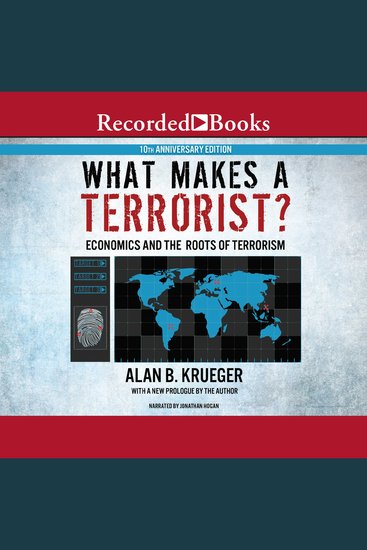
  • What Makes a Terrorist? - Economics and the Roots of Terrorism (10th Anniversary Edition) - cover

    What Makes a Terrorist? -...

    Alan B. Kreuger

    • 0
    • 0
    • 0
    Why we need to think more like economists to successfully combat terrorism If we are to correctly assess the root causes of terrorism and successfully address the threat, we must think more like economists do. This is the argument of Alan Krueger's What Makes a Terrorist, a book that explains why our tactics in the fight against terrorism must be based on more than anecdote, intuition, and speculation. Many popular ideas about terrorists and why they seek to harm us are fueled by falsehoods, misinformation, and fearmongering. Many believe that poverty and lack of education breed terrorism, despite the wealth of evidence showing that most terrorists come from middle-class, and often college-educated, backgrounds. Krueger closely examines the factors that motivate individuals to participate in terrorism, drawing inferences from terrorists' own backgrounds and the economic, social, religious, and political environments in the societies from which they come. He describes which countries are the most likely breeding grounds for terrorists, and which ones are most likely to be their targets. Krueger addresses the economic and psychological consequences of terrorism and puts the threat squarely into perspective, revealing how our nation's sizable economy is diverse and resilient enough to withstand the comparatively limited effects of most terrorist strikes. He also calls on the media to be more responsible in reporting on terrorism. Bringing needed clarity to one of the greatest challenges of our generation, this 10th anniversary edition of What Makes a Terrorist features a new introduction by the author that discusses the lessons learned in the past decade from the rise of ISIS and events like the 2016 Pulse nightclub attack in Orlando, Florida. Author bio: Alan B. Krueger is the Bendheim Professor of Economics and Public Policy at Princeton University, former chairman of President Barack Obama's Council of Economic Advisers, and an adviser to the National Counterterrorism Center. He is the coauthor of Myth and Measurement: The New Economics of the Minimum Wage (Princeton) and Inequality in America. He lives in Princeton, New Jersey.
    Show book
  • Europe without Borders - A History - cover

    Europe without Borders - A History

    Issac Stanley-Becker

    • 0
    • 0
    • 0
    Europe is a place of free movement among nations—or is it? The Schengen area, established in 1985 and today encompassing twenty-nine European countries, allows people, goods, and capital to cross borders without restraint. Schengen transformed European life, advancing both a democratic project of transnational citizenship and a neoliberal project of international free trade. But the right of free movement always excluded non-Europeans, especially migrants of color from former colonies of the Schengen states. In Europe without Borders, Isaac Stanley-Becker explores the contested creation of free movement in Schengen. 


    Schengen laid the groundwork for the making of a single market and the founding of the European Union. Yet its emergence is one of the great untold stories of modern European history, one hidden in archives long embargoed. Stanley-Becker is among the first to have access to records of the treatymaking and Europe without Borders offers a pathbreaking account of Schengen's creation. Stanley-Becker argues that Schengen gave a humanist cast to a market paradigm; but even in pairing the border crossing of human beings with the principles of free-market exchange, this vision of free movement was hedged by alarm about foreign migrants. Meanwhile, these migrants—the sans-papiers—saw in the promise of a borderless Europe only a neocolonial enterprise.
    Show book
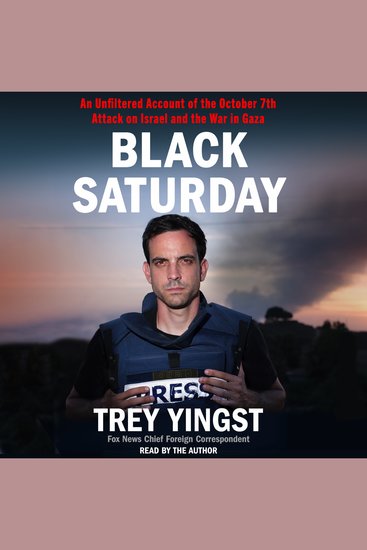
  • Black Saturday - An Unfiltered Account of the October 7th Attack on Israel and the War in Gaza - cover

    Black Saturday - An Unfiltered...

    Trey Yingst

    • 0
    • 0
    • 0
    Fox News war correspondent Trey Yingst shares his gripping, firsthand account of the events of October 7, 2023, and the ensuing war, offering riveting insight and fresh facts that clarify the scope and magnitude of this latest and most dramatic outbreak in one of the bloodiest, most nuanced, and longest-standing conflicts in modern history. 
    On the morning of October 7, 2023, the militant group known as Hamas launched a vicious attack on Israel in the most recent stage of the deeply complicated and decades-long Israel-Palestine conflict. The assault, which took place on Shabbat—the day of rest for the Jewish people—instantly became known among Israelis and the world as “Black Saturday.” 
    On October 7, Fox News Correspondent Trey Yingst was on the ground along the Gaza border and witnessed firsthand the devastation, shock, and deep sorrow that whirled through Israel. A seasoned journalist who has reported from some of the most dangerous hotspots around the world, including the frontlines in Ukraine, Afghanistan, and Pakistan, Yingst was just one among many people plunged into the terrifying chaos of that horrific event. In this shocking and eye-opening chronicle, he pieces together the story of that tragic day and reveals how he risked his life searching for answers to essential questions in real time--who within Israel had been attacked; what happened to them; who, potentially, was next--while exploring the impact on both Israelis and Palestinians as a full-scale war ramps up and peace grows more elusive. “We have a responsibility now to account for and record these events—and tell the world the truth,” Yingst writes. “We cannot look away.” 
    Committed to reporting the whole truth, on both sides of the Israel-Gaza border, Yingst interviewed a range of exclusive contacts to incorporate multiple perspectives. From conversations with Israeli Defense Minister Yoav Gallant and high-ranking soldiers, to interviews with Senior Hamas official Dr. Bassem Naim and Gazan journalist Nael Ghaboun, to heartbreaking accounts from civilians placed in the crosshairs of the attack and conflict that followed, Yingst takes us inside the newest phase of an old war in which thousands more people—men, women, and children—are suffering. 
    Combining candor, grit, and veracity, Yingst paints a vivid picture of horrors and violence, matched by acts of courage and humanity that cut through the darkness. A testament to unwavering resilience and tenacity, Black Saturday is the riveting chronicle of one journalist’s experience relentlessly pursuing the truth in the face of terror. 
    Supplemental enhancement PDF accompanies the audiobook.
    Show book
  • China's Next Act - How Sustainability and Technology are Reshaping China's Rise and the World's Future - cover

    China's Next Act - How...

    Scott M. Moore

    • 0
    • 0
    • 0
    Ever since China began its ascendancy to great-power status in the 1980s, observers have focused on its growing economic, military, and diplomatic power. But in recent years, Chinese officials, businesses, and institutions have increased their visibility and influence on every major global issue. How have these newer issues changed China's relationship with the world? And, importantly, how can we prepare for a future increasingly shaped by China? 


    In China's Next Act, Scott M. Moore re-envisions China's role in the world, with a focus on sustainability and technology. Moore argues that these increasingly pressing, shared global challenges are reshaping China's economy and foreign policy, and consequently, cannot be tackled without China. 


    In this clearly written and accessible overview, Moore examines how countries like the US must balance cooperation and competition with China in response to shared challenges. With an emphasis on opportunities as well as threats, Moore addresses not only key developments in sustainability and technology within China, but also their implications for foreign countries, companies, and other organizations. China's Next Act provides a unique—and uniquely balanced—window into these new dimensions of China's global ascension.
    Show book
  • A Tale of Two Unions - The British Union and the European Union After Brexit - cover

    A Tale of Two Unions - The...

    Mark Corner

    • 0
    • 0
    • 0
    Brexit is a tale of two unions, not one: the British and the European unions. Their origins are different, but both struggle to maintain unity in diversity and both have to face the challenge of populism and claims of democratic deficit.
    Mark Corner suggests that the »four nations« that make up the UK can only survive as part of a single nation-state, if the country looks more sympathetically at the very European structures from which it has chosen to detach itself. This study addresses both academic and lay audiences interested in the current situation of the UK, particularly the strains raised by devolution and Brexit.
    Show book
  • Confronting Saddam Hussein - George W Bush and the Invasion of Iraq - cover

    Confronting Saddam Hussein -...

    Melvyn P. Leffler

    • 0
    • 0
    • 0
    America's decision to go to war in Iraq in 2003 is arguably the most important foreign policy choice of the entire post–Cold War era. Nearly two decades after the event, it remains central to understanding current international politics and US foreign relations. 


    In Confronting Saddam Hussein, the eminent historian of US foreign policy Melvyn P. Leffler analyzes why the US chose war and who was most responsible for the decision. Employing a unique set of personal interviews with dozens of top officials and declassified American and British documents, Leffler vividly portrays the emotions and anxieties that shaped the thinking of the president after the shocking events of 9/11. He shows how fear, hubris, and power influenced Bush's approach to Saddam Hussein's Iraq. At the core of Leffler's account is his compelling portrait of Saddam Hussein. Rather than stressing Bush's preoccupation with promoting freedom or democracy, Leffler emphasizes Hussein's brutality, opportunism, and unpredictability and illuminates how the Iraqi dictator's record of aggression and intransigence haunted the president and influenced his calculations. Throughout, Leffler highlights the harrowing anxieties surrounding the decision-making process after the devastating attack on 9/11 and explains the roles of contingency, agency, rationality, and emotion.
    Show book