Join us on a literary world trip!
Add this book to bookshelf
Grey
Write a new comment Default profile 50px
Grey
Subscribe to read the full book or read the first pages for free!
All characters reduced
THOMAS MORE Premium Edition - Utopia The History of King Richard III Dialogue of Comfort Against Tribulation De Tristitia Christi Biography - cover

THOMAS MORE Premium Edition - Utopia The History of King Richard III Dialogue of Comfort Against Tribulation De Tristitia Christi Biography

Thomas Moore

Publisher: DigiCat

  • 0
  • 0
  • 0

Summary

In the "Thomas More Premium Edition," readers are offered a comprehensive exploration of More's seminal works, including his magnum opus, "Utopia," and other varied writings that encapsulate his humanist philosophy and ethical concerns. The literary style is marked by a rich, articulate prose that seamlessly blends narrative, dialogue, and philosophical discourse, set against the backdrop of 16th-century Europe—a period rife with political upheaval and theological debate. More's incisive critiques of contemporary society and vivid imagination come together to create a thought-provoking commentary on the ideal state and human virtue, showcasing his commitment to Renaissance humanism. Thomas More (1478-1535) was a lawyer, statesman, and philosopher, renowned for his unwavering moral integrity and profound intellect. His tumultuous relationship with King Henry VIII, particularly concerning issues of faith and governance, directly influenced his writings. More's experiences in a rapidly changing socio-political landscape, coupled with his deep Catholic faith, fueled his desire to articulate a vision of justice and community that remains relevant. This edition is highly recommended for readers seeking to understand the complexities of More's thought and its implications for contemporary discussions on ethics, governance, and society. By delving into More's works, one is invited to reflect on the ideals of justice, the moral obligations of governance, and the enduring quest for an equitable society.
Available since: 12/27/2023.
Print length: 819 pages.
Other books that might interest you

  • The Great Retreat - How Political Parties Should Behave and Why They Don't - cover

    The Great Retreat - How...

    Didi Kuo

    • 0
    • 0
    • 0
    Once a centralizing force of the democratic process, political parties have eroded over the past fifty years. Parties now rank among the most unpopular institutions in society—less trusted than business, the police, and the media. Identification with parties has plummeted, and even those who are loyal to a party report feeling that parties care more about special interests than about regular citizens. What does a "good" political party look like? Why do we urgently need them? And how do we get them? 


    The Great Retreat explores the development of political parties as democracy expanded across the West in the nineteenth century. It focuses in particular on mass parties, and the ways they served as intermediaries that fostered ties between citizens and governments. 


    For democracy to adapt to a new era of global capitalism, Kuo makes the case that we need strong intermediaries like mass parties—socially embedded institutions with deep connections to communities and citizens. Parties are essential to long-term democratic stability and economic growth, while the breakdown of party systems, on the other hand, has historically led to democratic collapse. As trust in political parties has plummeted, The Great Retreat provides a powerful defense of political parties—for without parties, democratic representation is impossible.
    Show book
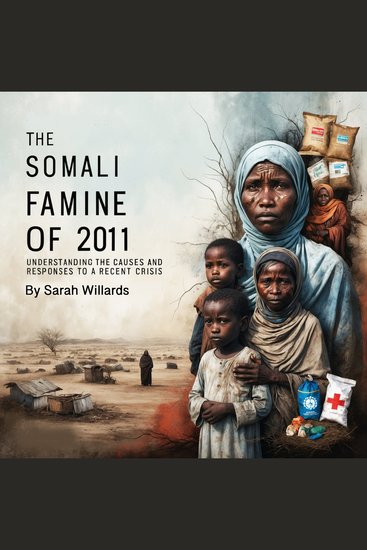
  • The Somali Famine of 2011 - Understanding the Causes and Responses to a Recent Crisis - cover

    The Somali Famine of 2011 -...

    Sarah Willards

    • 0
    • 0
    • 0
    The Somali Famine of 2011 stands as one of the most devastating humanitarian crises of the 21st century. It resulted in the deaths of tens of thousands of people, the majority of whom were children, and displaced millions of others. The famine, which lasted from mid-2010 to early 2012, was driven by a combination of environmental, political, and social factors. This chapter will examine the key aspects of the crisis, providing an understanding of how it emerged and what made it so catastrophic. 
    The roots of the famine can be traced to a severe drought that affected much of the Horn of Africa in 2011. The drought, one of the worst in decades, was exacerbated by irregular rainfall patterns linked to climate change. Somalia, already a country struggling with inadequate infrastructure and poor governance, faced dire consequences as crops failed, livestock perished, and food supplies dwindled to critical levels. The lack of sufficient rainfall and water sources left millions without the means to grow food or sustain their livelihoods. 
    However, the drought alone was not the sole cause of the famine. Somalia had been suffering from ongoing conflict and instability for years. The rise of militant groups, particularly the Al-Shabaab insurgency, contributed to the breakdown of essential services, such as food distribution and medical care. The instability also hindered the ability of international aid organizations to access those in need, which only deepened the crisis. The government’s weak control over large portions of the country and its inability to respond effectively to the disaster further complicated the situation.
    Show book
  • The Book We Wish We Had - cover

    The Book We Wish We Had

    Lisa Bachman, Justin Bachman

    • 0
    • 0
    • 0
    Lisa Bachman’s son, Justin, was sick, suffering, and broken. Lisa and her husband, Ron, had no idea how to heal, help, or fix him. His third suicide attempt, by the time he was eleven years old, was their final wake-up call. Although he survived, their family was left without a roadmap. They would start down a path through a maze, hit a wall, turn around, and begin again. Thankfully, with help, they found their way. Not only did they get through extraordinarily difficult times with a suicidal son, but he went on to start a nationwide nonprofit organization and become a motivational speaker who led more that 150 full-school assemblies for students in grades five through twelve in sixteen states—all before he turned eighteen.Mental health problems and the subsequent intolerance and isolation are some of the most prevalent, yet least discussed issues facing parents and kids today. Children and teens are over schedule, overstimulated, and dealing with challenges and questions that adults could never have imagined. Add in undiagnosed issues, willful ignorance, limited resources, refusal of the school to provide resources and abandonment from those believed to be a support system, and readers will get a glimpse of the obstacles the Bachman family had to overcome to navigate the first twelve years of their son’s life. “I wrote The Book We Wish We Had to share our triumphs but even more so, to share our struggles. By revealing our vulnerabilities and missteps, my hope is that readers will relate and become better able to understand that their experiences and feelings are normal as they find their way out of their maze.” Says Bachman, a mother of three grown children.The Book We Wish We Had addresses issues head-on with raw realism, humor, and hope as Bachman tells the story of how her family navigated their son Justin’s suicide attempts, medical, and mental illness. More than a memoir, this book is a resource that speaks truth to the pain that is so difficult to voice
    Show book
  • Ancient Ways Modern Truths - How Indigenous Wisdom Can Guide Us Forward - cover

    Ancient Ways Modern Truths - How...

    PHILIP BEARD, MARY PARKER

    • 0
    • 0
    • 0
    Ancient Ways Modern Truths: How Indigenous Wisdom Can Guide Us Forward 
    Introducing "Ancient Ways, Modern Truths: How Indigenous Wisdom Can Guide Us Forward." This work is a testament to the enduring knowledge of indigenous peoples and an invitation to integrate their insights into our quest for a sustainable and balanced future. 
    Connect with timeless traditions through: 
    🌱 Earth's Echo: Unearth the profound connection indigenous cultures have with nature, and how their understanding of ecosystems can transform our environmental strategies. 
    🔥 Fire of Community: Learn about the principles of community and kinship that bind traditional societies and how these can address modern issues of loneliness and disconnection. 
    🌌 Spiritual Symbiosis: Delve into the spiritual relationships indigenous peoples have with the cosmos, offering a different perspective on life's purpose and our place in the universe. 
    🕊 Harmony in Healing: Explore holistic approaches to health and well-being practiced for generations, highlighting prevention, balance, and integration of mind, body, and spirit. 
    "Ancient Ways, Modern Truths" is an enlightening read for those seeking alternative viewpoints, sustainable living advocates, and anyone drawn to the wisdom of our ancestors. 
    Each chapter bridges ancient knowledge and contemporary challenges—to inspire, to heal, and to encourage a more profound respect for the insights of indigenous peoples. 
    Are you ready to engage with the lessons of the past to address the dilemmas of the present? To embrace the ancient ways that offer a beacon for our collective journey forward? To acknowledge the modern truths found in the heritage of the original stewards of our planet? 📚🌿🔮
    Show book
  • The History of England - cover

    The History of England

    Jane Austen

    • 0
    • 0
    • 0
    The History of England from Henry IV to Charles I, by a partial, prejudiced, and ignorant historian.  N.B. There will be very few dates in this History! Jane Austen wrote The History of England in 1791, at the age of just 15, as a satirical parody of 18th-century historical textbooks.  It pokes fun at the apparent impartiality of contemporary historians and contains more opinions about the monarchs' relative characters than any facts or dates. The History of England was not published until 1922, more than a century after Austen's death.
    Show book
  • Who Runs the World? - Unlocking the Talent and Inventiveness of Women Everywhere - cover

    Who Runs the World? - Unlocking...

    Lois Quam

    • 0
    • 0
    • 0
    Women and girls across the world are often made to feel as if the challenges, limitations, and barriers they face are personal, belonging to them alone. When, in fact, they affect us all. The issues are systemic, societal, and global – and we have the power to create change. 
    In Who Runs the World?, author Lois Quam emphasizes the need to unlock the immense potential of women and girls globally. Quam argues that empowering women is the long-needed step for justice and the progress needed to address the growing challenges we face today. 
    Throughout the book, she speaks to the barriers – personal and systemic – that block the humanity and talent of half the all the world’s people – women. 
    Who Runs the World? sheds light on the path to change and the vital role women and girls play in addressing global challenges. Join the movement to unlock all the world’s talent and contribute to a more equitable and thriving world.
    Show book