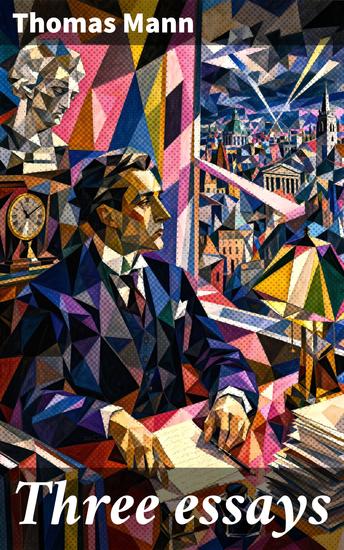
Three essays
Thomas Mann
Traducteur H. T. Lowe-Porter
Maison d'édition: Good Press
Synopsis
Three Essays gathers Thomas Mann's incisive reflections on culture, art, and the spiritual crises of modern Europe, presenting prose that is at once elegant, ironic, and intellectually exacting. Characteristic of Mann's essayistic style, these pieces move fluidly between literary criticism, philosophical meditation, and cultural diagnosis. Written in the context of the profound upheavals of early twentieth-century Germany, the essays illuminate recurring concerns in Mann's work: the tension between bourgeois order and artistic freedom, the fate of humanism, and the moral responsibilities of the intellectual in an age of instability. Mann, one of the central figures of modern German literature and Nobel laureate in 1929, brought to his nonfiction the same depth of psychological and cultural insight that distinguishes novels such as Buddenbrooks and The Magic Mountain. His life, marked by engagement with nationalism, democracy, exile, and the catastrophe of fascism, made him an acute observer of Europe's inner contradictions. These essays emerge from that historical and personal seriousness, revealing a writer compelled to interpret his era as well as to transcend it. This volume is especially recommended to readers interested in modernism, German intellectual history, and the essay as a major literary form. It offers not only keen analysis but also the rare pleasure of witnessing a great novelist thinking aloud with rigor and style.
Disponible depuis: 29/06/2026.
Longueur d'impression: 179 pages.