Join us on a literary world trip!
Add this book to bookshelf
Grey
Write a new comment Default profile 50px
Grey
Subscribe to read the full book or read the first pages for free!
All characters reduced
Declaration of Independence - Birth of a Nation - cover

Declaration of Independence - Birth of a Nation

Thomas Jefferson, Zenith Crescent Moon Press

Publisher: Zenith Crescent Moon Press

  • 0
  • 0
  • 0

Summary

📜 Experience the revolutionary document that changed the course of history: The Declaration of Independence. Written by Thomas Jefferson and adopted on July 4, 1776, this foundational text articulates the principles of liberty, equality, and the inherent rights of all individuals, forming the bedrock of the United States of America.
🗽 Delve into the powerful words that boldly declared freedom from tyranny and set forth the ideals of self-governance and democracy. Jefferson's eloquent prose captures the unyielding spirit of a new nation, calling for justice, independence, and the pursuit of happiness.
🌍 Recognized as a symbol of freedom worldwide, the Declaration inspires generations to stand for their rights and embrace the ideals of liberty. From its carefully crafted grievances against British rule to its timeless assertion of inalienable rights, this document remains a beacon of hope and an enduring testament to the fight for justice.
✨ Perfect for history enthusiasts, students, and anyone seeking a deeper understanding of democracy's roots, this iconic work is a must-read. Discover how the courage and conviction of a young nation shaped the world as we know it.
👉 Click now to explore this revolutionary text and connect with the spirit of independence that continues to inspire generations.
Available since: 03/18/2025.
Print length: 36 pages.

Other books that might interest you

  • Manifesto for the Revitalisation of Cities - A Solution to Portugal's Housing Crisis - cover

    Manifesto for the Revitalisation...

    Miguel Rebelo

    • 0
    • 0
    • 0
    The housing crisis in Portugal serves to illustrate a problem that has implications beyond the borders of the country, shedding light on challenges that are faced by major European and global cities. The rise in housing prices, driven by real estate speculation, the growth of tourism and the influx of foreign investment, has made it increasingly challenging for many in the population, especially the middle and lower classes, to access home ownership or renting. 
    The digitalisation of work has opened the possibility for highly qualified professionals to consider where they would like to live, regardless of the physical location of their job. Cities like Lisbon and Porto have become increasingly attractive destinations, offering a good quality of life combined with a range of professional opportunities. Nevertheless, this phenomenon has placed additional strain on the real estate market, leading to rising prices and the displacement of residents to the outskirts. 
    The housing policies that have been adopted thus far have not been as effective as might have been hoped, and in some cases may even have had the opposite effect. It seems that measures such as strict rent control, poorly targeted subsidies and the massive construction of new housing without proper urban and infrastructural planning have not solved the problem, and in some cases may have made it worse. Perhaps it would be beneficial to reconsider these approaches, acknowledging their shortcomings and adapting them to reflect the current situation. 
    It may be worth considering rehabilitating vacant buildings as a viable and sustainable solution. By restoring existing buildings, we can explore ways to increase the supply of affordable housing, revitalise run-down urban areas and preserve historical and cultural heritage to promote more inclusive and sustainable cities.
    Show book
  • Clandestine Cabals - History's Most Cryptic Organizations - cover

    Clandestine Cabals - History's...

    John Harpoon

    • 0
    • 0
    • 0
    Throughout history, secret societies have captivated the human imagination, their names whispered in shadowy corners, their rituals shrouded in secrecy. These clandestine groups, often operating in the hidden recesses of society, have been associated with the most significant events in world history, from political upheavals to revolutions. Despite the efforts of many to uncover their mysteries, much of what we know about them remains speculative, fueling a fascination that spans generations. But what drives this intrigue? Is it the promise of power, knowledge, or the allure of forbidden truths that draws people to these societies? 
    Secret societies are as old as civilization itself. From the ancient mystery schools of Egypt and Greece to the modern-day shadow organizations influencing global events, these groups have often been at the forefront of societal change, albeit behind the scenes. They are typically defined by their closed membership, strict initiation rites, and exclusive access to knowledge or practices that the outside world is not privy to. This secrecy has often been a point of both fascination and suspicion. Some view these societies as forces of good, safeguarding wisdom or advancing human progress, while others see them as dark, insidious entities working behind closed doors to manipulate world events for their own gain. 
    The historical roots of these secret organizations stretch back to times when religious, political, or philosophical beliefs were closely guarded. Ancient societies, such as the Egyptians, Greeks, and Romans, established mystery schools where knowledge was passed down only to those deemed worthy. These teachings often involved esoteric wisdom, such as alchemy, astrology, or sacred geometry, and were believed to hold the key to unlocking hidden truths about the universe and humanity's place within it.
    Show book
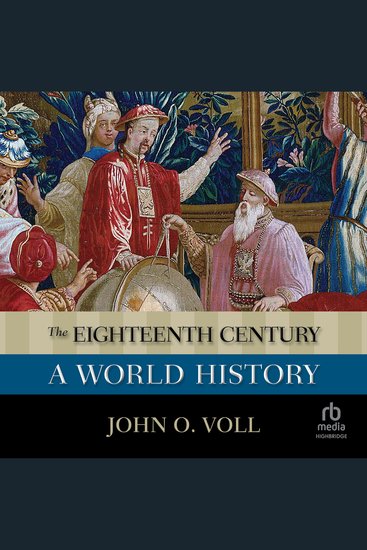
  • The Eighteenth Century - A World History - cover

    The Eighteenth Century - A World...

    John O. Voll

    • 0
    • 0
    • 0
    The eighteenth century was a time of major global transitions. Movements of religious and intellectual revival challenged established ideas, European colonies emerged in the Western hemisphere, global trade expanded, and political revolutions and revolts in America, France, Russia, and Haiti started to reshape political life. At the beginning of the century, power and wealth were roughly balanced among the major regions of the world. By its end, this balance was upset by the emergence of European imperial nation-states and Western European industrial societies whose evolution was enabled by modern processes of industrialization, globalization, and empires. 


    John O. Voll highlights key events and individuals in that transformation, from Emperor Kangxi's meeting with Jesuits and Catherine the Great's imperial expansion of Russia, Jonathan Edwards's Great Awakening and Muhammid ibn Abd al-Wahhab's Islam reform movement to Mulla Abdul Ghafur's trade in cotton, Richard Arkwright's textile factories, and Isaac Newton's and Immanuel Kant's contributions to the Enlightenment and modern science. This book shows that the eighteenth century was a time of transition to modernity, a time when the impact of the first globalization was being felt around the world. Old ways of life disappeared as new ways of organizing human activities emerged.
    Show book
  • Feeling the Waves - A Gentle Guide to Emotional Regulation and Self-Compassion - cover

    Feeling the Waves - A Gentle...

    Swati Bansal

    • 0
    • 0
    • 0
    Do your emotions sometimes feel like too much—rising and crashing without warning? Or not enough—leaving you feeling numb, stuck, or disconnected? You’re not alone. We’ve all been taught to suppress, avoid, or power through our feelings. But what if emotional strength wasn’t about being unaffected, but about learning to navigate the waves? 
    Feeling the Waves is a tender invitation to come home to yourself through the art of emotional regulation and self-compassion. 
    Drawing from her own healing journey through depression and emotional overwhelm, Dr. Swati offers practical tools, relatable insights, and the profound comfort of knowing you are not broken. 
    Whether you’re navigating anxiety, burnout, heartbreak, or simply longing for a more authentic connection with yourself, Feeling the Waves will help you build emotional resilience and live with greater peace, presence, and purpose.
    Show book
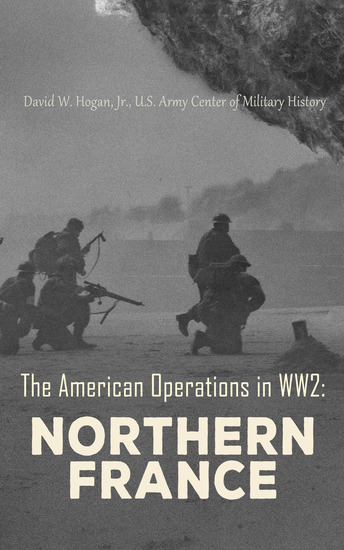
  • The American Operations in WW2: Northern France - cover

    The American Operations in WW2:...

    History U.S. Army Center of...

    • 0
    • 0
    • 0
    World War II was the largest and most violent armed conflict in the history of mankind. Highly relevant today, World War II has much to teach us, not only about the profession of arms, but also about military preparedness, global strategy, and combined operations in the coalition war against fascism. This book follows military operations of the US Army in the Northern France from 25 July to 14 September 1944. 
    As July 1944 entered its final week, Allied forces in Normandy faced, at least on the surface, a most discouraging situation. In the east, near Caen, the British and Canadians were making little progress against fierce German resistance. In the west, American troops were bogged down in the Norman hedgerows. These massive, square walls of earth, five feet high and topped by hedges, had been used by local farmers over the centuries to divide their fields and protect their crops and cattle from strong ocean winds. The Germans had turned these embankments into fortresses, canalizing the American advance into narrow channels, which were easily covered by antitank weapons and machine guns. The stubborn defenders were also aided by some of the worst weather seen in Normandy since the turn of the century, as incessant downpours turned country lanes into rivers of mud. By 25 July, the size of the Allied beachhead had not even come close to the dimensions that pre D-day planners had anticipated, and the slow progress revived fears in the Allied camp of a return to the static warfare of World War I. Few would have believed that, in the space of a month and a half, Allied armies would stand triumphant at the German border...
    Show book
  • Jeremiah - The World English Bible Book 24 (Unabridged) - cover

    Jeremiah - The World English...

    Various Authors

    • 0
    • 0
    • 0
    Jeremiah (c. 650 - c. 570 BC), also called the "weeping prophet", was one of the major prophets of the Hebrew Bible. According to Jewish tradition, Jeremiah authored the Book of Jeremiah, the Books of Kings and the Book of Lamentations, with the assistance and under the editorship of Baruch ben Neriah, his scribe and disciple. In addition to proclaiming many prophecies of Yahweh, the God of Israel, the Book of Jeremiah goes into detail regarding the prophet's private life, his experiences, and his imprisonment. Judaism and Christianity both consider the Book of Jeremiah part of their canon. Judaism regards Jeremiah as the second of the major prophets. Christianity holds him to be a prophet and his words are quoted in the New Testament. Islam also regards Jeremiah as a prophet and his narrative is recounted in Islamic tradition.
    Show book