Join us on a literary world trip!
Add this book to bookshelf
Grey
Write a new comment Default profile 50px
Grey
Subscribe to read the full book or read the first pages for free!
All characters reduced
The History of Colonial Virginia: Planters - Enriched edition - cover

The History of Colonial Virginia: Planters - Enriched edition

Thomas J. Wertenbaker

Publisher: Musaicum Books

  • 0
  • 0
  • 0

Summary

Thomas J. Wertenbaker's 'The History of Colonial Virginia: Planters' is a meticulously researched and enlightening exploration of the early days of the Virginia Colony, focusing on the lives and roles of the influential planters who shaped the economic and social landscape of the region. Wertenbaker's narrative style is both engaging and informative, providing readers with a comprehensive understanding of the challenges and triumphs faced by these early settlers. Drawing from primary sources and first-hand accounts, Wertenbaker offers a vivid portrayal of the complexities of colonial life in Virginia, shedding light on the intricate relationships between planters, indentured servants, and Native American tribes. This book is a must-read for anyone interested in the history of colonial America and the development of the plantation system in the New World. Thomas J. Wertenbaker's expertise in this field is evident throughout the book, making it a valuable addition to any history enthusiast's library.

In this enriched edition, we have carefully created added value for your reading experience:
- Hand‐picked Memorable Quotes shine a spotlight on moments of literary brilliance.
- Interactive footnotes clarify unusual references, historical allusions, and archaic phrases for an effortless, more informed read.
Available since: 01/04/2022.
Print length: 206 pages.


Other books that might interest you

  • The Majesty & Mystery Of Krsna's Divine Dance - cover

    The Majesty & Mystery Of Krsna's...

    Radha Krsna Das

    • 0
    • 0
    • 0
    Chaitanya Mahaprabhu appeared as a devotee of Krishna in Mayapur, West Bengal, India in the late fifteenth century. He introduced sankirtan, widespread congregational chanting of the Supreme Person’s names, as the most effective means by which anyone can achieve spiritual perfection. By His influence, many of India’s leading religious scholars and their followers became devotees of Krishna themselves. 
     
    In His youth, Mahaprabhu started a Sanskrit academy in Navadvipa—one of India’s top centers of learning at the time—and earned a reputation as an excellent scholar. But at age twenty-four he renounced everything to travel the subcontinent encouraging everyone he met to chant the Hare Krishna mantra. 
     
    He is considered by disciples, scholars and followers to be the latest avatar of Krishna Himself, based on extensive evidence found in Vedic literature. The International Society for Krishna Consciousness, ISKCON, is a continuation of Chaitanya Mahaprabhu’s sankirtan movement. 
      
    Chaitanya's humble, saintly demeanor and knowledge of Vedic conclusions persuaded prominent impersonalists that Krishna consciousness, worship of the Supreme Person, is life’s highest purpose. On Mahaprabhu’s instruction, the Six Goswamis of Vrindavan made a thorough analysis of the Vedas to show that Krishna bhakti, devotional service to Lord Krishna, is the essence of all Vedic teachings. Mahaprabhu’s extensive conversations with His devotees such as Ramananda Raya and Sanatana Goswami form the philosophical and scriptural basis of Gaudiya Vaishnavism, or Krishna consciousness. 
     
    Chaitanya himself left only eight written verses, the Siksastaka, in which he teaches that chanting God’s names is the most simple and sublime spiritual practice for everyone, everywhere. He also showed such extraordinary symptoms of love of God that great scholars among His devotees, including the Six Goswamis
    Show book
  • Great Patriotic War The: The History of the Fighting Between the Soviets and Germans during World War II - cover

    Great Patriotic War The: The...

    Editors Charles River

    • 0
    • 0
    • 0
    In the warm predawn darkness of June 22, 1941, 3 million men waited along a front hundreds of miles long, stretching from the Baltic coast of Poland to the Balkans. Ahead of them in the darkness lay the Soviet Union, its border guarded by millions of Red Army troops echeloned deep throughout the huge spaces of Russia. This massive gathering of Wehrmacht soldiers from Adolf Hitler's Third Reich and his allied states – notably Hungary and Romania – stood poised to carry out Operation Barbarossa, Hitler's surprise attack against the country of his putative ally, Soviet dictator Joseph Stalin.  
    	Though Germany was technically Russia’s ally, Stalin had no delusions that they were friends. Instead, he used this time to build up his forces for what he saw as an inevitable invasion. First, on the heels of the German invasion of Poland in September 1939, Stalin had his troops invade and reclaim the land Russia had lost in World War I. Next he turned his attention to Finland, which was only 100 miles from the newly named Leningrad.  He initially tried to negotiate with the Finnish government for some sort of treaty of mutual support. When this failed he simply invaded. While the giant Russian army ultimately won, the fact that little Finland held them off for three months demonstrated how poorly organized the bigger force was. 
    What Stalin did not realize was that Hitler had simply overstretched himself in Yugoslavia and only planned to delay the invasion by a few weeks.  The Soviets were so caught by surprise at the start of the attack that the Germans were able to push several hundred miles into Russia across a front that stretched dozens of miles long, reaching the major cities of Leningrad and Sevastopol in just three months. 
    Show book
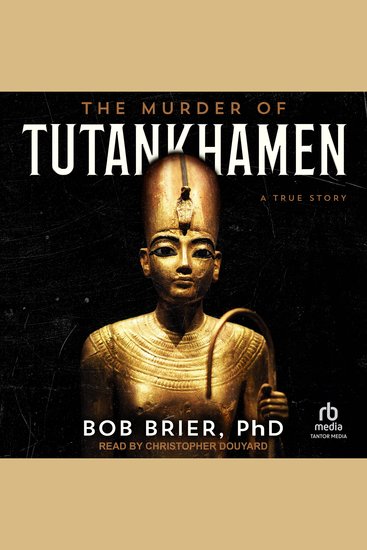
  • The Murder of Tutankhamen - A True Story - cover

    The Murder of Tutankhamen - A...

    PhD Bob Brier

    • 0
    • 0
    • 0
    Today, Tutankhamen is the most famous of the ancient Egyptian pharaohs. After his death at the age of nineteen, "King Tut" was forgotten from history, until the discovery of his tomb in 1922 propelled him to worldwide fame. But the circumstances of his death remain shrouded in mystery . . . 


    X-rays of Tutankhamen's skull suggest a violent death. Was it accident or murder? Several members of his family died around the same time—was is coincidence? Why did Tutankhamen's widow send desperate messages to the Hittite king, requesting marriage to one of his sons? And who murdered the Hittite price on his journey to Egypt? Who ordered the removal of Tutankhamen's name from all monuments and temples, and thus from Egyptian history? 


    This fascinating, painstakingly researched book is the first to explore in depth the questionable circumstances of Tutankhamen's demise—and to present a shocking scenario of betrayal, ambition, and murder. In The Murder of Tutankhamen, renowned Egyptologist Bob Brier reveals an exciting journey into ancient history—and a 3,000 year-old mystery that still compels us today.
    Show book
  • Outliers: Book Summary & Analysis - cover

    Outliers: Book Summary & Analysis

    Briefly Summaries

    • 0
    • 0
    • 0
    This is a concise summary and analysis of Outliers, by Malcolm Gladwell. It is not the original book and is not affiliated with or endorsed by Malcolm Gladwell. Ideal for those seeking a quick and insightful overview.
     
    "Outliers" delves into the extraordinary lives of individuals who have achieved remarkable success. The author explores the hidden forces that contribute to high levels of achievement, such as cultural background, family, and unique opportunities. Through compelling stories and thorough research, the book reveals that success is not merely a product of individual effort but also the result of external factors and timing. The author argues that understanding these factors can help us better comprehend the dynamics of success and potential.
    Show book
  • Organize Your Life - Develop Self-Discipline & A Strong Work Ethic - cover

    Organize Your Life - Develop...

    360K Pro Publishing

    • 0
    • 0
    • 0
    Free yourself from the burdens that have slowed down your life. We live in a world of clutter. It’s impossible to move around. It’s hard to breathe. Most of the time, we can’t see through the mess to accomplish even the little things. You see people who have their acts together and seem to know how to live a carefree lifestyle. What’s their secret? Is it something you can achieve? 
    Most of the time, the only thing that gets in your way to get ahead is you! Stop living vicariously through other people’s social media posts. Learn how to organize your life and develop a strong work ethic while mastering the self-discipline needed to make your life as thrilling as your friends. It doesn’t take much. And best of all, it probably costs a lot less than you realize. Most of the time when we remove the obstacles that get in the way of success, we do it without spending any money at all. 
    You’re about to dig into the little parts, the tiny hindrances, and the self-professed barriers that created the disorder and untidiness that makes more walls than windows and doors in your life. You are going to learn a few tricks to stop worrying about other people, stop comparing yourself to your friends and the celebrities that seem to have it all together. These are the table of contents of this book.  
    	Chapter 1: Introduction 
    	Chapter 2: Importance of Organization 
    	Chapter 3: Self Discipline  
    	Chapter 4: Signs of Chaos  
    	Chapter 5: Reasons Why You’re Not Organized or Disciplined 
    	Chapter 6: How to Develop Self Discipline  
    	Chapter 7: How to Curb Emotions  
    	Chapter 8: Break Bad Habits that Destroy Concentration  
    	Chapter 9: Building a Strong Work Ethic  
    	Chapter 10: How to Become Organized  
    	Chapter 11: How to Set Goals 
    	Chapter 12: How to Be Consistent 
    	Chapter 13: Affirmations Section 
    What do you think? Is this the book you looking?  
    Get it Now!
    Show book
  • A Little History of Music - cover

    A Little History of Music

    Robert Philip

    • 0
    • 0
    • 0
    A lively, engaging guide to music around the world, from prehistory to the present 
     
    Human beings have always made music. Music can move us and tell stories of faith, struggle, or love. It is common to all cultures across the world. But how has it changed over the millennia? 
     
    Robert Philip explores the extraordinary history of music in all its forms, from our earliest ancestors to today’s mass-produced songs. This is a truly global story. Looking to Europe, South America, Asia, Africa, and beyond, Philip reveals how musicians have been brought together by trade and migration and examines the vast impact of colonialism. From Hildegard von Bingen and Clara Schumann to Bob Dylan and Aretha Franklin, great performers and composers have profoundly shaped music as we know it. 
     
    Covering a remarkable range of genres, including medieval chant, classical opera, jazz, and hip hop, this Little History shines a light on the wonder of music—and why it is treasured across the world.
    Show book