Join us on a literary world trip!
Add this book to bookshelf
Grey
Write a new comment Default profile 50px
Grey
Subscribe to read the full book or read the first pages for free!
All characters reduced
Thomas Hardy: The Complete Novels (The Giants of Literature - Book 22) - cover

Thomas Hardy: The Complete Novels (The Giants of Literature - Book 22)

Thomas Hardy

Publisher: DigiCat

  • 0
  • 0
  • 0

Summary

In "Thomas Hardy: The Complete Novels," part of the esteemed "Giants of Literature" series, readers are invited to explore the expansive narratives of one of England's most significant literary figures. This volume encompasses all of Hardy's major works, showcasing his masterful command of language and deep psychological insight. With a distinctive style that integrates naturalism and an acute awareness of societal constraints, Hardy's novels delve into themes of fate, love, and the inexorable passage of time. The collection not only highlights Hardy's vivid characterizations but also reflects the sociopolitical landscape of 19th-century England, characterized by rapid industrialization and social upheaval. Thomas Hardy (1840-1928) emerged from a rural background in Dorset, where the intricate relationship between humanity and nature shaped much of his writing. His early career as an architect and his subsequent transition into literature provided him with diverse experiences that informed his storytelling. Hardy's profound connection to the English countryside, alongside his critical views on Victorian morality, influenced his thematic explorations and character development, positioning him as a precursor to modernism. This comprehensive collection is a valuable resource for both seasoned scholars and new readers. It offers a substantive insight into Hardy's literary genius, making it an essential addition to the library of anyone interested in classic literature or the complexities of the human condition. Embark on a journey through the poignant landscapes of Hardy's mind and embrace the enduring relevance of his narratives.
Available since: 11/25/2023.
Print length: 4958 pages.

Other books that might interest you

  • The Count of Monte Cristo - cover

    The Count of Monte Cristo

    Alexandre Dumas

    • 0
    • 0
    • 0
    The Count of Monte Cristo (French: Le Comte de Monte-Cristo) is an adventure novel written by French author Alexandre Dumas (père) completed in 1844. It is one of the author's most popular works, along with The Three Musketeers. Like many of his novels, it was expanded from plot outlines suggested by his collaborating ghostwriter Auguste Maquet.The story takes place in France, Italy, and islands in the Mediterranean during the historical events of 1815–1839: the era of the Bourbon Restoration through the reign of Louis-Philippe of France. It begins on the day that Napoleon left his first island of exile, Elba, beginning the Hundred Days period when Napoleon returned to power. The historical setting is a fundamental element of the book, an adventure story centrally concerned with themes of hope, justice, vengeance, mercy, and forgiveness.Before he can marry his fiancée Mercédès, Edmond Dantès, a French nineteen-year-old first mate of the Pharaon, is falsely accused of treason, arrested, and imprisoned without trial in the Château d'If, a grim island fortress off Marseille. A fellow prisoner, Abbé Faria, correctly deduces that romantic rival Fernand Mondego, envious crewmate Danglars, and double-dealing magistrate De Villefort are responsible. Over the course of their long imprisonment, Faria educates Dantès and tells him of a cache of treasure he found. After Faria dies, Dantès escapes and finds the treasure. As the powerful and mysterious Count of Monte Cristo, he enters the fashionable Parisian world of the 1830s to avenge himself.
    Show book
  • The Lost World - cover

    The Lost World

    Arthur Conan Doyle

    • 0
    • 0
    • 0
    Venture into The Lost World, Arthur Conan Doyle’s thrilling tale of discovery and adventure in a land untouched by time. Join Professor Challenger and his team of explorers as they journey deep into the Amazon, where they stumble upon a plateau filled with prehistoric creatures and extraordinary dangers. Dinosaurs roam freely, and survival becomes a gripping challenge in this untouched world beyond imagination. 
    Blending suspense, science fiction, and the excitement of exploration, The Lost World captures Doyle’s skill for weaving mystery with adventure. This classic tale of resilience and discovery has inspired generations and remains one of the foundational works of adventure fiction. 
    Narrated to bring each peril and wonder to life, this audiobook is a captivating listen for fans of thrilling adventures and timeless classics. 
    Start listening to The Lost World today and explore a land of wonders where anything is possible!
    Show book
  • The Aloe - cover

    The Aloe

    Katherine Mansfield

    • 0
    • 0
    • 0
    'It was not sadness exactly, but a kind of aching sweetness.'
    
    One of Katherine Mansfield's forgotten gems, and a precursor to what would become her acclaimed Prelude, The Aloe is a tender, impressionistic portrait of family life that transforms the mundane into the extraordinary.
    
    First written in 1915, The Aloe is a deeply personal novella that captures Mansfield's childhood in New Zealand. Through a series of finely observed domestic vignettes, the narrative follows the Burnell family, as they move to a new house on the outskirts of Wellington. Mansfield expertly conveys the subtleties of family dynamics: the exhausted yet appreciative father, the imaginative yet quickly maturing children, the inner emotional life of the mother. Through these characters, Mansfield asserts her ability to turn everyday moments into opportunities for exploring memory, belonging and identity.
    Katherine Mansfield (1888 – 1923) was a New Zealand writer and critic. She was an important figurehead of the modernist movement, befriending the likes of Virginia Woolf and D. H. Lawrence amongst others. Her works regularly explored themes such as sexuality, religion and existentialism, and have been translated into twenty-five different languages across the world.
    Show book
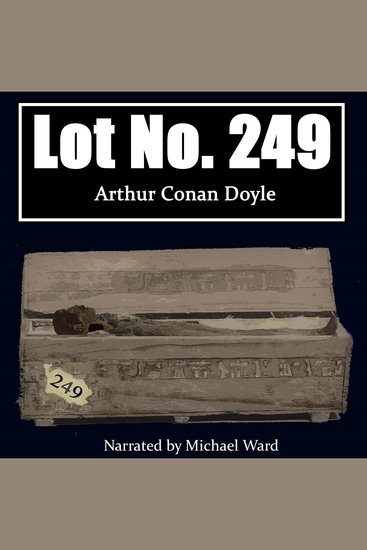
  • Lot No 249 - cover

    Lot No 249

    Arthur Conan Doyle

    • 0
    • 0
    • 0
    "...he’s a man whom I, for one, would rather not know."  
    So says Abercrombie Smith's friend to him one night about the man in the room directly below his: Edward Bellingham.  
    But Smith soon finds himself drawn into the acquaintance of the strange, Egypt obsessed man, and his room full of strange antiquities... and especially the pride of Bellinghams collection: A well preserved mummy, known only by the title "Lot No 249"... And soon, Abercrombie Smith comes to understand just how right his friend was to warn him, and just what murderous powers Bellingham has in his thrall...  
    A short story of supernatural horror written by Arthur Conan Doyle, and narrated by Michael Ward.
    Show book
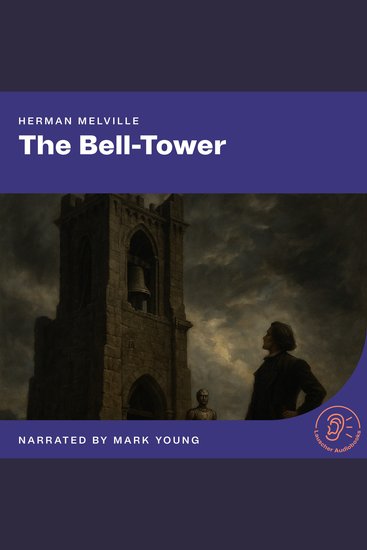
  • The Bell-Tower - cover

    The Bell-Tower

    Herman Melville

    • 0
    • 0
    • 0
    "The Bell-Tower" appeared in 1855 in Putnam's Monthly Magazine no. 32 (August).
    In the south of Europe, nigh a once frescoed capital, now with dank mould cankering its bloom, central in a plain, stands what, at distance, seems the black mossed stump of some immeasurable pine, fallen, in forgotten days, with Anak and the Titan.
    Show book
  • War and Peace (Book Fourteen: 1812) - cover

    War and Peace (Book Fourteen: 1812)

    Leo Tolstoy

    • 0
    • 0
    • 0
    War and Peace is a literary work mixed with chapters on history and philosophy by the Russian author Leo Tolstoy. It was first published serially, then published in its entirety in 1869. It is regarded as one of Tolstoy's finest literary achievements and remains an internationally praised classic of world literature.
    Book 14: 1812: The Battle of Borodinó, with the occupation of Moscow that followed it and the flight of the French without further conflicts, is one of the most instructive phenomena in history. All historians agree that the external activity of states and nations in their conflicts with one another is expressed in wars, and that as a direct result of greater or less success in war the political strength of states and nations increases or decreases.
    Show book