Join us on a literary world trip!
Add this book to bookshelf
Grey
Write a new comment Default profile 50px
Grey
Subscribe to read the full book or read the first pages for free!
All characters reduced
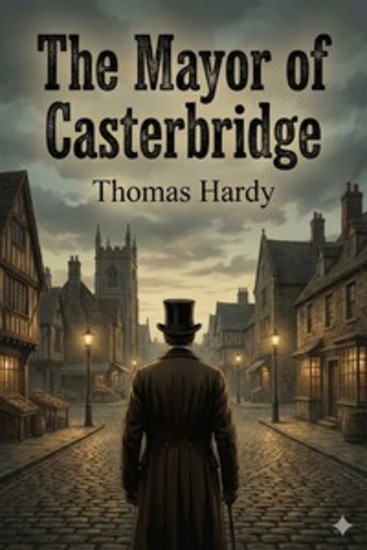
The Mayor of Casterbridge - cover

The Mayor of Casterbridge

Thomas Hardy

Publisher: Bu Classics Books

  • 0
  • 0
  • 0

Summary

The rise and fall of Michael Henchard is a towering study of character, guilt, and the inescapable ghosts of the past. After a shameful act in his youth, Henchard claws his way to power only to find his foundations crumbling under the weight of his own impulsive nature. This intense drama set in a bustling market town proves that character is indeed destiny.
Available since: 03/06/2026.
Print length: 462 pages.
Other books that might interest you

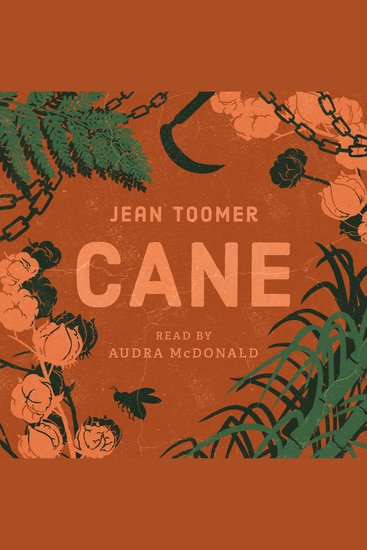
  • Cane - cover

    Cane

    Jean Toomer

    • 0
    • 0
    • 0
    Narrated by six-time Tony Award-winning actress Audra McDonald, Jean Toomer’s revolutionary masterpiece Cane is exemplary of the era we now know as the Harlem Renaissance, and has come to be considered one of the classic works of American literary modernism. A boldly experimental “novel” mixing prose, poetry, and dramatic sketches, the book’s hallmark is its formal sophistication; sexuality, racism, and industrialization are among its major themes. Above all else it offers unforgettably evocative portraits of the African American lives Toomer encountered in rural Georgia, by turns down-to-earth, heartfelt, hauntingly lyrical. 
     
    Cover illustrated by: Laylie Frazier 
    Laylie is a digital illustrator from Houston, Texas. She combines texture, color, and pattern to create warm and expressive portraits. She often pulls inspiration from nature, utilizing abstract plant, mountain, and sun motifs in her backgrounds. She is currently illustrating middle grade and YA covers for publishing as well as working in advertising.
    Show book
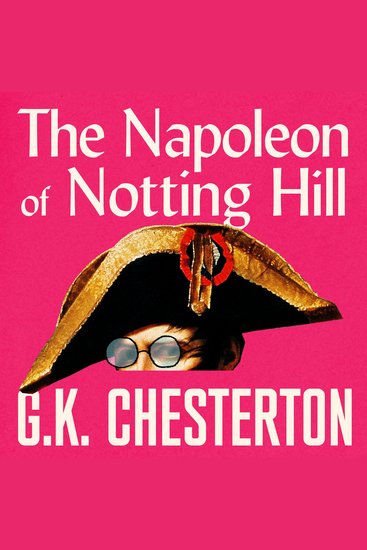
  • The Napoleon of Notting Hill - A Novel - cover

    The Napoleon of Notting Hill - A...

    G.K. Chesterton

    • 0
    • 0
    • 0
    'The joke is the noblest thing in the world. The joke is older than the throne, and will survive it.'
    
    A colourful reimagining of the year 1984, written eighty years before its occurrence, The Napoleon of Notting Hill is a playful yet philosophical satirical novel which explores how meaning can emerge from even the most absurd situations.
    
    The year is 1984. The British government has become impersonal and apathetic, not run by a particular party or corresponding ideology, but by the random selection of a new figurehead each year. When the eccentric Auberon Quin – who loves nothing more than a good gag – is chosen to lead the country, the nation begins to take a whimsical turn. In an attempt to liven up London, Auberon transforms the city into a mock-medieval town, complete with crests, flags and costumes. Everything is a joke – that is until Adam Wayne, a young man claiming to be the Napoleon of Notting Hill, begins to take it seriously. A masterclass in how even silliness can transcend into nobility, The Napoleon of Notting Hill is one of Chesterton's finest satirical works. This audiobook edition is compellingly narrated by Justin Avoth.
    Gilbert Keith Chesterton (1874 – 1936) was an English novelist, philosopher, journalist and critic. A Christian apologist, he is famed for creating the fictional priest-detective Father Brown. His writing was also renowned for his sense of humour: known as 'the prince of paradox', Chesterton often turned common sayings upside down. Admired by several of his literary contemporaries, Chesterton's work is still widely read today.
    Show book
  • Hunger - cover

    Hunger

    Knut Hamsun

    • 0
    • 0
    • 0
    "Hunger" by Knut Hamsun 
    Explore the human psyche's extremes in Knut Hamsun's renowned novel, "Hunger." Set in 19th-century Oslo, this modernist masterpiece follows a starving artist's struggle for survival and self-expression. The novel intricately portrays the protagonist's inner turmoil, balancing between sanity and madness, as he wanders through the city's streets, battling hunger and pursuing his artistic vision. 
    Hamsun's sharp, introspective writing vividly captures the ebb and flow of the narrator's mental state, making "Hunger" a profound exploration of isolation, existential angst, and human resilience. This influential work marked a significant shift in literary narrative, introducing psychological depth that paved the way for future writers. 
    "Hunger" is an unforgettable journey into the depths of human nature and a testament to the indomitable human spirit. It remains a vital read for understanding the complexities of artistic pursuit and human condition. 
    See more
    Show book
  • Mark Twain’s Library of Humor - cover

    Mark Twain’s Library of Humor

    Mark Twain, Thomas Bailey...

    • 0
    • 0
    • 0
    Master wit Mark Twain selected these twenty-seven stories himself by fifteen of his favorite nineteenth century authors. The order follows that which Twain placed them in in the original anthology, published in 1888. He indulged his comic fancy rather than making a textbook in which all themes or authors are placed together, saying that "This way, you will have to peruse the whole thing before discovering that one of your favorites is not included." However, it is no joke that these are the authors represented: Charles Dudley Warner, Thomas Bailey Aldrich, Eugene Field, William D. Howells, James M. Bailey, Joel Chandler Harris, Katherine Kent Child Walker, Robert J. Burdette, Sam Davis, Artemus Ward, Harriet Beecher Stowe, Francis Lee Pratt, Oliver Wendell Holmes, Frederick W. Cozzens, and Twain himself.
    Show book
  • Second Best - From their pens to your ears genius in every story - cover

    Second Best - From their pens to...

    D H Lawrence

    • 0
    • 0
    • 0
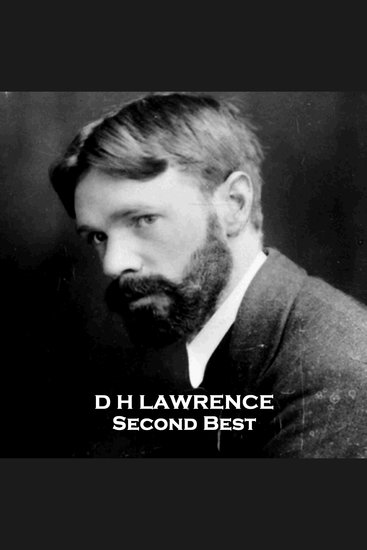
    David Herbert Lawrence was born on the 11th September 1885 in Eastwood, Nottinghamshire, a coal mining town where the reality of a harsh life was only useful as experiences for future literary works. 
    He was educated at Beauvale Board School and became the first local boy to receive a scholarship to attend Nottingham High School. After 3 years he became a junior clerk in Haywood’s surgical appliances factory. He was also attempting a literary career which, in the short term, led to a teacher training position in Eastwood and later a teaching qualification from University College, Nottingham.  
    Lawrence’s first efforts were poems, short stories and a draft of ‘The White Peacock’. Moving to London and a teaching position in Croydon his writing attracted the attention of Ford Madox Ford, editor of The English Review, and he commissioned him to write ‘Odour of Chrysanthemums’.  
    Wanting to write full-time he now began work on what would become ‘Sons and Lovers.   
    In 1912 he met the older and married mother-of-three Frieda Weekley. They eloped to Germany and here Lawrence could see for himself the growing tensions with France.  So keen was his interest that he was arrested and accused of being a British spy.  
    In early 1914 Frieda obtained her divorce and they returned to Britain to be married just days before the outbreak of war. Owing to her German parentage, and his own public dislike of militarism and violence, the couple were treated with contempt and suspicion throughout the war years.  
    Despite this he continued to write but his reputation in England was so tarnished and, mirrored by his own disdain for the country, he and Frieda left England in November 1919, first for Europe and then America via Ceylon and Australia. 
    They bought a ranch in Taos, New Mexico and visited Mexico several times. The third visit in March 1925 caused a near fatal attack of malaria. To convalesce they moved to Florence. Here he continued work on ‘Lady Chatterley’s Lover’ which for many years would cause controversy. A renewed interest in oil painting resulted in an exhibition in 1929 which was raided by the police and several works were confiscated.  
    D H Lawrence died of complications arising from a bout of tuberculosis on the 2nd of March 1930 in Vence, France.  He was 44.
    Show book
  • The Empty House - cover

    The Empty House

    Algernon Blackwood

    • 0
    • 0
    • 0
    🎬 Experience the atmospheric visual edition of this tale by searching “Jonathan Dunne Horror” on YouTube.Title: The Empty House 
    Series Name: Timeless Terrors 
    Series Entry: 149 
    Author: Algernon Blackwood 
    Narrator: Jonathan Dunne 
    Original Publication: 1906 
    Public Domain: Yes 
    Description: 
    The Empty House by Algernon Blackwood is a masterclass in classic haunted house horror — a slow, suffocating descent into fear within the walls of a place long abandoned to something unseen. 
    When a scholarly investigator of the supernatural and his nervous companion decide to spend the night in a notoriously haunted house on the outskirts of London, they expect perhaps a few strange sounds or unsettling impressions. What they encounter instead is an atmosphere so oppressive and malignant that the very air of the house seems saturated with terror. 
    As they move from room to room through dust, darkness, and silence, an overwhelming sensation of invisible hostility begins to close around them. Every staircase creak, every shadowed corner, and every faint disturbance in the stillness carries the suggestion that the house is not truly empty at all — but inhabited by something watchful, ancient, and deeply evil. 
    Rather than relying on violence or spectacle, Algernon Blackwood creates fear through suggestion, psychological tension, and the unbearable feeling of entering a place where human beings are no longer welcome. The Empty House remains one of the finest old-fashioned ghost stories ever written — a chilling and atmospheric tale where the horror lies not in what is seen clearly, but in what waits just beyond perception.
    Show book