¡Acompáñanos a viajar por el mundo de los libros!
Añadir este libro a la estantería
Grey
Escribe un nuevo comentario Default profile 50px
Grey
Suscríbete para leer el libro completo o lee las primeras páginas gratis.
All characters reduced
The Complete Novels of Thomas Hardy (Illustrated) - cover

The Complete Novels of Thomas Hardy (Illustrated)

Thomas Hardy

Editorial: DigiCat

  • 0
  • 0
  • 0

Sinopsis

In "The Complete Novels of Thomas Hardy (Illustrated)," readers are invited to explore the extensive and intricate universe crafted by Hardy, celebrated for his profound understanding of human nature and the inescapable forces of fate. This comprehensive compilation showcases Hardy's hallmark blend of realism and lyrical prose, offering gripping narratives that examine the struggles of individual characters against the backdrop of rural England. The inclusion of illustrations complements Hardy's evocative depictions of landscapes and societal changes during the late Victorian era, emphasizing the tension between progress and tradition, as well as the stark realities of class and gender dynamics. Thomas Hardy, an English novelist and poet, was profoundly influenced by his upbringing in Dorset, a region that serves as the fictional Wessex in his work. His interest in the complexities of rural life, along with a commitment to social reform, is evident in his profound commentary on the constraints of society and the human condition. Hardy's own experiences with disillusionment in relationships and societal expectations profoundly shaped his character-driven narratives, making his works not only personal but also culturally significant. This illustrated collection is essential for both scholars and casual readers alike, as it emphasizes Hardy's mastery of character development and thematic depth. His exploration of love, loss, and existentialism resonates in today's world, making it a timeless read. For anyone seeking an immersive experience into human emotion and societal critique, this collection stands as a definitive testament to Hardy's literary genius.
Disponible desde: 09/12/2023.
Longitud de impresión: 4965 páginas.

Otros libros que te pueden interesar

  • Baffling Beasts - 15 Tales of Weird and Mystifying Creatures - cover

    Baffling Beasts - 15 Tales of...

    Walter de la Mare, Arlton Eadie,...

    • 0
    • 0
    • 0
    Fifteen horror stories about strange beings and behaviours that defy conventional definitions. 
    Contents: 
    Warning Wings by Arlton Eadie (Weird Tales, 1929) 
    A seemingly insignificant white moth. 
    Mother of Toads by Clark Ashton Smith (WT, 1938) 
    An unusual witch. 
    The Destroying Horde by Donald Wandrei (WT, 1935) 
    The first BLOB story? 
    Caterpillars by E. F. Benson (The Room in the Tower, 1912) 
    Terrible things in an Italian villa. 
    The Urbanite by Ewen Whyte (WT, 1950) 
    The great city is never still. 
    Rats by F. A. M. Webster (At Dead of Night, 1931) 
    A plague of rats. 
    The Malignant Invader by F. B. Long (WT, 1932) 
    A creature from the bowels of the earth. 
    The Horror in the Museum by H. P. Lovecraft (WT, 1933) 
    A private wax museum that specialises in the grotesque. 
    My Father, the Cat by H. Slesar (Fantastic Universe, 1957) 
    A most unusual cat. 
    The Seeking Thing by Janet Hirsch (Magazine of Horror, 1964) 
    Something in the middle of the road. 
    They by R. B. Johnson (WT, 1936) 
    They dwell in Dead Man's Canyon. 
    The Hyena by Robert E. Howard (WT, 1928) 
    A man with an unusual ability. 
    Sredni Vashtar by Saki (The Chronicles of Clovis, 1911) 
    A secret in the garden shed. 
    Demons of the Film Colony by Theodore LeBerthon (WT, 1932) 
    A tale of 'Dracula' and 'Frankenstein'. 
    A:B:O. by Walter de la Mare (Cornhill, 1896) 
    The excavation of a metallic chest.
    Ver libro
  • History of Herodotus The - Book 2: Euterpe (Unabridged) - cover

    History of Herodotus The - Book...

    Herodotus, George Rawlinson

    • 0
    • 0
    • 0
    One of the masterpieces of classical literature, the "Histories" describes how a small and quarrelsome band of Greek city states united to repel the might of the Persian empire. But while this epic struggle forms the core of his work, Herodotus' natural curiosity frequently gives rise to colorful digressions - a description of the natural wonders of Egypt; an account of European lake-dwellers; and far-fetched accounts of dog-headed men and gold-digging ants. With its kaleidoscopic blend of fact and legend, the "Histories" offers a compelling Greek view of the world of the fifth century BC.
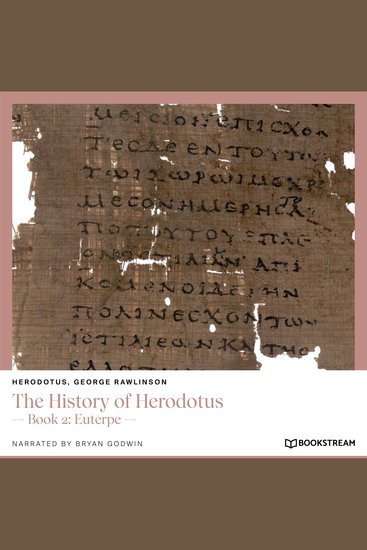
    BOOK 2: EUTERPE: On the death of Cyrus, Cambyses, his son by Cassandane, daughter of Pharnaspes, took the kingdom. Cassandane had died in the lifetime of Cyrus, who had made a great mourning for her at her death, and had commanded all the subjects of his empire to observe the like.
    Ver libro
  • New Accelerator The (Unabridged) - cover

    New Accelerator The (Unabridged)

    H. G. Wells

    • 0
    • 0
    • 0
    The New Accelerator features a fascinating depiction of the invention of what sounds a lot like an amphetamine (though technically they had already been invented a dozen years earlier). It will also remind Star Trek fans of the episode called Wink of an Eye.
    Ver libro
  • Dead Souls - Audiobook - cover

    Dead Souls - Audiobook

    Nikolai Gogol, Classic...

    • 0
    • 0
    • 0
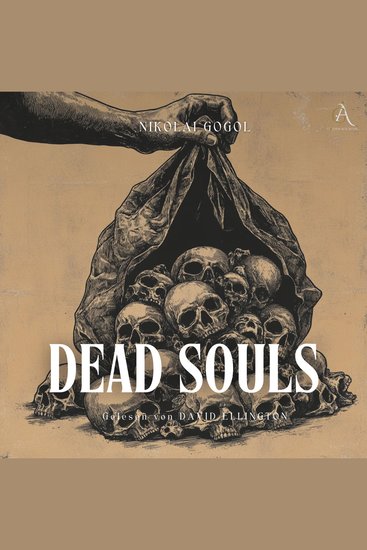
    In Dead Souls, Nikolai Gogol crafts a brilliant satirical portrait of 19th-century Russian society. The novel follows the mysterious and cunning Pavel Ivanovich Chichikov as he travels from town to town, attempting to buy the ownership rights to dead serfs in order to gain wealth and status through a bizarre loophole in the Russian system.Through absurdity, irony, and vivid characterization, Gogol exposes the moral decay and bureaucratic nonsense of imperial Russia. At once comedic and deeply philosophical, Dead Souls is considered one of the great masterpieces of Russian literature, a novel that is as relevant and haunting today as it was in Gogol's time.
    Ver libro
  • Laura Silver Bell - cover

    Laura Silver Bell

    Joseph Sheridan Le Fanu

    • 0
    • 0
    • 0
    "She heard the chiming of the silver bells, and she knew the hills were calling her home."
    
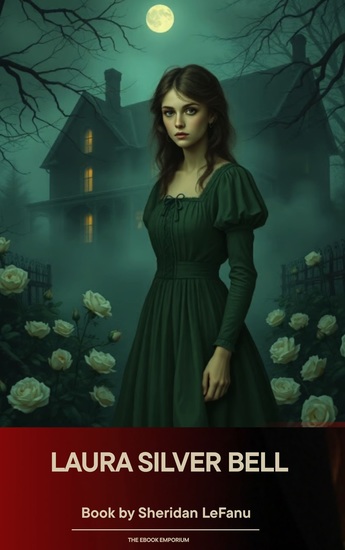
    In a secluded village nestled beneath the shadow of ancient, brooding hills, dwells the beautiful and ethereal Laura Silver Bell. Unlike the other village girls, Laura feels a strange, magnetic pull toward the wild, unpeopled places of the moor. But in the world of Le Fanu, the hills have eyes, and the "Good People" (the Sidhe) are not the whimsical fairies of nursery rhymes—they are ancient, predatory, and possessive. When a mysterious and charismatic stranger appears, Laura finds herself caught between the warmth of human love and a chilling supernatural inheritance. It is a tale of enchantment that warns: once you hear the silver bells, you can never truly belong to the world of men again.
    
    The "Dark" Fairy Tale: Le Fanu strips away the Victorian "flower fairy" imagery to return to the roots of Celtic myth. His fairies are tall, silent, and dangerous beings who exist in the "liminal" spaces of the world. The story explores the "Changeling" myth through a sophisticated Gothic lens, making the supernatural feel like a physical, inevitable force of nature.
    
    A Heroine of Two Worlds: Laura is one of Le Fanu's most complex female characters. Her "silver" beauty is both a blessing and a curse, marking her as someone who doesn't quite fit into the mundane life of her village. Her struggle is a poignant metaphor for the outsider—the person who hears a music that no one else can.
    
    The Master of the Eerie: Laura Silver Bell showcases Le Fanu's ability to weave a sense of "wrongness" into the natural landscape. The rustle of the grass, the shifting shadows of the hills, and the sudden silence of the birds all build toward a climax that is as beautiful as it is devastating.
    
    Follow the music into the mist. Purchase "Laura Silver Bell" today.
    Ver libro
  • Eugénie Grandet - cover

    Eugénie Grandet

    Honoré de Balzac

    • 0
    • 0
    • 0
    Who will win the prize of marrying Eugénie Grandet?
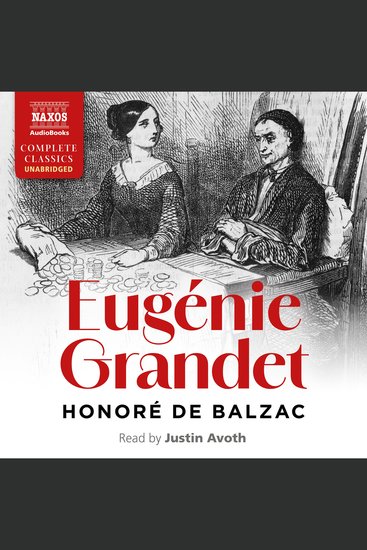
    Felix Grandet, having married well and become a wealthy landowner and wine-grower, is a miser who watches like a hawk the sugar lumps and the bread slices. The question of who will marry his daughter and inherit his fortune fuels endless speculation in the town of Saumur. The arrival of Eugénie’s cousin sparks feelings and a resolve that puts her on a collision course with her father’s control. As the years pass and she must navigate the self-interest of potential suitors, we see how habits manifest themselves in a new generation.
    It was while working on Eugénie Grandet that Balzac conceived his magnum opus La Comédie humaine, a huge collection of interlinked novels and stories depicting French society between 1815 and 1848. Sitting within this collection beneath the heading of ‘Scenes from Provincial Life’, Eugénie Grandet (1833) is a brilliantly woven, deeply affecting tale with the disease of avarice at its heart.
    Ver libro