Join us on a literary world trip!
Add this book to bookshelf
Grey
Write a new comment Default profile 50px
Grey
Subscribe to read the full book or read the first pages for free!
All characters reduced
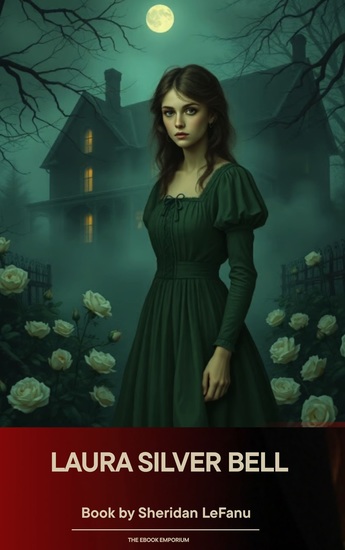
Laura Silver Bell - cover

Laura Silver Bell

Joseph Sheridan Le Fanu

Publisher: The Ebook Emporium

  • 0
  • 0
  • 0

Summary

"She heard the chiming of the silver bells, and she knew the hills were calling her home."

In a secluded village nestled beneath the shadow of ancient, brooding hills, dwells the beautiful and ethereal Laura Silver Bell. Unlike the other village girls, Laura feels a strange, magnetic pull toward the wild, unpeopled places of the moor. But in the world of Le Fanu, the hills have eyes, and the "Good People" (the Sidhe) are not the whimsical fairies of nursery rhymes—they are ancient, predatory, and possessive. When a mysterious and charismatic stranger appears, Laura finds herself caught between the warmth of human love and a chilling supernatural inheritance. It is a tale of enchantment that warns: once you hear the silver bells, you can never truly belong to the world of men again.

The "Dark" Fairy Tale: Le Fanu strips away the Victorian "flower fairy" imagery to return to the roots of Celtic myth. His fairies are tall, silent, and dangerous beings who exist in the "liminal" spaces of the world. The story explores the "Changeling" myth through a sophisticated Gothic lens, making the supernatural feel like a physical, inevitable force of nature.

A Heroine of Two Worlds: Laura is one of Le Fanu's most complex female characters. Her "silver" beauty is both a blessing and a curse, marking her as someone who doesn't quite fit into the mundane life of her village. Her struggle is a poignant metaphor for the outsider—the person who hears a music that no one else can.

The Master of the Eerie: Laura Silver Bell showcases Le Fanu's ability to weave a sense of "wrongness" into the natural landscape. The rustle of the grass, the shifting shadows of the hills, and the sudden silence of the birds all build toward a climax that is as beautiful as it is devastating.

Follow the music into the mist. Purchase "Laura Silver Bell" today.
Available since: 01/13/2026.
Print length: 155 pages.

Other books that might interest you

  • Paradise Lost - cover

    Paradise Lost

    John Milton

    • 0
    • 0
    • 0
    Paradise Lost is an epic poem in blank verse by the 17th-century English poet John Milton (1608–1674). The first version, published in 1667, consists of ten books with over ten thousand lines of verse. A second edition followed in 1674, arranged into twelve books (in the manner of Virgil's Aeneid) with minor revisions throughout. It is considered by critics to be Milton's major work, and it helped solidify his reputation as one of the greatest English poets of his time.
    The poem concerns the biblical story of the Fall of Man: the temptation of Adam and Eve by the fallen angel Satan and their expulsion from the Garden of Eden. Milton's purpose, stated in Book I, is to "justify the ways of God to men."
    Show book
  • Arch Rascal An - From their pens to your ears genius in every story - cover

    Arch Rascal An - From their pens...

    Knut Hamsun

    • 0
    • 0
    • 0
    Knud Pedersen was born in Lom in the Gudbrandsdal valley of Norway on the 4th of August, 1859 in what was then the United Kingdoms of Sweden and Norway.  He was the fourth son of seven children born to poor parents who, when he was three, were invited to an uncle’s farm to work his land. 
    When he was nine he moved away from his family to help another uncle who ran a post office.  Whilst with him he was beaten and starved which manifested in a series of chronic nervous difficulties.  The treatment endured for six years until he managed to escape back to Lom. 
    For some time he now took any job that was available to him, including store clerk, peddler, shoemaker's apprentice, sheriff's assistant, elementary-school teacher and ropemaker's apprentice.  At about the same time, with the wealth of these gained experiences, he began to explore his literary talents. 
    In 1877 he published his first book ‘The Enigmatic Man: A Love Story from Northern Norway’, others soon followed but real success only came in 1890 with ‘Hunger’, an influential work for later novelists with its internal monologue and bizarre logic.  His work is often associated with Pantheism; where nature and mankind are unified in a strong and often mystical bond.   
    His work was so influential that in 1920 he was awarded the Novel Prize for Literature. 
    Shortly after this point his works became fewer and his interests darker.  During World War II he became a fervent admirer of the Nazi’s, even meeting Hitler, even though German armies had overrun Norway.  With the war’s end he was detained on charges of treason.  His old age was apparently the primary reason given for Hamsun receiving only a fine.  Other reasons also sought to excuse his abhorrent behaviour but it was clear that whilst he was loved for his literature he was detested for his politics and morals. 
    His literary canon includes more than 20 novels, a poetry collection, short stories, plays, a travelogue, other works of non-fiction and essays. 
    Knut Hamsun died on the 19th February 1952 in Grimstad. He was 92.
    Show book
  • Lord Arthur Savile's Crime - Classic Tales Edition - cover

    Lord Arthur Savile's Crime -...

    Oscar Wilde

    • 0
    • 0
    • 0
    A palm reader notifies Lord Arthur that murder is in his future. But not his murder – he’s the murderer. This really throws a wrench into his wedding plans, for Lord Arthur is soon to be married to the most beautiful lady in London. In fact he loves her so much, he decides to postpone the wedding until his business is done. Now, for a tasteful homicide...
    Show book
  • The Bottle Neck - cover

    The Bottle Neck

    Hans Christian Andersen

    • 0
    • 0
    • 0
    In The Bottle Neck, Hans Christian Andersen tells a quietly extraordinary story through the long life of a simple object—a glass bottle that passes from celebration to ruin, from usefulness to neglect, and back again. 
    Once filled with fine wine at a joyful betrothal, the bottle is later broken, discarded, carried across oceans, forgotten in darkness, and finally reborn as something humbler but necessary: a water vessel for a bird’s cage in a poor attic room. Along the way, it bears witness to love and loss, time and chance, human hopes and human absence—without ever fully understanding them. 
    This is not a children’s fairy tale, nor a tragedy. It is a reflective, gently ironic meditation on endurance, memory, and purpose: how objects outlast people, how meaning changes shape, and how usefulness itself can be a form of quiet dignity. 
    Narrated with calm clarity by Mike Polischuk, The Bottle Neck is a contemplative classic—an intimate reminder that life does not always move forward in grand arcs, but often returns, reshaped, to where it began.
    Show book
  • The Farewell Binge - From their pens to your ears genius in every story - cover

    The Farewell Binge - From their...

    Alun Lewis

    • 0
    • 0
    • 0
    Alun Lewis was born on the 1st July 1915 in Cwmaman in South Wales. 
    He studied history at Aberystwyth and Manchester Universities before beginning a career as a teacher. 
    In 1940, despite his pacifism, he enlisted to serve in the Royal Engineers and later received a commission in the South Wales Borderers. 
    His first poetry collection ‘Raider’s Dawn’ was published in 1942 as was his short story collection ‘The Last Inspection’.  Both brought him critical acclaim and an admiring audience. 
    Later that year he was posted to India where his conscience and morality wrestled with suffering and poverty that so was so evident all around him. 
    Alun Lewis died on the 5th March 1944 in Rakhine, Myanmar, from a self-inflicted gunshot wound, that was officially declared accidental.  He was 28.  
    His second poetry collection, ‘Ha! Ha! Among the Trumpets’, was published posthumously in 1945.
    Show book
  • Road to Wigan Pier - cover

    Road to Wigan Pier

    George Orwell

    • 0
    • 0
    • 0
    The first half of this work documents his sociological investigations of the bleak living conditions among the working class in Lancashire and Yorkshire in the industrial north of England before World War II. The second half is a long essay on his middle-class upbringing, and the development of his political conscience, questioning British attitudes towards socialism. Orwell states plainly that he himself is in favour of socialism, but feels it necessary to point out reasons why many people who would benefit from socialism, and should logically support it, are in practice likely to be strong opponents.
    Show book