Join us on a literary world trip!
Add this book to bookshelf
Grey
Write a new comment Default profile 50px
Grey
Subscribe to read the full book or read the first pages for free!
All characters reduced
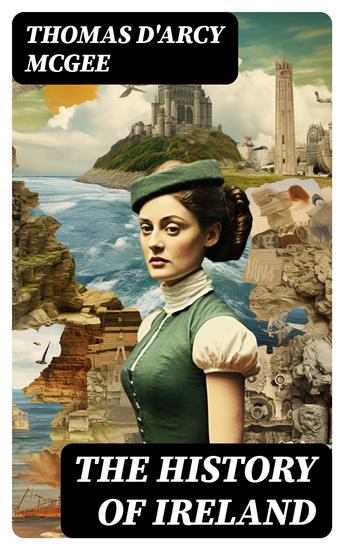
The History of Ireland - From the Earliest Period to the Emancipation of the Catholics - cover

The History of Ireland - From the Earliest Period to the Emancipation of the Catholics

Thomas D'Arcy McGee

Publisher: DigiCat

  • 0
  • 0
  • 0

Summary

In "The History of Ireland," Thomas D'Arcy McGee meticulously chronicles the tumultuous past of Ireland from ancient times through the 19th century. McGee employs a vivid narrative style, blending historical fact with lyrical prose, making complex events accessible and engaging. This work emerges from a period marked by political upheaval and cultural revival, positioned within the broader context of nationalist movements across Europe, and reflects McGee's profound understanding of Ireland's socio-political fabric, enhancing its relevance in Irish historiography. Thomas D'Arcy McGee, an emigrant from Ireland to Canada, epitomizes the dual identity that inspired this work; a nationalist steeped in the struggles of his homeland, he sought to counteract prevailing British narratives. His experiences as a journalist and politician deeply informed his analysis, motivating him to advocate for Irish self-determination while celebrating its rich heritage. McGee's immersion in both the Canadian and Irish political landscapes provides a unique lens through which he addresses issues of identity, belonging, and governance. This book is essential for anyone seeking to understand the complexities of Irish identity and history. McGee's balanced approach and eloquent style render it a valuable resource for scholars and casual readers alike, encouraging a deeper appreciation of Ireland's multifaceted past.
Available since: 11/15/2023.
Print length: 910 pages.
Other books that might interest you

  • The Scientific Approach to Buddhism and The Appeal of Buddhism - Two Essays - cover

    The Scientific Approach to...

    Francis Story

    • 0
    • 0
    • 0
    This is an audiobook of Bodhi Leaves No. 55 by Francis Story (Anāgārika Sugatānanda), The Scientific Approach to Buddhism and The Appeal of Buddhism, two essays narrated by Christa Michel. The print edition can be found in the Pariyatti Edition of Collected Bodhi Leaves Vol. 2. The eBook of Bodhi Leaves No. 55 can be downloaded from the BPS website. 
    Excerpt from The Scientific Approach to Buddhism: 
    At present it may look as though man has only searched out the secrets of the universe in order to destroy himself with the power he has acquired; and of that there is certainly a danger. But I believe that a change in outlook is beginning to dawn, and that science itself, having destroyed the basis of much wrong thinking, is drawing us ever nearer to the realisation of the truth proclaimed by the Enlightened One. This is what I mean by “the scientific approach to Buddhism;” without being aware of it, the modern scientist and philosopher are being propelled irresistibly in the direction of Buddhism. Their uncertainties and doubts are spiritual “growing pains;” but a time will come quickly when they will realise that, although they have had to reject everything on which their ordinary religious and moral beliefs are founded, there is a higher religion—one based upon systematic investigation and the sincere search for truth—which will restore their lost faith in the universal principles of justice, truth and compassion. Those who now believe that man has come to the end of his tether will then see the opening up of vistas into the future that they only dimly suspect, and will recognise, beyond it all, the final goal of complete emancipation from the fetters of ignorance and delusion.
    Show book
  • Cry Freedom - The Regulatory Assault on Institutional Autonomy in England’s Universities - cover

    Cry Freedom - The Regulatory...

    James Tooley

    • 0
    • 0
    • 0
    A clarion call for academics and policymakers alike, Cry Freedom prompts reflection on the evolving relationship between government and higher education.
    Show book
  • Breaking on the Ball of Life - Where bold decisions lead to unforgettable wins - cover

    Breaking on the Ball of Life -...

    Alex Molden

    • 0
    • 0
    • 0
    Breaking on the Ball of Life is a transformative guide for those ready to stop reacting and start responding to life’s defining moments with clarity, confidence, and purpose. Drawing from the high-stakes world of football—specifically the sharp instincts and rapid decisions of a cornerback—author and leadership coach Alex Molden presents a powerful metaphor for life. With a unique framework built around Alignment, Assignment, and Adjustment, this book shows readers how to position themselves for success, understand their deeper purpose, and adapt with precision when opportunities or obstacles arise. 
    Through personal stories, actionable insights, and reflective exercises, Breaking on the Ball of Life invites readers to become intentional players in the game of life. It’s not about being the fastest or strongest—it’s about being prepared, present, and willing to move when the moment demands it. Whether you're navigating leadership, relationships, or personal growth, this book equips you to read the field, trust your instincts, and break toward your calling with conviction.
    Show book
  • On the Purpose of Hating - cover

    On the Purpose of Hating

    William Hazlitt

    • 0
    • 0
    • 0
    'I like solitude, when I give myself up to it, for the sake of solitude.'
    
    A deeply insightful take on how hate and insecurity can be intertwined, and an endearing love letter to the natural world, 'On the Purpose of Hating' is one of the most renowned essays from the brilliant mind of William Hazlitt.
    
    In 'On the Purpose of Hating', Hazlitt explores the complexities of hatred. He compellingly argues that hatred can have a self-destructive edge, and can do just as much harm to the person who harbours it as the subject of it. At its heart, hatred is merely a coping mechanism to manage our own shortcomings.
    William Hazlitt (1778 – 1830) was an English essayist, social commentator and literary critic. Largely considered one of the best essayists of his time, and having befriended other literary giants such as Samuel Taylor Coleridge, John Keats and Charles Lamb, Hazlitt was a prolific writer, penning articles and periodicals until his death.
    Show book
  • The Message in the Teachings of Kamma Rebirth & Saṃsāra - A Gateway to Deeper Understanding - cover

    The Message in the Teachings of...

    Ashin Ottama

    • 0
    • 0
    • 0
    This essay is a revised and expanded version of a talk I gave to three American psychologists in March 1995 at the Mahāsi Training School in Yangon. To this written form of the talk I have added the sections on “solidity” and “objective matter” as well as some concluding reflections. 
    The essay is intended to preserve the direct and informal tone of a listener-oriented, interactive talk; hence doctrinal expressions are reduced to the minimum. Passages representing my own thoughts are clearly introduced as such. My explanations are supported by many parallels, comparisons, and analogies from daily life as well as from science. My predilection for examples from physics should not give the impression that I am an expert in the subject. I assure the reader I am not. 
    As the background to this essay I rely on the original Teaching of the Buddha and on the Theravāda Abhidhamma. I sometimes distinguish between the “original Teaching of the Buddha” and the Theravāda. When I make this distinction, by the former I mean the teachings found in the main Nikāyas of the Pali Canon, which were part of the general Buddhist heritage; by the latter I refer to the specific mode of interpretation found in the Pali Abhidhamma and the Commentaries. For people not yet familiar with the Buddha’s doctrine I have included some basic information from the ancient texts. The doctrinal points, however, are not my main concern here. 
    My object in discussing the three themes of the ancient Teaching is to invite all sincerely, seriously investigating people to question deeply the so-called “given realities” of our lives and to reflect thoroughly on the nature and predicament of our existence. 
    -Ashin Ottama
    Show book
  • Sigmund Freud Reflections On War & Death - cover

    Sigmund Freud Reflections On War...

    Sigmund Freud

    • 0
    • 0
    • 0
    “Illusions commend themselves to us because they save us pain and allow us to enjoy pleasure instead. We must therefore accept it without complaint when they sometimes collide with a bit of reality against which they are dashed to pieces.” 
    ― Sigmund Freud, Reflections on War and Death 
     
    Here is a classic historical psychology study by Sigmund Freud. Thoughts for the Time of War and Death is a set of twin essays written by Sigmund Freud in 1915, six months after the outbreak of World War I. The essays express discontent and disillusionment with human nature and human society in the aftermath of the hostilities and generated much interest among lay readers of Freud. The first essay addressed the widespread disillusionment brought on by the collapse of the Pax Britannica of the preceding century-what Freud called "the common civilization of peacetime. The second essay addressed what Freud called the peacetime 'protection racket' whereby the inevitability of death was expunged from civilized mentality. Building on the second essay of Totem and Taboo, Freud argued that such an attitude left civilians in particular unprepared for the stark horror of industrial-scale death in the Great War. Freud's account of the centrality of loss in culture has been seen as seminal for his later work, Civilization and its Discontents. Caught in the whirlwind of these war times, without any real information or any perspective upon the great changes that have already occurred or are about to be enacted, lacking all premonition of the future, it is small wonder that we ourselves become confused as to the meaning of impressions which crowd in upon us or of the value of the judgments we are forming. It would seem as though no event had ever destroyed so much of the precious heritage of mankind, confused so many of the clearest intellects or so thoroughly debased what is highest.
    Show book