Join us on a literary world trip!
Add this book to bookshelf
Grey
Write a new comment Default profile 50px
Grey
Subscribe to read the full book or read the first pages for free!
All characters reduced
Past and Present (Annotated) - Enriched Edition Victorian Social Criticism Medieval Monastic History and the Moral Crisis of Industrial Britain - cover

Past and Present (Annotated) - Enriched Edition Victorian Social Criticism Medieval Monastic History and the Moral Crisis of Industrial Britain

Thomas Carlyle

Publisher: e-artnow

  • 0
  • 0
  • 0

Summary

Past and Present (1843) is Thomas Carlyle's searching meditation on the moral crisis of industrial Britain, set in counterpoint with the medieval chronicle of Abbot Samson of Bury St Edmunds. Moving between historical narrative, social criticism, prophecy, and satire, Carlyle contrasts organic communal authority with the "cash nexus" of modern capitalism. Its vehement, biblical prose and fragmented structure place it among the defining Victorian works of condition-of-England literature. Carlyle, the Scottish essayist, historian, and sage, wrote from a deep distrust of laissez-faire economics and utilitarian complacency. Shaped by Calvinist seriousness, German idealist thought, and his own observation of poverty, mechanization, and political unrest, he sought not merely reform but spiritual renewal. Past and Present reflects his conviction that leadership, duty, and meaningful labor were essential antidotes to social disintegration. This book is recommended to readers interested in Victorian intellectual history, social criticism, and the origins of modern debates about work, inequality, and moral responsibility. Though Carlyle's authoritarian tendencies demand critical attention, his diagnosis of a society rich in production yet poor in purpose remains powerful, unsettling, and remarkably resonant.

This enriched edition has been carefully crafted to add value to your reading experience.
- A succinct Introduction situates the work's timeless appeal and themes.
- The Synopsis outlines the central plot, highlighting key developments without spoiling critical twists.
- A detailed Historical Context immerses you in the era's events and influences that shaped the writing.
- An Author Biography reveals milestones in the author's life, illuminating the personal insights behind the text.
- A thorough Analysis dissects symbols, motifs, and character arcs to unearth underlying meanings.
- Reflection questions prompt you to engage personally with the work's messages, connecting them to modern life.
- Hand‐picked Memorable Quotes shine a spotlight on moments of literary brilliance.
- Interactive footnotes clarify unusual references, historical allusions, and archaic phrases for an effortless, more informed read.
Available since: 11/21/2023.
Print length: 331 pages.


Other books that might interest you

  • Charles II - George II - Tea Treason & Trouserless Kings (1689–1760) - cover

    Charles II - George II - Tea...

    Gilbert Abbott À Beckett

    • 0
    • 0
    • 0
    Charles Featherstone gleefully narrates the uproarious finale of A’Beckett’s Comic History, skewering Britain’s glorious descent into chaos after Queen Anne. Witness thick-accented German kings fumbling through English, ministers auctioning the nation’s dignity, and England drowning in get-rich-quick scams – all while crinolines expanded and sense evaporated. 
    meet George I, shuffling mistresses in and out of palace cupboards while dodging Jacobite assassins; his son George II, shrieking battlefield commands in mangled English (and reportedly dropping his trousers for "luck" mid-cavalry charge); and Britain’s "first" Prime Minister, Robert Walpole, who perfected bribery as statecraft with the immortal quip: "Every man has his price... and mine is remarkably low!" 
    Witness the South Sea Bubble—a frenzy of greed that saw nobles and cobblers alike betting fortunes on "vapor and paperwork" until the economy imploded (though London’s wig-makers somehow thrived). Hold your breath as Bonnie Prince Charlie’s tartan-clad Jacobite rebels storm south in the ’45 Rising, only to collapse into farce when the prince reportedly fled a dessert fork "quivering in his pudding." And marvel at Britain’s global gambles: empires built on naval mutinies over rancid limes, colonial cash-grabs, and taxes on everything from windows to gin—all while Germanic kings gazed wistfully toward Saxony. 
    Perfect for fans of Blackadder the Third and The Perfect for fans of Blackadder the Third and the screwball intrigue of The Favourite, this riotous finale proves Britain’s "Enlightenment" was really enlightened self-interest—a stumble toward greatness paved with blunders, bribes, and enough powdered wigs to choke a horse.
    Show book
  • Band That Stood Strong The: Untold Stories of the AIDS Crisis - "Dive into the untold stories of the AIDS crisis—experience The Band That Stood Strong like never before!" - cover

    Band That Stood Strong The:...

    Cyrus Vesperton

    • 0
    • 0
    • 0
    The Band That Stood Strong: Untold Stories of the AIDS Crisis   
    ⭐⭐ Simplified Guide & Explanations Included ⭐⭐   
    Are you ready to expand your understanding and deepen your empathy by exploring the untold stories of the AIDS crisis?   
    Searching for a thorough guide that addresses essential elements related to the powerful narratives surrounding this pivotal time?   
    Your quest ends here!   
    This guide acts as your essential companion for enhancing your comprehension, applying relevant insights, and engaging in reflective exercises. With this resource, you are prepared for a meaningful journey.   
    Updated to reflect current perspectives on the impact of the AIDS crisis.   
    Key features of this insightful guide include:   
    - In-depth exploration of the untold stories of the AIDS crisis   
    - Detailed accounts of the struggles and resilience of individuals and communities   
    - Effective strategies for understanding and connecting with these narratives   
    Our guide stands out through its comprehensive coverage, vital for fostering empathy and understanding. The stories are not simply recounted; they are explored with depth and sensitivity.   
    Crafted with a clear structure and straightforward language, our guide ensures smooth transitions between topics. Say goodbye to convoluted jargon and embrace content that is clear, precise, and emotionally resonant.   
    So, why wait? Click the BUY NOW button, secure your guide, and embark on a transformative journey through the untold stories of the AIDS crisis!
    Show book
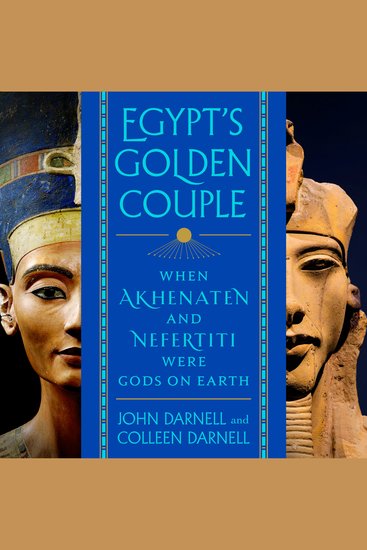
  • Egypt's Golden Couple - When Akhenaten and Nefertiti Were Gods on Earth - cover

    Egypt's Golden Couple - When...

    John Darnell, Colleen Darnell

    • 0
    • 0
    • 0
    Two celebrated Egyptologists bring to vivid life the intriguing and controversial reign of King Tut’s parents 
    Akhenaten has been the subject of radically different, even contradictory, biographies. The king has achieved fame as the world’s first individual and the first monotheist, but others have seen him as an incestuous tyrant who nearly ruined the kingdom he ruled. The gold funerary mask of his son Tutankhamun and the painted bust of his wife Nefertiti are the most recognizable artifacts from all of ancient Egypt. But who are Akhenaten and Nefertiti? And what can we actually say about rulers who lived more than three thousand years ago? 
     
    November 2022 marks the centennial of the discovery of the tomb of Tutankhamun and although “King Tut” is a household name, his nine-year rule pales in comparison to the revolutionary reign of his parents. Akhenaten and Nefertiti became gods on earth by transforming Egyptian solar worship, innovating in art and urban design, and merging religion and politics in ways never attempted before. Combining fascinating scholarship, detective suspense, and adventurous thrills, Egypt’s Golden Couple is a journey through excavations, museums, hieroglyphic texts, and stunning artifacts. From clue to clue, renowned Egyptologists, John and Colleen Darnell, reconstruct an otherwise untold story of the magnificent reign of Akhenaten and Nefertiti.
    Show book
  • A Psychotherapeutic Understanding of Eating Disorders in Children and Young People - Ways to Release the Imprisoned Self - cover

    A Psychotherapeutic...

    Jeanne Magagna

    • 0
    • 0
    • 0
    This important book shows how psychotherapy can address severe eating disorders in children and young people, illustrating the ways an imprisoned self can be released from suffering. 


    The book features a range of case studies while addressing core issues such as self-harm, hallucinations and the threat of suicide, as well as related topics such as depression and psychosis. Illustrating the psychological roots to eating disorders, it places therapy within hospital, clinical and multi-disciplinary contexts, as well as displaying how psychoanalytic theory can be applied across various settings and in different teams. 


    Written by an eminent author in the field, this will be a key text for anyone wishing to understand eating disorders in children from a psychotherapeutic and psychoanalytic dimension.
    Show book
  • The Greatest Generals of the Ancient World - cover

    The Greatest Generals of the...

    Editors Charles River

    • 0
    • 0
    • 0
    Over the last 2,000 years, ambitious men have dreamed of forging vast empires and attaining eternal glory in battle, but of all the conquerors who took steps toward such dreams, none were ever as successful as antiquity’s first great conqueror. Leaders of the 20th century hoped to rival Napoleon’s accomplishments, while Napoleon aimed to emulate the accomplishments of Julius Caesar. But Caesar himself found inspiration in Alexander the Great (356-323 B.C.), the Macedonian King who managed to stretch an empire from Greece to the Himalayas in Asia at just 30 years old. It took less than 15 years for Alexander to conquer much of the known world. Although his empire was quickly divided, his legacy only grew, and Alexander became the stuff of legends even in his own time.  
    	In the history of war, only a select few men always make the list of greatest generals. Napoleon. Caesar. Alexander. They are always joined by Hannibal, who has the distinction of being the only man who nearly brought Rome to its knees before its decline almost 700 years later. Rome never suffered a more horrifying defeat in its history than at Cannae, and indeed, Hannibal nearly rewrote the course of Western history during the Second Punic War. Even today there remains great debate on just how he accomplished his masterful invasion of Italy across the Alps. Since his army included war elephants, historians still argue over exactly where and how he crossed over 2,000 years after he managed that incredible feat.  
    	The ultimate conqueror, statesman, dictator, visionary, and opportunist, during his time in power Caesar expanded the borders of Rome to almost twice their previous size, revolutionized the infrastructure of the Roman state, and destroyed the Roman Republic for good, leaving a line of emperors in its place. His legacy is so strong that his name has become, in many languages, synonymous with power.
    Show book
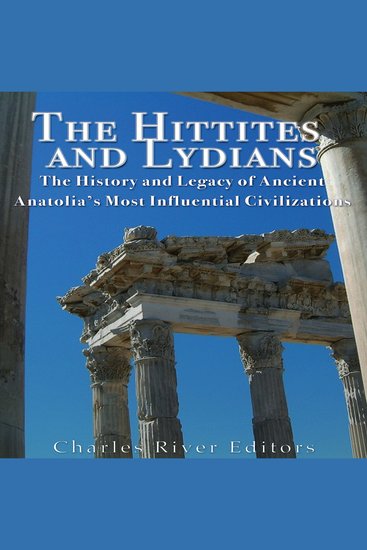
  • Hittites and Lydians The: The History and Legacy of Ancient Anatolia’s Most Influential Civilizations - cover

    Hittites and Lydians The: The...

    Charles River Editors

    • 0
    • 0
    • 0
    Compared to some of their contemporaries – including the Egyptians, Assyrians, and Babylonians – the Hittites were somewhat distant both culturally and geographically. The Hittites were an Indo-European speaking in an ocean of Afro-Asiatic and Semitic groups, their homeland was to the north of Mesopotamia, and it contained no major river like the Nile, Tigris, or Euphrates Rivers. The Hittite empire was also far less enduring than its neighbors, as it only existed from about 1800-1200 BCE (van de Mieroop 2007, 156), which was considerably shorter than most of the other major kingdoms of the Near East.  
    With that said, the influence of the Hittites on the politics, economy, and overall situation of the ancient Near East cannot be understated; the Hittites were a force to be reckoned with while they existed. The sources used to reconstruct Hittite history and chronology are many and varied, and since the Hittites were a literate people who developed a fairly sophisticated corpus of literature, ancient Hittite archives can be used to reconstruct events.  
    Of all the empires and kingdoms in the ancient world, few could compare with the Lydians in terms of wealth and opulence. From the early 7th century BCE until the middle of the 6th century BCE, the Lydians played an important role in the history of the eastern Mediterranean region as they took on the role of middleman between the empires of the Near East and the emerging Hellenic civilization in Greece. From their capital in Sardis, the Lydian kings traded and made alliances and war with numerous kings, tyrants, and generals, which ultimately cemented their role as a brief but historically important people and kingdom in the ancient world. 
    Show book