Join us on a literary world trip!
Add this book to bookshelf
Grey
Write a new comment Default profile 50px
Grey
Subscribe to read the full book or read the first pages for free!
All characters reduced
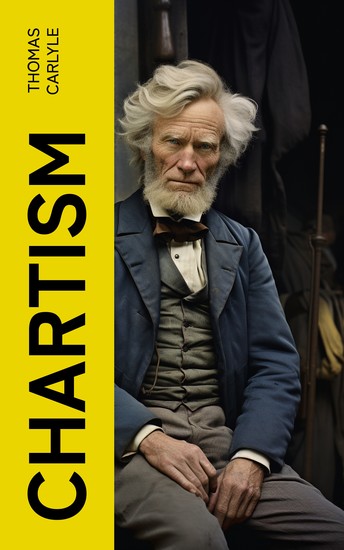
Chartism - cover

Chartism

Thomas Carlyle

Publisher: e-artnow

  • 0
  • 0
  • 0

Summary

Thomas Carlyle disapproved of Chartism in this pamphlet concerning the political idea. He acknowledged that it entailed the substitution of democracy by class-rule leadership, being content as long as the upper class held the reins.
Available since: 11/27/2023.
Print length: 78 pages.

Other books that might interest you

  • Rise of Fascism in Europe The: The History of the Fascist Takeovers in Nazi Germany Italy and Spain during the 20th Century - cover

    Rise of Fascism in Europe The:...

    Editors Charles River

    • 0
    • 0
    • 0
    It’s easy to forget how young Italy was when Benito Mussolini was born on July 29, 1883. It is hard to conceive a territory with such a long and ancient history was once young and troubled with constant conflict and instability. Similar to Germany, Italy was unified in 1861, but contrary to its northern cousin, its previous history was one of separation. Italy had no great romantic idea of a “Great Germany,” keeping it unified even during the wars between city-states. Benito Mussolini was born and raised in a highly volatile environment where ideas already considered extreme by most contemporary observers, such as Socialism, would undergo a deep and violent transformation.	Mussolini would ride that wave to power, and he would hold it for decades as he opportunistically tried to strengthen Italy's position and empire. That would lead him to foreign interventions in Africa, and eventually an alliance with Nazi Germany's Adolf Hitler, ultimately costing him everything and devastating his country throughout World War II. 
    	It is often claimed that Adolf Hitler rose to power in Germany through democratic means, and while that is a stretch, it is true that he managed to become an absolute dictator as Chancellor of Germany in the 1930s through a mixture of politics and intimidation. Ironically, he had set such a course only because of the failure of an outright coup attempt known as the Beer Hall Putsch about a decade earlier. 
    	The Spanish Civil War has exerted a powerful impact on the historical imagination. Without question, the conflict was a key moment in the 20th century, a precursor to World War II, and an encapsulation of the rise of extremist movements in the 1930s, but it was also a complex narrative in and of itself, even as it offered a truly international theatre of war. 	Ultimately, the forces of reaction, led by General Francisco Franco, triumphed, and after his victory in 1939, Franco ruled Spain with an iron fist for 36 years.
    Show book
  • Beacons of Liberty - International Free Soil and the Fight for Racial Justice in Antebellum America - cover

    Beacons of Liberty -...

    Elena K. Abbott

    • 0
    • 0
    • 0
    Before the Civil War, free African Americans and fugitive slaves crossed international borders to places like Canada, Mexico, and the Caribbean in search of freedom and equality. Beacons of Liberty tells the story of how these bold migrants catalyzed contentious debates over citizenship, racial justice, and national character in the United States. Blending fresh historical analysis with incredible stories of escape and rebellion, Elena K. Abbott shows how the shifting geography of slavery and freedom beyond US borders helped shape the hopes and expectations of black radicals, white politicians, and fiery reformers engaged in the American anti-slavery movement. Featuring perspectives from activists and risk-takers like Mary Ann Shadd, Martin Delany, and James C. Brown, Beacons of Liberty illuminates the critical role that international free soil played in the long and arduous fight for emancipation and racial justice in the United States.
    Show book
  • American Civil War in 1864 The: The History and Legacy of the War’s Penultimate Year - cover

    American Civil War in 1864 The:...

    Editors Charles River

    • 0
    • 0
    • 0
    Americans have long been fascinated by the Civil War, marveling at the size of the battles, the leadership of the generals, and the courage of the soldiers. Since the war's start over 150 years ago, the battles have been subjected to endless debate among historians and the generals themselves. The Civil War was the deadliest conflict in American history, and had the two sides realized it would take 4 years and inflict over a million casualties, it might not have been fought. Since it did, however, historians and history buffs alike have been studying and analyzing the biggest battles ever since.  
    	By the close of 1864, Abraham Lincoln had been reelected, the Union army had taken Nashville from General Hood, and Sherman had concluded his total war, “slash-and-burn” march of destruction to Savannah, Georgia, offering it as a Christmas present to Lincoln. Nevertheless, with everything seemingly falling to pieces, the South still held out hope of some sort of miracle, and Davis even attempted to send a peace delegation to meet with Lincoln in the early months of 1865. On January 28, 1865 as Union General Ulysses S. Grant was continuing to lay siege to Lee’s army at Petersburg, Virginia, Davis sent three commissioners headed by Vice-President Stephens to initiate informal peace talks with Lincoln. By February 3, however, the talks, known as the Hampton Roads Conference, came to a stalemate as Lincoln would accept nothing less than total union, while Davis would only accept Southern independence.  
    	Even at that point, the South was clearly on its last legs. General George H. Thomas destroyed John Bell Hood’s Confederate army at the battles of Nashville and Franklin, leaving only two large Confederate armies still in the field. Lee's army was weakened by desertion, lack of supplies and casualties, and Joseph E. Johnston’s army could barely resist against Sherman’s army as it was advancing north toward Virginia.
    Show book
  • Nature - cover

    Nature

    Ralph Waldo Emerson

    • 0
    • 0
    • 0
    Nature by Ralph Waldo Emerson, narrated by Richard Stibbard, is a foundational work of transcendentalist philosophy that explores the profound connection between humanity and the natural world. In this timeless essay, Emerson encourages readers to look beyond the superficial and appreciate the deeper spiritual and philosophical lessons that nature offers. By finding unity and harmony with nature, Emerson suggests, individuals can achieve greater self-awareness, insight, and enlightenment. 
    Richard Stibbard’s narration captures the reflective and insightful tone of Emerson’s writing, guiding listeners through the beautiful and inspiring passages that have made Nature a classic in philosophical and literary circles. His delivery enhances the contemplative mood of the text, making this audiobook an immersive experience for those seeking wisdom and inspiration from the natural world. 
    Perfect for lovers of philosophy, literature, and the outdoors, Nature offers listeners an opportunity to explore Emerson's vision of how nature shapes and elevates the human spirit. This audiobook provides a serene, thought-provoking journey into the beauty of the world around us and the inner self.
    Show book
  • Journey to Personal Freedom: A Toltec Guide - Embark on Personal Freedom Journey: Discover powerful Toltec audio guides designed to transform your life - cover

    Journey to Personal Freedom: A...

    Elias Ravenscroft

    • 0
    • 0
    • 0
    Journey to Personal Freedom: A Toltec Guide 
    ⭐⭐ Simplified Audio Guide ⭐⭐ 
    Are you looking to achieve true personal freedom while solidifying your understanding of Toltec wisdom? 
    Seeking a comprehensive guide that provides all the necessary elements to attain personal liberation? 
    Your search ends here! 
    This guide serves as your definitive companion for deepening your understanding, applying your knowledge, and engaging in practical exercises. With this, you're geared for a transformative journey. 
    Key features of this enriched guide: 
    - Profound insights about personal freedom through Toltec wisdom 
    - Detailed explanation of the principles and practices for true liberation 
    - Effective strategies for personal growth and overcoming challenges 
    Our guide distinguishes itself through comprehensive coverage, which is essential for your personal success. Concepts aren't merely skimmed; they are delved into with precision. 
    Please note that this guide is not affiliated with any official entities and is purely an independent resource for your benefit. 
    Designed with a clear structure and easy-to-understand language, our guide ensures smooth transitions between topics. Say goodbye to dense jargon and welcome clear, precise, and technically accurate content. 
    So, why wait? Click the BUY NOW button, secure your guide, and begin your journey to true personal freedom!
    Show book
  • The Engagement Specialist - Pandemics - Strategies for Success - Staying Calm Throughout the Storm - cover

    The Engagement Specialist -...

    Tolumaagave Leroy Harris Jr

    • 0
    • 0
    • 0
    The book “The Engagement Specialist: Pandemics - Strategies for Success - staying calm throughout the storm” is based on the notion to help organizations, nations, and communities successfully responding, mitigating and recovering from pandemics and national disasters. This book highlights all key leaders who engaged in developing National Pandemic Preparedness & Response plans and their role in building Healthcare capacity for local pandemic agencies. This book also contrasts COVID-19 responses of different countries compared to the United States by discussing how other countries remained successful in responding to the pandemic, posing a challenge to the U.S healthcare systems on its shortcomings.
    Show book