Join us on a literary world trip!
Add this book to bookshelf
Grey
Write a new comment Default profile 50px
Grey
Subscribe to read the full book or read the first pages for free!
All characters reduced
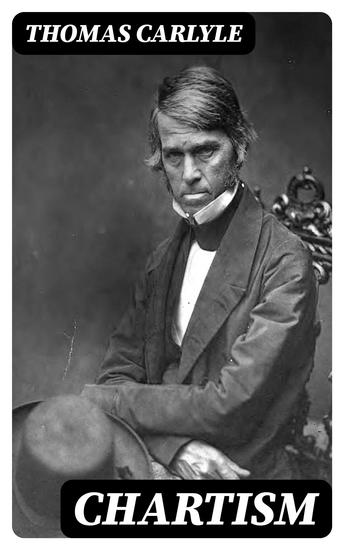
Chartism - cover

Chartism

Thomas Carlyle

Publisher: DigiCat

  • 0
  • 0
  • 0

Summary

In "Chartism," Thomas Carlyle delves into the socio-political upheaval of early Victorian England, examining the Chartist movement's demands for electoral reform and workers' rights. Written in a passionate and impassioned style, the text serves as both a critique and a manifesto, blending historical analysis with vibrant rhetoric to engage the readership. Carlyle's exploration of the moral and social implications of industrialization reflects the complexities of his time, as he grapples with the stark inequalities wrought by the capitalist system and advocates for genuine social change amidst widespread despair and political disillusionment. Thomas Carlyle (1795-1881), a Scottish essayist and historian, was profoundly influenced by the tumultuous events of his era, including the rise of industrialism and the accompanying struggles of the working class. His personal experiences with poverty and the moral crises of the age are evident in his writings. The encounter with the Chartist movement, which sought to empower the disenfranchised, directly resonated with Carlyle's philosophical convictions concerning duty, labor, and the rights of individuals in society. "Chartism" is an essential read for those interested in the intersections of literature, politics, and social philosophy. The book not only enhances our understanding of 19th-century movements for reform but also serves as a timeless reminder of the power of collective action against systemic injustice. Carlyle's insightful observations resonate today, making this work a vital contribution to both historical and contemporary discussions on democracy and social justice.
Available since: 05/29/2022.
Print length: 78 pages.


Other books that might interest you

  • Social Engineering - Manipulating People into Divulging Confidential Information - cover

    Social Engineering -...

    Cito Harder

    • 0
    • 0
    • 0
    Social engineering is the art of manipulating individuals into divulging confidential or personal information by exploiting their psychological vulnerabilities. Unlike traditional forms of hacking, which rely on technical skills to break into systems, social engineering takes advantage of human behavior to gain access to sensitive data. Whether through deceit, persuasion, or psychological manipulation, social engineers often prey on an individual’s trust, emotions, or fear, making it a more subtle yet highly effective form of attack. This introduction will explore what social engineering is, its methods, and why it has become such a significant threat in today’s digital landscape. 
    The core idea behind social engineering is simple: it is the manipulation of people rather than technology. In this approach, an attacker bypasses security measures and instead focuses on exploiting the weakest link in any organization or system—the people. These attacks can take many forms, ranging from phishing emails to impersonating authority figures, all designed to get the victim to willingly provide information, click on malicious links, or take actions that compromise their security. The success of social engineering relies not on breaking through firewalls or hacking encryption systems but on exploiting the trust and naivety of human beings. 
    Social engineering attacks can have serious consequences, especially as more of our personal and professional lives move online. Cybercriminals can gain access to sensitive personal information, financial data, or corporate secrets, leading to identity theft, financial loss, or damage to an organization’s reputation. In the corporate world, social engineering is often used as a gateway to larger cyberattacks. For instance, once an attacker gains access to an employee’s credentials through a phishing scheme, they can infiltrate company systems, potentially compromising valuable data.
    Show book
  • The Battle For The Jewish State - How Israel―And America―Can Win - cover

    The Battle For The Jewish State...

    Victoria Coates, Sen. Ted Cruz

    • 0
    • 0
    • 0
    On October 7, 2023, Israel was ambushed by the Palestinian terrorist organization, Hamas. The attack, underwritten by the Islamic Republic of Iran, unleashed unspeakable terrors on the Israeli population. Most of the world reacted with horror. But many commentators labeled the Jewish people, and Israel as a nation, as oppressors. The Palestinians, according to their Marxist calculus, were the oppressed. 


    A legion of figures in academia, the media, and the United States then declared support for Palestine, the perpetrator of the atrocities. Many American institutions have been indoctrinated and transformed into puppets who propagate hateful antisemitism. Why does Israel exist? Why is it worthy of remaining a critical ally of the United States? Why have critical race theorists identified Israel and the US as the most pernicious examples of "settler colonialism"? 


    Answers to these questions were developing during the first term of President Trump. But they were abandoned by the Biden-Harris Administration, imperiling Israel and the United States. In The Battle for the Jewish State, Victoria Coates shows how the conflict in Israel is not a regional issue to be resolved through an interminable diplomatic peace process. Rather, it is a broader military and cultural war that must be won for the sake of Israel and the United States.
    Show book
  • A Sense of Balance - cover

    A Sense of Balance

    John Howard

    • 0
    • 0
    • 0
    On how our feeling of equilibrium has characterized us as a country and will protect our future. 
    In the years that the creator served in the public parliament he came to figure out the extraordinary person of Australia; to see the value in its assets and shortcomings; and in particular to regard the feeling of equilibrium in the plan of public strategy that has long characterized us as a country and made Australia an appealing objective for individuals from across the world. 
    In this book he investigates this equilibrium, its establishments and its future. Composed against the background of the Coronavirus pandemic, as well as a portion of the more challenged political occasions of late years - the appointment of Donald Trump, the Brexit vote, the ascent of China, and, inside our own country, a merry go round of six heads of the state in eleven years - these reflections address how Australia has answered strain over the course of the past ten years or somewhere in the vicinity. Editorial regarding these matters from lawmakers, assessment scholars and web-based entertainment can at times appear to be deafening and disruptive. Australia's 25th and second longest serving head of the state has confidence that regardless of what difficulties and limits take steps to agitate our feeling of equilibrium, the nation's foundations and individuals will stay hearty for a significant length of time.
    Show book
  • Theory of Justice A: Book Summary & Analysis - cover

    Theory of Justice A: Book...

    Briefly Summaries

    • 0
    • 0
    • 0
    This is a concise summary and analysis of A Theory of Justice, by John Rawls.
    It is not the original book and is not affiliated with or endorsed by John Rawls.
    Ideal those seeking a quick and insightful overview.
     
    This groundbreaking work reimagines the foundations of modern political philosophy, offering a compelling vision of a fair and just society. Through the innovative concept of the "original position" and the "veil of ignorance," the book argues for principles of justice that prioritize equality, individual rights, and social cooperation. It has become a cornerstone in debates about democracy, ethics, and public policy, influencing generations of thinkers and leaders.
    Show book
  • The Revolution Betrayed - What Is the Soviet Union and Where Is It Going? - cover

    The Revolution Betrayed - What...

    Leon Trotsky

    • 0
    • 0
    • 0
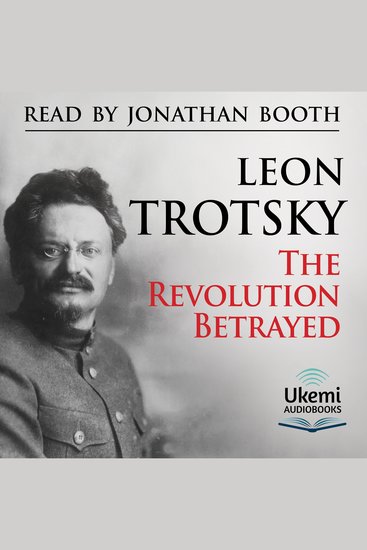
    It is June 1936. Leon Trotsky (1879-1940) has finally been granted a visa for asylum in Norway, having been banned first from living in Paris, and then the whole of France. With him comes the draft of The Revolution Betrayed: What Is the Soviet Union and Where Is It Going?, which is completed and sent to the publishers on the 4th of August. The book, published by Faber in 1937, is considered to be Trotsky’s major work on Stalinism. Trotsky’s passion for the spirit of the Revolution he co-founded, his disgust and sadness at how the people of Russia have been betrayed by Stalin and his acolytes, shows us the bleak lives of 170 million Russians under the absolute control of ‘the Ten Thousand’ of the bureaucracy.  
     
    Trotsky reminds us of the high concepts of the 1917 October Revolution, (Marx’s 'From each according to his ability, to each according to his needs') with the sharing of the nation’s resources for the benefit of all. Prominent among such forward thinking was the commitment to lift women out of the trap of housework and childbirth by communal refectories and creches in the workplace. He praises the positive economic advances of the USSR since the death of Lenin - the growth in areas such as industrial and electrical output. But he notes the continued and inevitable low productivity (much lower than the capitalist West, he acknowledges) that is the result of lack of incentive for the Soviet worker. This, he argues, will never allow the country to lift itself up to full potential, despite Stalin’s ever-changing Five-Year Plans. 
     
    Indeed, it is this zig-zagging of panicked policy and bovine directionlessness that frustrates Trotsky so much. It is bad enough that Stalin and his self-serving cohorts have formed a Thermidorian regime of brutal repression and conservative nest-feathering. But even worse, their economic adventurism is carrying ‘the nation to the edge of disaster’.  
     
    Trotsky brings us a clear picture of the miserable existence of the vast majority of Russians, barely surviving on bad rations, endemic corruption and fear, and the promise of a tomorrow that will never come. He laments the lack of a proletarian uprising in the West that might encourage Russians to change their own off-course regime. He notes the rise of Hitler and Mussolini, and seems, even in 1936, to see war as inevitable. He predicts the toppling of Stalinism but would have wept at how many decades it took and how many millions of lives would be wasted by stupidity and war.  
     
    Only 10 days after Trotsky sent this book to the publishers, Stalin announced the first of the Moscow show trials that began the Great Purge. Trotsky and his wife were badly treated and muzzled by the Norwegians to prevent his protesting at Stalin’s actions, and they moved to Mexico City in early 1937. There they lived, terrorized by Stalin’s determination to assassinate his old rival, until Trotsky’s death following a blow from an ice pick on 20th August 1940. The Revolution Betrayed, with its vivid translation by Max Eastman, is presented with clarity and commitment by Jonathan Booth.
    Show book
  • Confronting Climate Gridlock - How Diplomacy Technology and Policy Can Unlock a Clean Energy Future - cover

    Confronting Climate Gridlock -...

    Daniel S. Cohan

    • 0
    • 0
    • 0
    An atmospheric scientist explains why global climate change mitigation and energy decarbonization demand American diplomacy, technology, and policy 


    Professor of environmental engineering Daniel Cohan argues that escaping the gravest perils of climate change will first require American diplomacy, technological innovation, and policy to catalyze decarbonization globally. Combining his own expertise along with insights from more than a hundred interviews with diplomats, scholars, and clean-technology pioneers, Cohan identifies flaws in previous efforts to combat climate change. He highlights opportunities for more successful strategies, including international "climate clubs" and accelerated development of clean energy technologies. Grounded in history and emerging scholarship, this book offers a forward-looking vision of solutions to confronting climate gridlock and a clear-eyed recognition of the challenges to enacting them.
    Show book